 EN
EN
 English
 日本語
日本語 Español
 Deutsch
 عربى
عربى
A retail sugar buyer opens a 1 kg bag after four weeks in a humid warehouse and finds hard lumps. The bag looks fine. The print is sharp. The fill weight is correct. Yet the product has failed in the only way that matters to the customer: it no longer pours, measures, or dissolves the way it should. Sugar packaging problems rarely announce themselves on the line. They show up later, in storage, transit, and kitchen use.
Bottom line: sugar packaging is a moisture-control and seal-integrity project first, and a graphic project second. The correct structure depends on sugar form, target shelf life, distribution climate, and filling method. For most retail sugar, a moistureproof stand-up pouch or sealed pillow bag with a verified water-vapor barrier will outperform a heavier, more expensive laminate that has a weak seal or a contaminated seal area.
Content
- 1 Sugar Packaging Requirements by Sugar Form
- 2 Comparing Flexible Structures for Sugar
- 3 Materials, Bag Styles, and Filling Compatibility
- 4 Hidden Failure Drivers in Sugar Packaging Audits
- 5 Where Sugar Packaging Volume Sits
- 6 Selection and ROI: A Practical Order of Operations
- 7 Maintenance and Compliance for Sugar Packaging Lines
Sugar Packaging Requirements by Sugar Form
Not all sugar behaves the same in a package. Granulated sugar is free-flowing and relatively forgiving, but it still absorbs moisture and can cake under pressure. Powdered sugar is far more sensitive to humidity and dust. Brown sugar contains residual moisture and can either dry out or become sticky depending on the barrier. Sugar cubes need shape retention and abrasion resistance. A single bag specification cannot cover all four without trade-offs.
Start with the failure mode, not the bag type
- Granulated sugar: moisture migration, seal creep, and sifting through poorly sealed corners.
- Powdered sugar: airborne dust in the seal zone, static cling, and rapid caking after humidity exposure.
- Brown sugar: moisture loss leading to hardening, or excess moisture leading to stickiness and mold risk.
- Sugar cubes: edge chipping, abrasion, and compression during stacking and transport.
For a 12-month ambient shelf life, a practical water-vapor transmission rate target for retail sugar is often below 1 g/m2/day, with below 0.5 g/m2/day for humid markets or premium powdered sugar. The exact target should be confirmed by real storage testing, not by a supplier sheet alone.
Comparing Flexible Structures for Sugar
The table below is a buying comparison, not a universal ranking. The best structure is the one that survives your filling line, distribution route, and storage climate at an acceptable cost.
If moisture control is the main concern, compare structures using high-barrier packaging solutions for product freshness as a reference. The practical check is not only WVTR, but also seal strength after sugar dust contamination.
Materials, Bag Styles, and Filling Compatibility
Choose the bag around the filler
A beautiful stand-up pouch with a poor fill opening will slow the line and create seal waste. For vertical form fill seal lines, pillow bags and gusseted bags are usually the lowest-friction choice. For premade pouch lines, stand-up pouches, flat-bottom pouches, and eight-side seal bags offer better shelf presence but require precise pick-up, opening, and sealing. Stick packs and sachets are best for single-serve sugar, foodservice portions, and sample programs.
Control dust at the seal jaw
Powdered sugar and fine granulated sugar can leave a thin dust layer exactly where the seal must form. This is one of the most common causes of leakers and micro-channels. A wider seal band, improved vacuum at the fill station, and a controlled drop height often solve more problems than upgrading the film. For retail bags, a moistureproof stand-up pouch with a reliable zipper or tin tie can preserve the customer experience after opening.
Hidden Failure Drivers in Sugar Packaging Audits
Packaging complaints are usually attributed to the film, but line audits often show a different pattern. The example distribution below reflects typical findings from sugar and powder filling environments: seal contamination, moisture ingress through weak seals, fill weight drift, and handling damage.
The implication is practical: before changing the laminate, measure seal jaw contamination, jaw temperature, dwell time, and pressure. A 5 degree C deviation or a 0.1 second dwell change can matter more than a small WVTR improvement.
Where Sugar Packaging Volume Sits
Different sugar channels demand different formats. Retail consumer packs need shelf appeal and reopenability. Foodservice sachets need low cost, fast filling, and portion control. Industrial bulk packs need strength, stacking stability, and moisture protection during long storage. The pie chart below shows a typical volume split for a flexible packaging program serving mixed sugar customers.
- Retail consumer: 42% - stand-up, flat-bottom, and pillow bags.
- Foodservice: 24% - sachets, stick packs, and small pouches.
- Industrial bulk: 18% - heavy-duty sacks and liners.
- Specialty brown sugar: 10% - high-barrier resealable pouches.
- Sugar cubes: 6% - cartons, flow wraps, and shaped inserts.
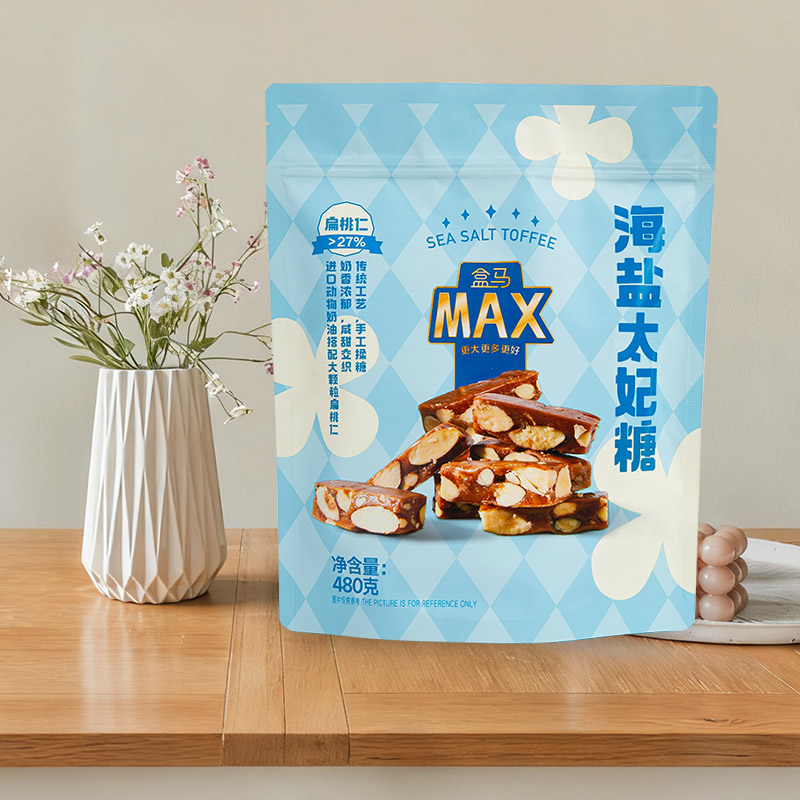
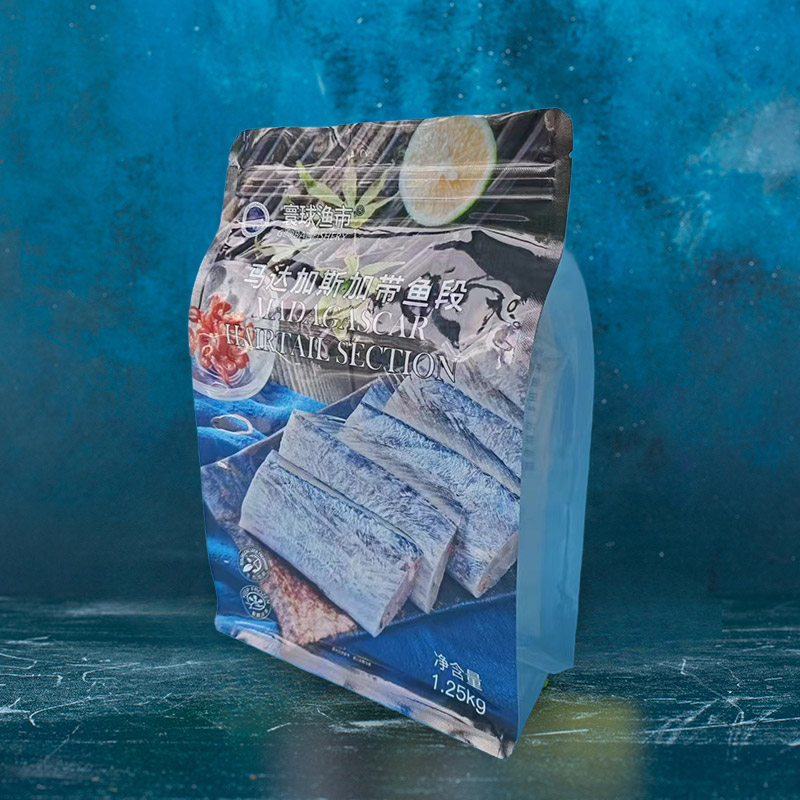
For retail sugar and sugar-based confectionery, a colorful stand-up pouch can carry both moisture protection and shelf differentiation. The key is to keep the barrier layer and seal layer separate from the decorative surface.
Selection and ROI: A Practical Order of Operations
The cheapest bag is rarely the lowest-cost package. A 3% material saving can disappear quickly if the line slows by 10% or if one pallet in twenty is rejected for leakers. Use the following sequence to compare suppliers and structures on total delivered cost.
1. Fix the sugar specification
Define granulation, moisture content, bulk density, and flow behavior. Powdered sugar and brown sugar usually need tighter moisture targets than granulated sugar.
2. Set shelf life and climate
A 6-month domestic retail pack and a 24-month export pack should not use the same barrier target. Include worst-case humidity and stacking pressure.
3. Match bag to filler
Confirm fill opening, gusset depth, seal band width, and zipper position. Run a real product trial with production sugar, not salt or flour.
4. Validate the seal
Use dye penetration, burst, and vacuum leak tests after filling. Check seals before and after drop testing, because sugar abrasion can open weak channels.
5. Control the launch quantity
For new sugar brands or seasonal flavors, digital printing with low minimum order quantities reduces obsolete packaging risk.
6. Scale only after repeatability
Once seal settings and fill weights are repeatable across three production runs, move to larger orders and lock the specification.
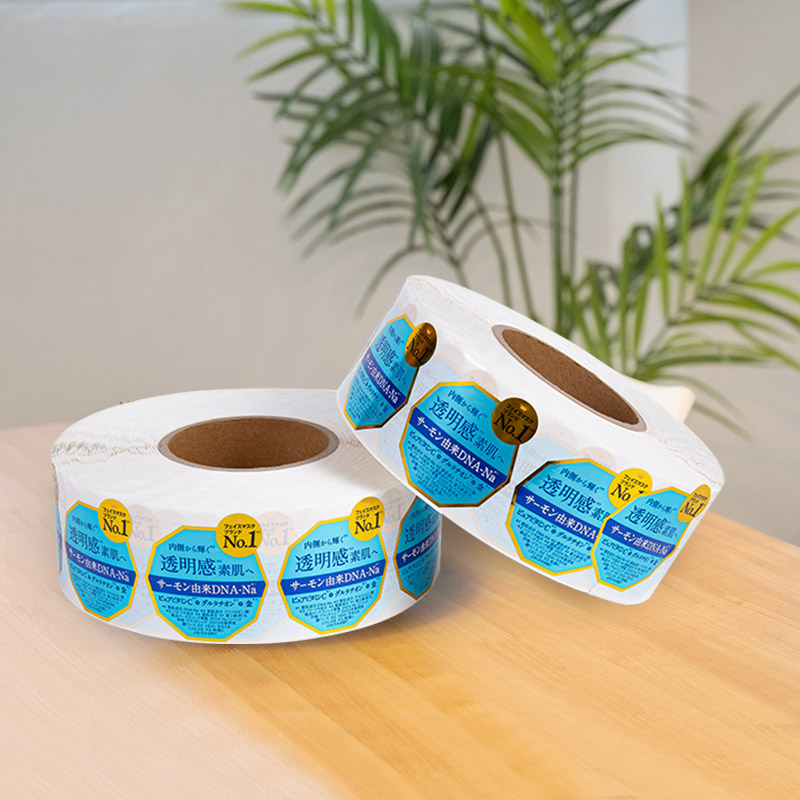
A converter such as SC Shanghai New Material Tech. Co.,Ltd. can combine multilayer coextruded films, printed rolls, finished pouches, and labels, which reduces the number of suppliers that must agree on one moisture target.
Maintenance and Compliance for Sugar Packaging Lines
Sugar is a food product, and packaging materials that contact it must meet the applicable food-contact rules in the destination market. In the United States, that usually means FDA-compliant components. In the European Union, compliance with EU 10/2011 and relevant migration testing is typical. In China, GB 4806 series standards apply to food-contact materials and articles. The supplier should provide a current declaration of compliance, migration test data where required, and traceability for each production lot.
- Verify that the seal layer, barrier layer, adhesive, and ink are all suitable for direct or indirect food contact as used.
- Keep a documented quality control process for incoming film, print registration, seal strength, and leak testing.
- Clean filling and sealing zones on a fixed schedule. Sugar dust builds quickly and can attract moisture and insects.
- Store film rolls in a dry, shaded area. A high-barrier film stored in a humid room can still cause seal defects.
Maintenance is not only about the machine. It is also about the specification. If a supplier changes film thickness, resin grade, or adhesive without notice, the line may need new seal settings and the shelf life claim may no longer be valid.
Sugar packaging rewards buyers who treat moisture, dust, and seals as one system. Start with the sugar form, set a realistic WVTR target, choose a bag style that fits the filler, and validate the seal with the actual product. Only then should you optimize print and cost. A package that protects the sugar for the full shelf life is worth more than one that merely looks good on the shelf.