 EN
 English
 日本語
 Español
 Deutsch
 عربى

Watch a chocolate bar come off a horizontal flow wrapper and you will see a seal that was never heated. The film carries two narrow bands of a rubbery cohesive, the bands are pressed together for a fraction of a second at 2–6 bar, and the pack is closed. That is the entire mechanism behind cold seal, and it explains both why the format can run at 90 packs a minute with no warm-up cycle, and why the same wrapper will block into a solid, unusable roll if it is left on a warm loading bay for a week.
Cold seal is not a universal replacement for heat sealing. It is a different closure with a different failure mode, and the choice between the two usually comes down to three questions: how much heat the product can survive, how fast the line has to run, and how much powder, fat or crumb will be sitting in the seal area when the jaws close.
The short answer
Cold seal bonds through pressure alone, using a registered cohesive coating that sticks only to itself. Specify it for heat-sensitive products, high-speed flow-wrap lines and seal areas exposed to powder or fat. Do not specify it for retort, liquid-filled pouches, vacuum packs or packs much above 2–3 kg, where the lower seal strength of a cohesive bond becomes the limiting factor rather than the film.
Content
- 1 How Cold Seal Actually Works
- 2 Cold Seal Versus Heat Seal: Where the Difference Bites
- 3 Seal Strength and Speed: The Numbers Buyers Underestimate
- 4 Where Cold Seal Is Used, and Where It Is Not
- 5 Cost and Line Economics
- 6 A Practical Selection Sequence
- 7 Storage, Maintenance and Compliance
- 8 Where the Film Supply Side Matters
How Cold Seal Actually Works
A cold seal coating is a cohesive, not an adhesive. Adhesives stick to a second, different surface; cohesives stick to themselves and to nothing else. That single property is what makes the format practical: the coated band will not adhere to the product, to the machine jaws, to the outside of the wrapper, or to a neighbouring pack in the carton.
- The coating is a latex dispersion, natural or synthetic, applied by gravure or flexo in a registered pattern rather than across the full web.
- Dry coat weight typically sits between 2 and 6 gsm per side, and both mating surfaces must be coated for the bond to form.
- Sealing pressure is normally 2–6 bar with a dwell of roughly 30–120 milliseconds; temperature plays a secondary role, mainly in how quickly the coating wets out.
- On a fin-seal flow wrapper, the same web folds onto itself, so a single coated side is enough. On a two-web pouch line, both webs need the pattern.
Self-only bonding
No product contact, no jaw sticking, no accidental seals on the wrapper face.
Registered pattern
Coating sits only in the seal zone, so the barrier layer across the pack face stays intact.
No heat history
Nothing warms the film or the product, so no condensation, no aroma flash-off, no shrinkage.
Peel behaviour
The bond peels cleanly and predictably, which is why medical pouch formats rely on it.
Cold Seal Versus Heat Seal: Where the Difference Bites
The two closures are often compared on speed alone, which hides the trade-offs that actually cause production problems. The comparison below reflects the bands most converters and brand owners work within for confectionery, bakery and medical formats.
Bands are typical production ranges rather than specification limits; actual values follow film structure, cohesive grade and jaw geometry.
Seal Strength and Speed: The Numbers Buyers Underestimate
Almost every cold seal complaint traces back to one of two numbers that never made it onto the specification: coat weight and seal strength. A coating applied 1 gsm light will pass a visual check and still peel open in a retail carton six weeks later.
Cold seal
BOPP
~6 N
Cold seal
paper
~4 N
Heat seal
PE sealant
~20 N
Heat seal
retort PP
~35 N
The chart is deliberately unflattering to cold seal, because that is the honest picture. What it buys in return is speed and product protection: a flow wrapper closing 90 packs a minute with no jaw recovery time, and no heat plume warming the chocolate, the cheese or the sterile barrier inside the pouch.
Verify the bond with the standard methods rather than a hand pull: seal strength to ASTM F88, dye penetration to ASTM F1929 for channel leaks, and burst or bubble emission testing where a sterile barrier is claimed. A 2 N difference between the two tails of a fin seal is usually a registration problem, not a coating weight problem.
Where Cold Seal Is Used, and Where It Is Not
Demand clusters around products that are damaged by heat or that leave residue in the seal zone. Confectionery dominates because chocolate blooms and deforms above roughly 30 °C, and biscuit and bakery formats generate crumbs that would open a heat seal channel.
Confectionery and chocolate — 38%
Bakery and biscuits — 22%
Medical and sterile devices — 16%
Fresh produce and cheese — 14%
Ice cream and frozen novelty — 10%
The medical segment is the one most buyers overlook. Peelable cold seal paper and film pouches are a long-established sterile barrier format for ethylene oxide sterilisation, validated under ISO 11607, precisely because the closure is clean, peelable and free of heat history that could distort the coating in the seal zone.
What cold seal should not be asked to do: hold a retort pouch at 121 °C, contain a low-viscosity liquid through a drop test, survive a vacuum chamber cycle, or carry a 5 kg pet food load. In each of those cases the cohesive bond is the weak link, and no amount of film upgrade compensates for it.
Cost and Line Economics
Cold seal removes heat from the sealing step, and the savings appear in four predictable places:
- Energy: heater cartridges and jaw heating on a flow wrapper draw several kilowatts continuously, all shift.
- Start-up: 10–20 minutes saved at every shift change and every product changeover.
- Maintenance: no thermocouples, cartridges or jaw-face coatings to replace, and far less Teflon wear.
- Scrap: heat-damaged product and scorched film simply stop occurring.
The offset is the coated film, which costs more per square metre than an uncoated equivalent, plus the registration accuracy the printer must hold and the tighter storage discipline the roll then needs. On a two-shift line running above 60 packs a minute the arithmetic usually closes inside a year; on a slow line running 20 packs a minute it rarely does.
A Practical Selection Sequence
- Confirm the product temperature at the jaws. Anything above roughly 30 °C, or anything that deforms when warmed, points towards pressure-only sealing.
- Map the seal area. If powder, sugar, fat or crumbs will be present, cold seal tolerates it far better than a heat seal.
- Check the load path. Packs above 2–3 kg, or packs that will be stacked twelve high in a case, need the higher strength of a heat seal.
- Fix the substrate first, then the cohesive. BOPP, PET, paper and metallised films all coat well, but the pattern position and the release lacquer must match the wrapper design.
- Set pressure and dwell on the machine, not on paper. Run a pressure ladder in 0.5 bar steps and test each sample to ASTM F88.
- Run a blocking and ageing trial: 40 °C for 72 hours at the intended stack pressure will expose a coating that is too tacky at ambient conditions.
- Close the compliance file before the first commercial run, not after.
Storage, Maintenance and Compliance
A cohesive roll is a pressure-sensitive product in its own right. Treat storage as part of the process:
- Hold coated rolls at 15–25 °C and 40–60% relative humidity, still in their poly bags, away from direct sunlight and radiators.
- Never stack rolls so that the coated face bears weight against another coated face; that is the fastest route to blocking.
- Respect shelf life, commonly 6–12 months from coating; cohesive tack drifts with age and humidity even when the film itself is fine.
- Clean gravure or anilox cylinders and doctor blades on the coating station at every changeover; dried cohesive deposits produce streaks that read as weak seals.
- Calibrate jaw pressure weekly. A 0.5 bar drift is invisible on the machine and very visible in a peel test.
On compliance, the coating is a food-contact material in its own right: FDA 21 CFR 175.105 for adhesive components and EU 10/2011 with migration testing for the European market, plus a latex-free declaration if the pack is destined for a medical or latex-sensitive application. Where a sterile barrier is claimed, ISO 11607 and the associated seal-strength and leak methods form the validation backbone.
Where the Film Supply Side Matters
The cohesive is only half the pack. The base web decides stiffness for machine runnability, barrier for shelf life and print quality for the shelf. A cold seal wrapper for chocolate is usually a white or metallised BOPP; a sterile pouch may be medical-grade paper; a frozen novelty needs a film that stays flexible at −18 °C without cracking at the fold.
That is where a converter with in-house film capability earns its place in the chain. SC Shanghai runs multilayer coextrusion alongside printing and pouch making, which means the barrier structure, the coating pattern and the finished pack are specified together rather than assembled from three suppliers who never speak to each other. The multilayer coextruded film guide is a reasonable starting point for structure selection, and the quality control process covers the inspection side.
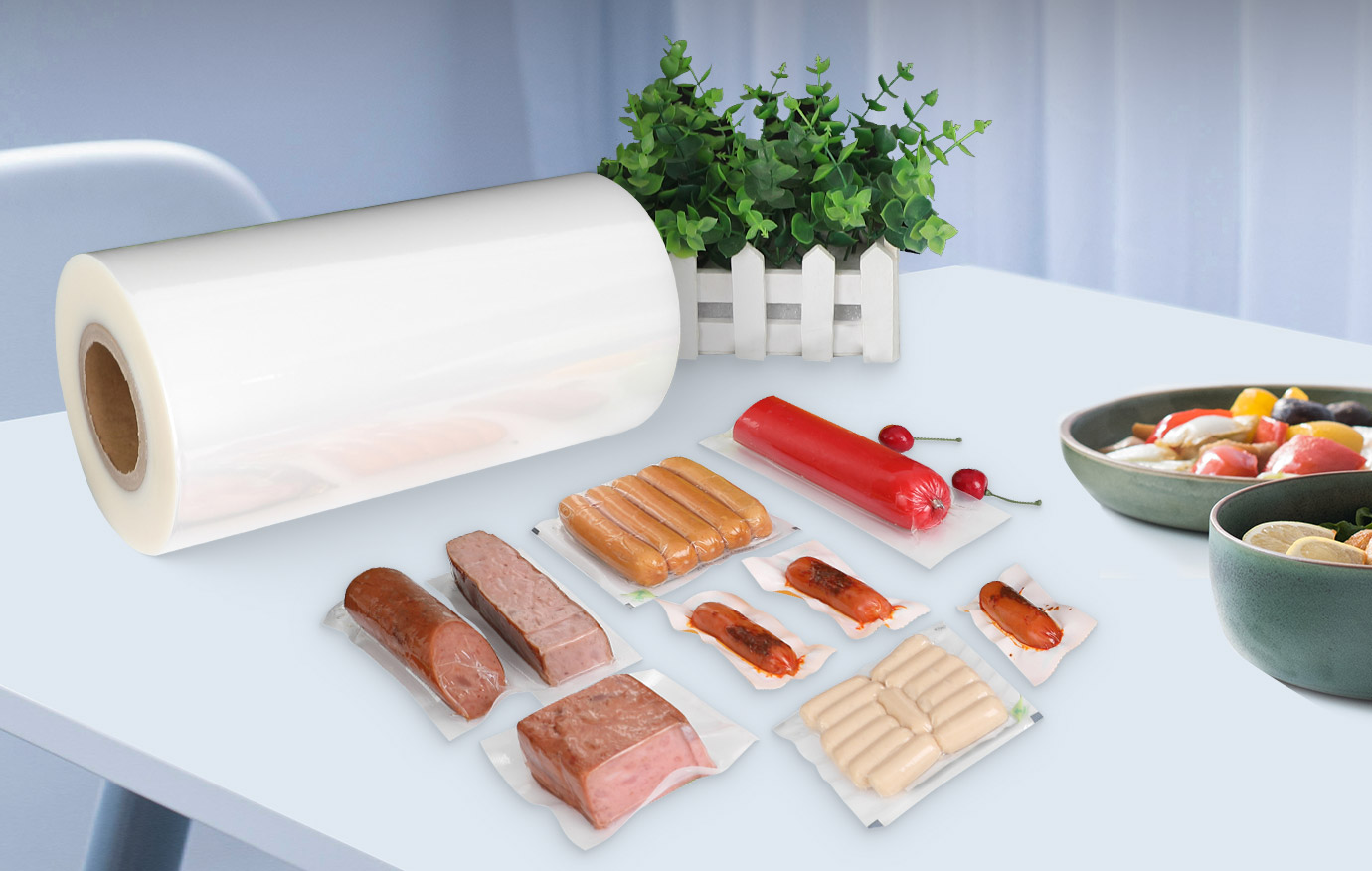 Multi-Layer Co-Extruded Barrier Thermoforming FilmsFor barrier-critical short-run briefs, these 7-, 9-, and 11-layer PA/PE and PA/EVOH/PE thermoforming films cover frozen and high-temperature cooked food packaging.View Product →
Two product lines are worth a look when the brief involves short runs or barrier-critical formats:
 Digital Printing for Low-MOQ Flexible PackagingDigitally printed pouches and roll stock support short runs, multiple SKUs, market tests, and seasonal designs without plate-making, with barrier and recyclable material options.View Product →
Digital printing at low minimum order quantity suits seasonal chocolate and bakery versions where the wrapper changes four times a year and a gravure cylinder set cannot be justified. For frozen and chilled formats, the base film has to hold both barrier and low-temperature toughness, which is a different conversation from the cohesive itself. If you are weighing cold seal against a heat-sealed structure for a specific product, send the specification over and ask for both routes costed on the same film.