 EN
EN
 English
 日本語
日本語 Español
 Deutsch
 عربى
عربى
Content
- 1 Why Candy Bag Packaging Fails Before the Candy Ever Does
- 2 How Candy Bag Packaging Works: Three Properties That Interact
- 3 Structure Comparison: What Each Candy Bag Build Actually Buys You
- 4 The Number Buyers Rarely See: Seal Creep After Accelerated Aging
- 5 Where Candy Bag Packaging Volume Actually Goes
- 6 Selection Workflow: From Candy Type to Signed Specification
- 7 Compliance and Ongoing Maintenance
Why Candy Bag Packaging Fails Before the Candy Ever Does
A gummy manufacturer switches to a new 130 g stand-up pouch, runs 40,000 units, and three weeks later finds that roughly 6 percent of the bags have soft, wrinkled seals around the zipper. The candy inside is fine. The packaging is not. Sugar dust drawn into the seal area, a 38 µm sealant layer that was never validated at the machine's real dwell time, and a filling speed 15 percent above the pilot run combined to create channel leaks that no visual inspection caught.
That failure is ordinary rather than exotic. Candy bag packaging has to survive three separate environments: the filling line, the distribution chain, and a kitchen counter over a shelf life that commonly runs 9 to 18 months. Each environment stresses a different property, and a structure that performs well in one can be marginal in another. Sugar is hygroscopic, abrasive, and aggressive toward seal areas, which rules out a large part of the generic pouch market before the conversation even starts.
Core conclusion: Specify candy bag packaging by three numbers first — sealant layer thickness, water vapour transmission rate (WVTR), and seal strength measured on your own filling machine — and only then by bag style, zipper type or print. A quotation that does not tie those three values to your line's dwell time, temperature and pressure is incomplete, no matter how good the sample looks on a desk.
How Candy Bag Packaging Works: Three Properties That Interact
A candy bag is a laminate of three functional zones: an outer print and abuse layer, a barrier core, and an inner sealant. Each zone solves a different problem, and the most expensive mistake is optimising one zone while ignoring the other two.
Barrier is a stack property, not a layer
Metallised PET at 12 µm can reach an oxygen transmission rate near 1.5 cc/m²·day, but only when the metallised surface survives pouch forming without micro-creasing and the adhesive is fully cured. Aluminium foil at 7 µm beats that on paper, yet foil flex-cracks at the fold lines of a stiff stand-up pouch. For most candy, moisture is the primary enemy; oxygen matters most for chocolate, nuts and anything with a fat phase.
Seal integrity is a machine and film contract
Seal strength is not a film property alone. A PE sealant that delivers 32 N/15 mm on a clean laboratory sample may drop to 14 N/15 mm once sugar crystals sit in the seal zone at the same 0.4 s dwell. Buyers should request a seal curve — strength plotted against temperature, dwell and pressure — instead of a single data point, and then confirm it on the actual filler.
Food contact and ink chemistry disqualify late
Inks, adhesives and coatings must satisfy 21 CFR 175 and 177 in the United States and EU 10/2011 in Europe, with migration testing performed on the finished laminate rather than the base film. Low-migration ink systems are not a premium option for candy: the product often touches the sealant directly, and retail storage can exceed 30 °C.
Structure Comparison: What Each Candy Bag Build Actually Buys You
The ranges below are typical published values for 100 g to 200 g candy pouches measured at 23 °C and 50 percent relative humidity. Treat them as the start of a specification conversation rather than a guarantee, because forming, filling and sealing conditions move real numbers by 20 to 40 percent.
Table 1: Typical property ranges for candy bag laminates. OTR and WVTR are measured at 23 °C and 50 percent RH; the cost index uses the standard PET12/PE50 build as 1.00.
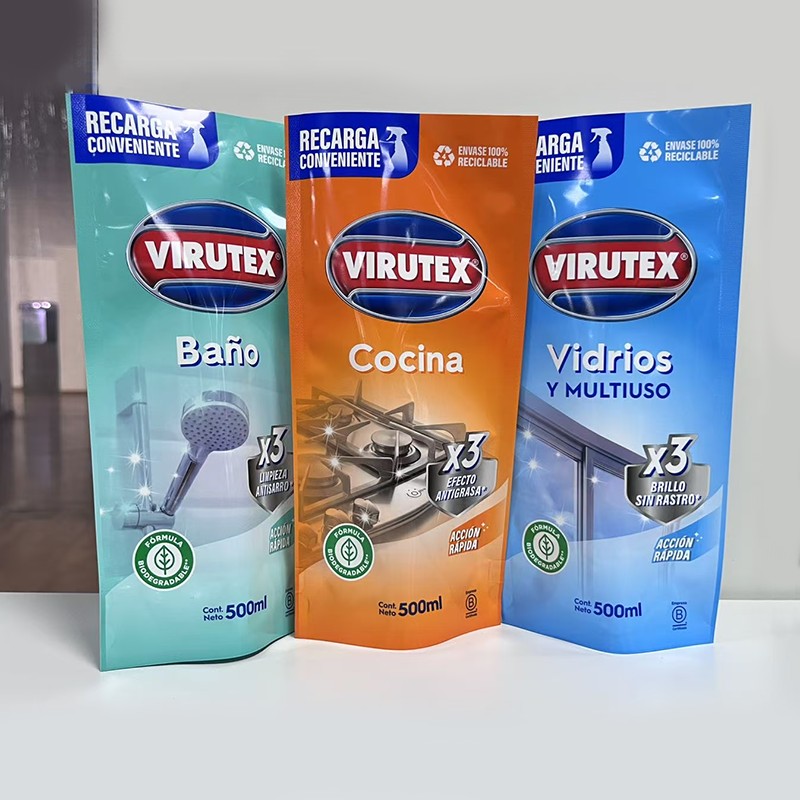
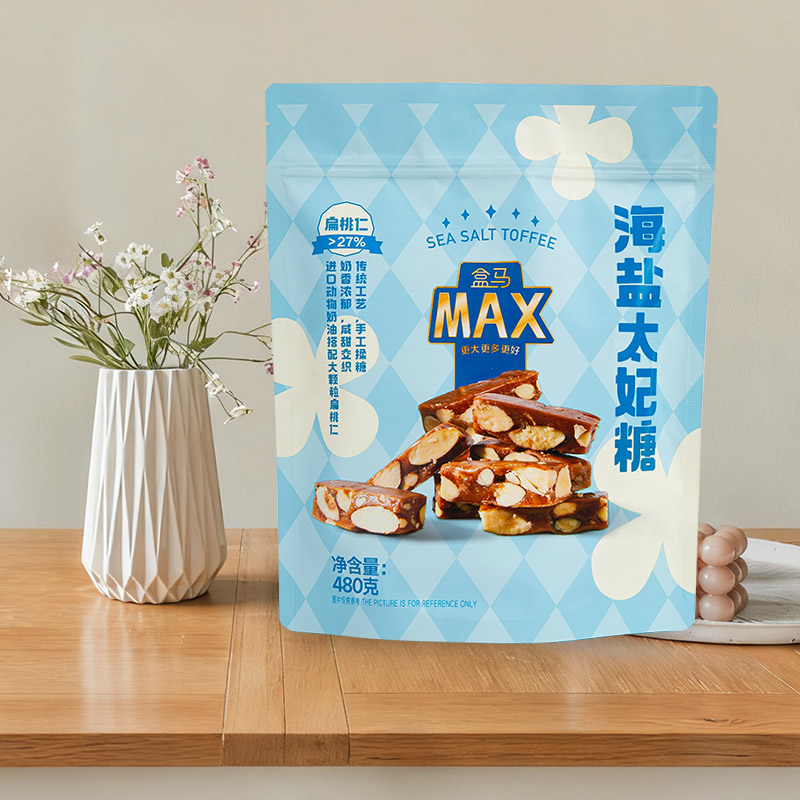
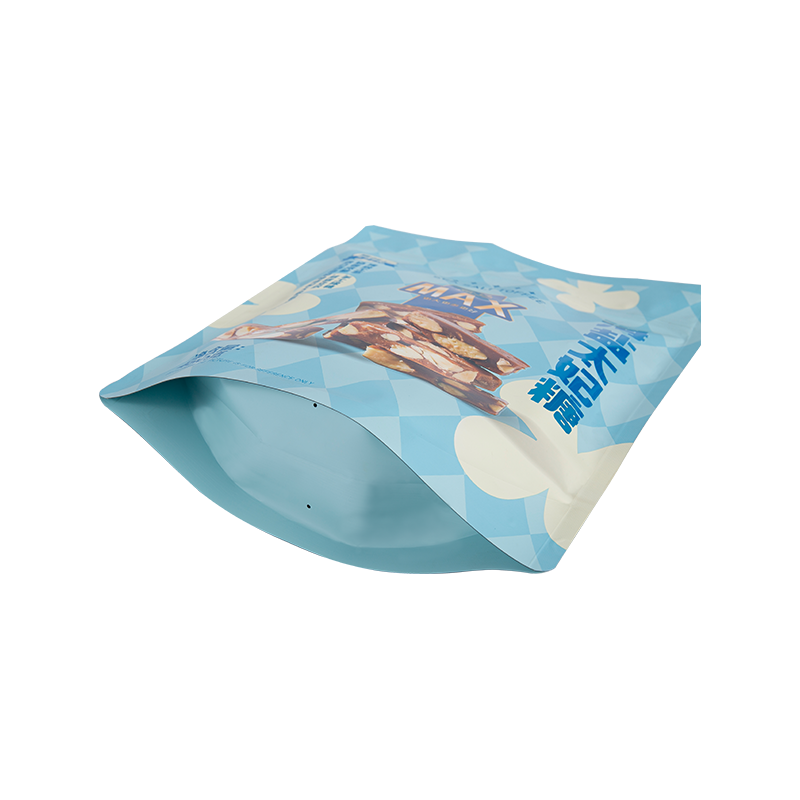 Colorful Stand-Up Candy Pouch for Soft Candy and JellyIn candy laminate comparisons, this colorful stand-up pouch offers a self-supporting printed format for soft candy, chocolate beans and jelly.View Product →
The practical reading is straightforward. For hard candy with a 6 to 9 month shelf life, the MOPP build gives the stiffness that high-speed flow wrapping needs at a low cost index. Gummies and chewy candy usually justify the metallised build. Chocolate and nut inclusions justify foil unless a mono-material structure is mandatory for a brand's sustainability target. For a closer look at how materials, pouch types and barrier metrics fit together, this snack packaging guide walks through the same decision tree in more detail.
The Number Buyers Rarely See: Seal Creep After Accelerated Aging
Most suppliers test seals on day one. Candy sits on shelves for months. The figures below come from a 21-day accelerated aging trial at 40 °C and 75 percent relative humidity on 130 g gummy pouches filled with sugar-coated product, with 400 samples per sealant thickness.
25 µm
8.4%
30 µm
4.1%
38 µm
1.3%
50 µm
0.7%
60 µm
0.6%
Two observations matter commercially. First, the curve is not linear: moving from 25 µm to 38 µm removes roughly 85 percent of the failures, while going from 38 µm to 60 µm removes almost nothing and adds material cost. Second, sugar contamination shifts the whole curve to the right, so a clean-sample test will always flatter a structure that fails in production.
Where Candy Bag Packaging Volume Actually Goes
Demand is not spread evenly. The split below reflects the mix of candy types that typically drive flexible pouch and film specifications, and it explains why gummy and chocolate applications attract most of the barrier engineering effort.
- Gummies and chewy candy — 28%. Highest moisture sensitivity and the main driver of metallised barrier demand.
- Chocolate and compound coatings — 22%. Oxygen and light protection dominate; foil or high-barrier metallised builds are common.
- Hard candy and lollipops — 14%. Stiffness and machine speed matter more than ultra-high barrier.
- Nuts and trail mix — 12%. Fat oxidation sets the target, and nitrogen flushing is frequently specified.
- Licorice and jelly — 9%. Moderate barrier with strong seal-through-contamination tolerance.
- Marshmallow — 8%. Light weight, high compressibility, and soft-bag handling requirements.
- Sugar-free and functional candy — 7%. Small batches and frequent flavour changes favour digital print and low minimum order quantities.
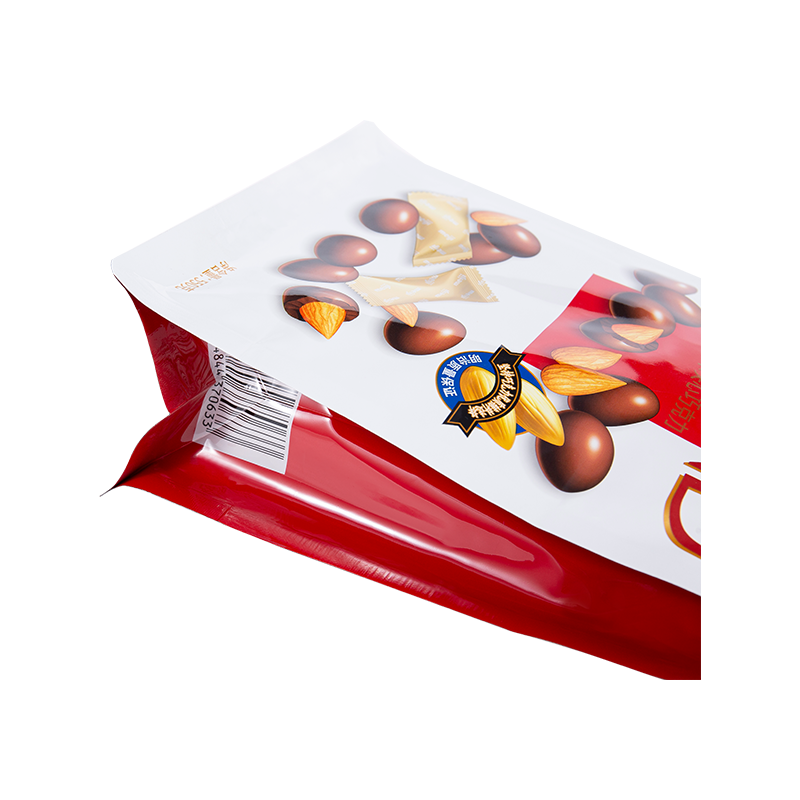 Moisture-Proof Eight-Side Seal Chocolate Packaging BagFor chocolate's tighter oxygen limits, this eight-side seal bag uses light- and oxygen-blocking composite film, self-supporting design and repeatable zipper.View Product →
Chocolate illustrates the point. Its oxygen limit is far tighter than that of boiled sweets, and its fat phase is unforgiving of even a slow leak, so the eight-side seal format with a moisture-proof, oxygen-isolating build often replaces a simpler flat pouch once the shelf life target passes nine months.
Selection Workflow: From Candy Type to Signed Specification
Six steps cover most projects, and skipping any one of them tends to surface as a claim two quarters later.
1. Define the candy, not the bag
Record sugar type, fat content, piece hardness, fill weight, target shelf life and distribution climate. A 6 month domestic product and an 18 month export product rarely deserve the same laminate.
2. Set barrier targets
Aim for WVTR under 1 g/m²·day for 12 months or longer, and OTR under 3 cc/m²·day whenever chocolate, nuts or a fat phase is involved.
3. Match format to the filler
Stand-up pouch for shelf presence, flat bottom for 1–3 kg packs, flow wrap for single-serve, eight-side seal for premium gifting. Format must suit the existing filler before it suits the marketing plan.
4. Validate seals on your line
Request a seal curve and run a 30 minute continuous trial with production product and production speeds. A pilot run at reduced speed hides exactly the defects that matter.
5. Pilot, then hold samples
Produce 500 to 2,000 units and hold them for four weeks at 30 °C alongside an accelerated test. Keep retained samples from every subsequent lot.
6. Scale with a written spec
Freeze the structure, seal window, print reference and inspection criteria in one document. Undocumented approvals are how small variations become large recalls.
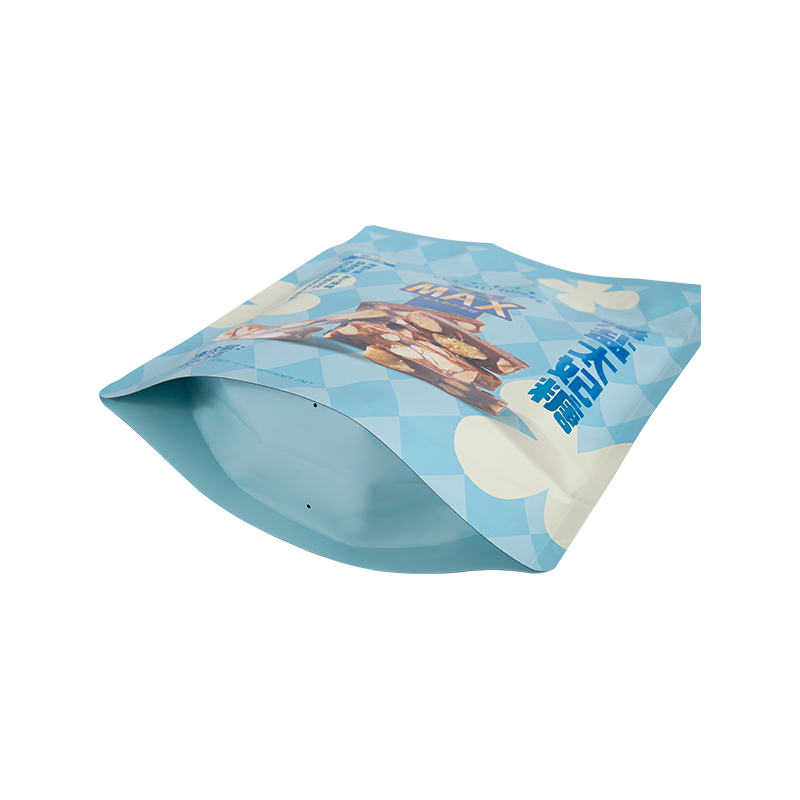 Vibrant Color Digital Printing Low-MOQ Snack BagFor small volumes or frequent artwork changes, this digitally printed snack pouch keeps barrier packaging viable for puffed foods and nuts.View Product →
The economics are simple. Upgrading from PET/PE to a metallised build adds roughly 8 to 14 percent to unit packaging cost. In a 500,000-unit run, moving the seal creep failure rate from 8.4 percent to 1.3 percent avoids about 35,000 rejected bags, which usually covers the film delta several times over once rework, freight and retailer chargebacks are counted. Where volumes are small or artwork changes often, low-minimum-order digital print keeps that same barrier build economically viable.
Compliance and Ongoing Maintenance
Regulatory clearance is a document set, not a certificate on a wall. Expect a Declaration of Compliance covering 21 CFR 177.1520 for polyethylene, 21 CFR 177.1630 for PET, and EU 10/2011 for the European market, with overall migration held below 10 mg/dm² and specific migration limits addressed for every substance in the formulation.
- Incoming material: Verify WVTR and OTR on each laminate lot against the frozen specification, not against the supplier's marketing sheet.
- On-line monitoring: Sample seal strength every 30 minutes and log sealing temperature, pressure and dwell. Trend data catches drift before a customer does.
- Solvent and cure control: Residual solvent and adhesive cure affect both migration and odour. Candy picks up taint easily, so retention limits should be part of the purchase agreement.
- Storage: Hold laminate and finished pouches between 15 °C and 25 °C, under 60 percent relative humidity, away from solvents, and rotate stock first in, first out.
- Re-validation: Repeat seal and barrier testing annually, and whenever resin, adhesive, ink or machine settings change.
Documented procedures are what turn a good sample into a repeatable supply. Details of how incoming inspection, in-process sampling and retained-sample management are organised sit inside our quality control process, which is worth reviewing before you lock a specification rather than after the first complaint.