 EN
EN
 English
 日本語
日本語 Español
 Deutsch
 عربى
عربى
A snack brand ordered 5,000 beautifully printed pouches, and by week nine the chips were soft, the nuts tasted rancid, and the retailer wanted compensation. The recipe was fine. The problem was the packaging structure: nobody checked its oxygen and moisture transmission rates before committing to a low-cost film.
Snack packaging is a performance decision before it is a design decision. The right structure keeps oxygen, moisture, light, and physical damage away from the product for a defined shelf life under real distribution conditions. The wrong one turns shelf appeal into shelf waste and retailer chargebacks. This guide explains the barrier fundamentals, bag formats, material trade-offs, and purchasing checks that determine whether your snack packaging actually works.
Core conclusion: A snack pouch is a barrier system before it is a branding canvas. Match oxygen and moisture transmission rates to the product's shelf-life target, or the package will fail no matter how good it looks on the shelf.
Content
- 1 What Snack Packaging Must Deliver: The Performance Baseline
- 2 Snack Packaging Formats: Matching Bag Style to Product Behavior
- 3 Materials and Barrier Structures: A Practical Comparison
- 4 Hidden Metrics: OTR and WVTR in Real Snack Scenarios
- 5 Snack Category Distribution and What It Means for Buyers
- 6 Selection Roadmap and ROI Considerations
- 7 Maintenance, Compliance, and Supplier Qualification
What Snack Packaging Must Deliver: The Performance Baseline
Snack products fail in predictable ways, and the package is what separates the product from its failure modes. Four functions define a workable snack package:
- Moisture control (WVTR): Chips, crackers, and puffed snacks lose crunch when water vapor migrates inward. The water vapor transmission rate of the film structure decides how long crispness survives.
- Oxygen protection (OTR): Nuts, seeds, and fried snacks go rancid when oxygen triggers lipid oxidation. Oxygen transmission rate is the single most important specification for fat-containing snacks.
- Light and aroma barriers: UV exposure degrades colors and flavors, while aroma losses flatten the eating experience. Aluminum foil and metallized films block both.
- Mechanical durability: A pouch that pinholes in transit or splits at the seal is a total failure regardless of barrier numbers. Seal strength and puncture resistance are non-negotiable.
The practical conclusion: a premium-looking pouch with weak barrier numbers will fail sooner than a plain pouch made with the right laminate. Define the performance first, then spend the design budget.
Snack Packaging Formats: Matching Bag Style to Product Behavior
Bag style is not a cosmetic choice. It affects filling speed, shelf footprint, resealability, and how consumers interact with the product on a daily basis.
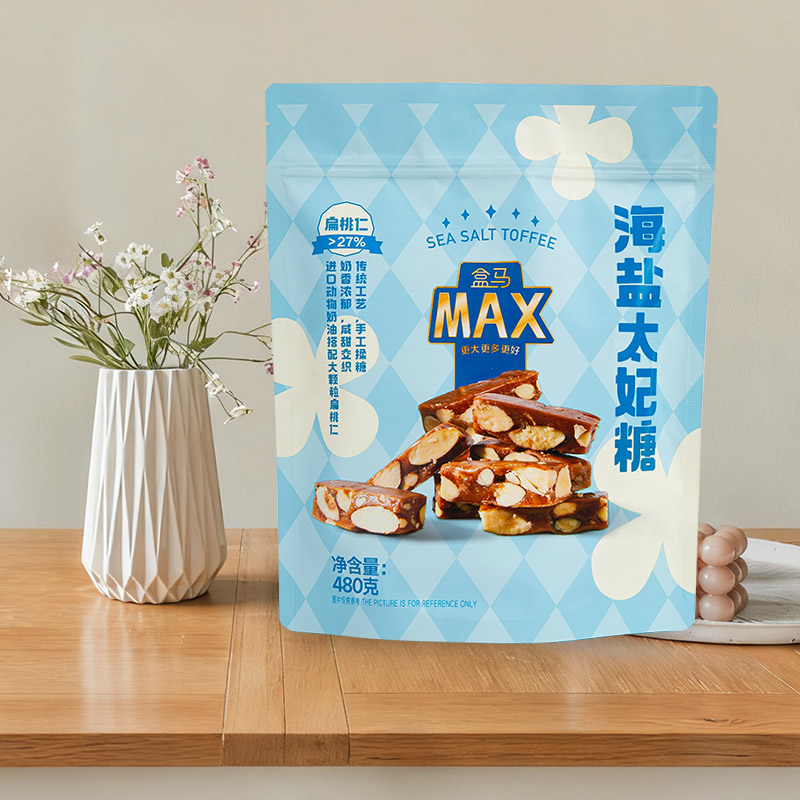
- Stand-up pouches hold retail attention, and resealable options suit nuts, trail mix, and dried fruit. The bottom gusset creates a stable footprint for shelf display.
- Flat-bottom pouches add even more shelf presence and pack efficiency, making them a common choice for premium and family-size snack formats.
- Eight-side seal (octagonal) pouches deliver a squared, rigid feel that fits chocolate, cookies, and gifting products; the larger seal area also improves drop resistance.
- Pillow pouches and VFFS bags are the high-volume workhorses for chips, popcorn, and single-serve portions formed on vertical form-fill-seal machines.
- Stick packs and sachets offer single-serve portions for powders, jerky bites, and candy, with low material cost per unit and precise portion control.
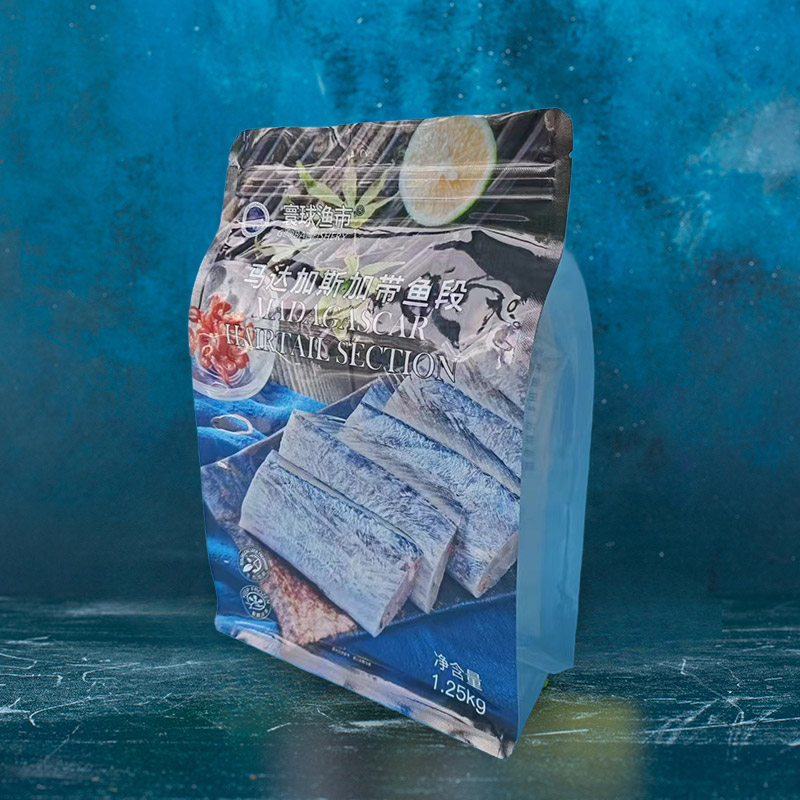
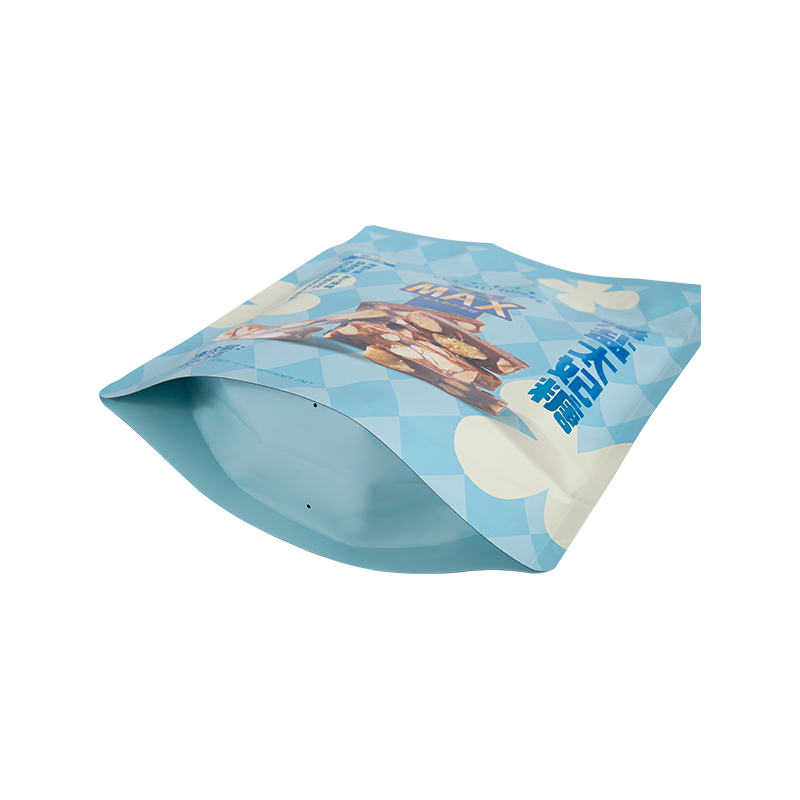 Low-MOQ Digital Printed Snack Pouch with High-Resolution ColorThis digitally printed snack pouch supports small-batch runs and variable designs up to 1200dpi, ideal for testing seasonal flavors or limited editions without committing to large gravure orders.View Product →
For test-market SKUs and seasonal flavors, low-minimum-order digital printing lets you validate a design on real film without committing to a full gravure print run. For established lines, the decision usually comes down to resealability needs, filling-line compatibility, and the retail shelf format you are targeting.
Materials and Barrier Structures: A Practical Comparison
Most snack pouches are not a single film but a laminated or coextruded structure of two to five layers. The table below compares common structures used in snack packaging with typical oxygen and moisture barrier ranges. Actual values depend on layer thickness, coating quality, and lamination process control.
A foil laminate is the safest choice for oily nuts and fried snacks with a nine-to-twelve-month shelf-life target. If the product is less sensitive, a metallized structure can deliver comparable practical protection at a lower cost. Suppliers that produce multilayer coextruded films can tune layer counts and resin selection to hit a specific barrier window without over-engineering the pouch.
Hidden Metrics: OTR and WVTR in Real Snack Scenarios
Two numbers explain most snack shelf-life failures: oxygen transmission rate and water vapor transmission rate. The chart below illustrates typical shelf-life outcomes for fried snacks packaged in different barrier structures under ambient distribution at 25 °C and 60% relative humidity.
The practical implication: if your brand promises six months of freshness, a monolayer film or a simple BOPP/PE laminate cannot deliver the mathematics. What matters just as much is seal integrity. Even a foil structure fails if the seal area contains product dust or the crimp temperature drifts, so finished-pouch testing matters as much as raw film specifications.
Snack Category Distribution and What It Means for Buyers
- Potato chips and crisps — 30%: high moisture sensitivity demands strong WVTR control.
- Chocolate and confectionery — 25%: fat and aroma protection plus temperature tolerance.
- Nuts and dried fruit — 20%: oxidation is the dominant risk, so oxygen barrier is critical.
- Baked snacks — 15%: moderate barrier, high filling speed, and high volume.
- Meat snacks and jerky — 10%: moisture and oxygen both matter, often requiring opaque structures.
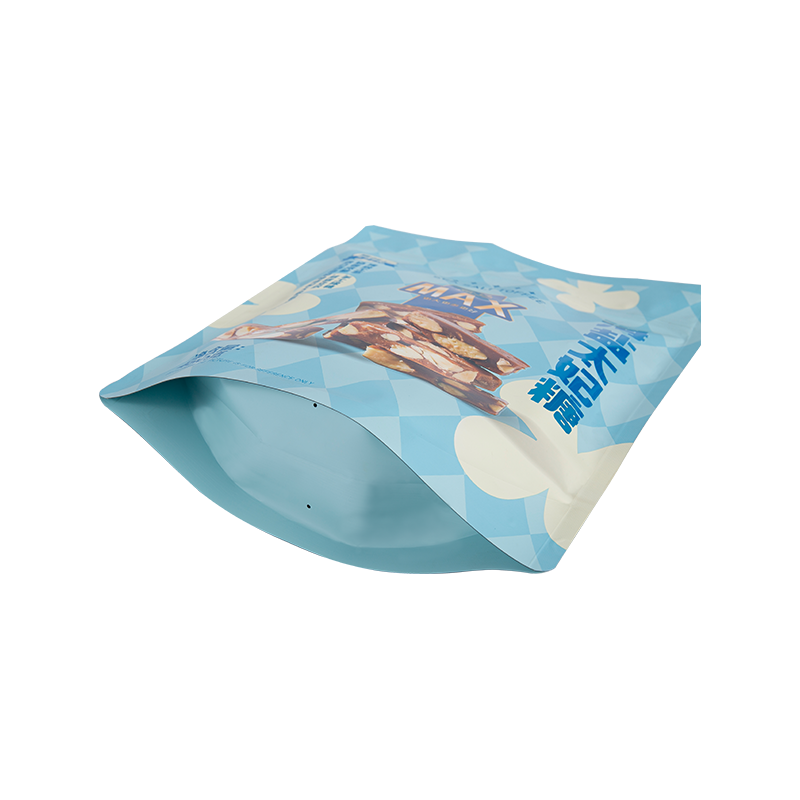 Self-Standing Colorful Candy Pouch with Zipper and Easy TearA stand-up pouch for candies, chocolates, and jellies with a stable base, vivid printed film, and convenient resealable or tear-open top, suited for retail display and home storage.View Product →
What the split means in practice: the largest snack categories each have a dominant failure mode. A one-structure-fits-all approach is either over-engineered for one SKU or under-engineered for another. Categorize your portfolio by fat content, water activity, and required shelf life, then assign a barrier tier to each group.
Selection Roadmap and ROI Considerations
The cheapest pouch per thousand units is not automatically the lowest-cost packaging. The real unit cost includes stale product, returns, and lost repeat purchases. A practical selection sequence looks like this:
Write down the promised best-before date and the actual distribution temperature range. Cold-chain snacks require different films than ambient snacks.
Fat content above 20%, water activity below 0.6, and large exposed surface area all increase barrier demand. Score each SKU, then group them into barrier tiers.
Premade pouches suit low-to-medium speeds and complex formats. VFFS lines run faster on pillow bags but need film with good machineability and sealability.
Add material, printing, waste rate, and expected returns. A slightly more expensive film that cuts stale-return claims by two percent is usually the better deal.
For premium chocolate and cookie lines, an eight-side seal bag adds the rigid shelf presence that supports a higher retail price.
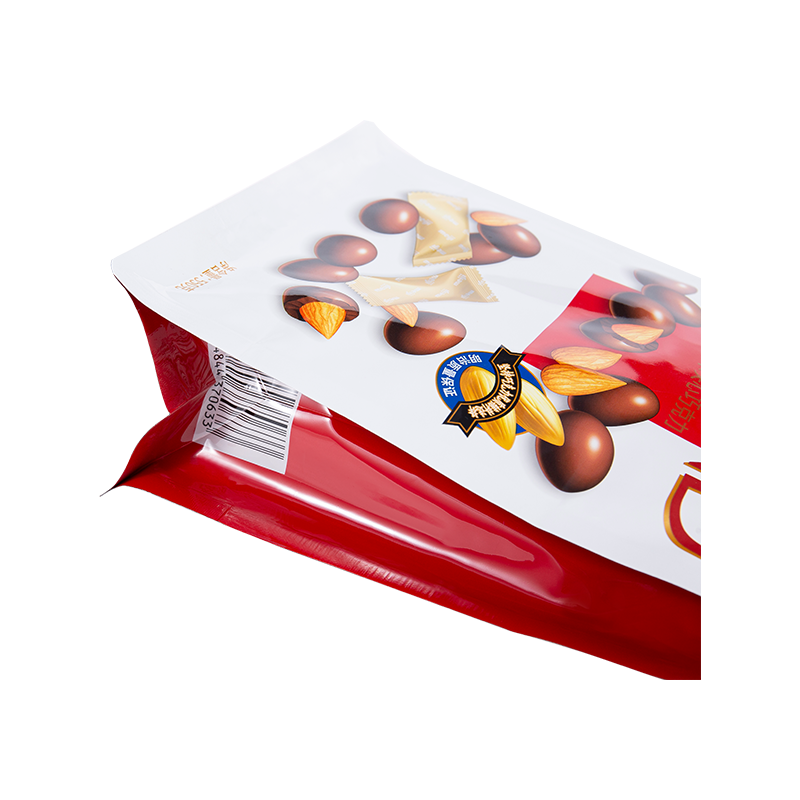 Eight-Side Seal Chocolate Pouch with Moisture and Light BarrierThis octagonal, self-standing pouch uses food-grade PET/AL/PE to block light and oxygen, with a zipper and tray option, giving premium chocolate shelf presence and freshness protection.View Product →
For small-batch launches and seasonal SKUs, digital-printed pouches with low minimum order quantities avoid the cost of holding obsolete printed inventory. This is often the difference between testing a new flavor profitably and writing off a full pallet of unused bags.
Maintenance, Compliance, and Supplier Qualification
Snack packaging sits inside a regulatory and quality framework that buyers often overlook until an incident occurs. Food-contact films must meet applicable migration limits for inks, adhesives, and additives in every market where the snack is sold. Ask your supplier for documented compliance declarations, not verbal assurances.
- Migration testing: Confirm printed and laminated structures meet migration limits for your target markets, including EU and US requirements.
- Seal integrity checks: Demand burst test or seal strength data from each production lot. Seal failures are the most common field defect in snack pouches.
- Lot traceability: Film rolls and finished pouches should be traceable to raw material batches so a recall stays narrow and fast.
- Storage conditions: Unconverted film should be kept at controlled temperature and humidity; poor storage degrades barrier performance before the pouch is even filled.
Before adding a supplier, review their quality control procedures and ask how they handle out-of-spec deliveries. A manufacturer that treats quality as a production stage rather than a final inspection step will save you far more than the difference in pouch price.
Snack packaging decisions come down to matching barrier physics with business reality. Define the shelf life, understand the product's failure mode, choose a structure that hits the numbers, and verify the supplier reproduces that performance consistently. Do that, and the pouch becomes a revenue protector instead of a liability.