 EN
EN
 English
 日本語
日本語 Español
 Deutsch
 عربى
عربى
A dairy exporter shipped eight pallets of whole milk powder to Southeast Asia. Three months later, the powder near the side seams had hardened into lumps that jammed the customer's filling line. The film had passed incoming inspection, but a marginal moisture barrier, flex cracking in transit, and a sealant layer that reopened around powder dust combined to ruin the batch. That failure pattern is common enough that milk powder packaging deserves a stricter review than snack or cereal packaging.
Key conclusion: select a milk powder package by barrier math first, then by format. For a retail pouch with a 12-month shelf life, a practical target is an MVTR below 0.15 g/m²/day and an OTR below 2 cm³/m²/day at 23°C and 75 percent relative humidity, plus seal integrity that survives compression and drop testing. Print, shape, and closures come after those numbers are met.
Content
- 1 Why milk powder sets tougher packaging requirements than most foods
- 2 Retail formats compared: pouches, cans, and bulk sacks
- 3 Film structure: where the barrier is actually built
- 4 Hidden indicators: transmission rates and seal integrity
- 5 Where the formats are used: a practical market snapshot
- 6 A step-by-step selection guide for milk powder pouches
- 7 Maintenance, testing, and compliance for longer shelf life
Why milk powder sets tougher packaging requirements than most foods
Milk powder is not simply dehydrated milk. It is a high-surface-area, fat-bearing, strongly hygroscopic material that reacts to every molecule of water and oxygen it encounters. Four characteristics drive material selection.
Retail formats compared: pouches, cans, and bulk sacks
Retail milk powder is sold in three primary package families — flexible pouches, metal cans, and glass jars — plus bulk sacks for food service and industrial buyers. Each family buys a different combination of barrier, rigidity, and unit cost.
For a brand entering a new market, pouches offer the shortest route between concept and shelf. A stand-up pouch with a foil or EVOH barrier, a flat base for stable stacking, and a reclose zipper covers most retail formats from 200 g to 2 kg without the capital cost of can-seaming equipment.
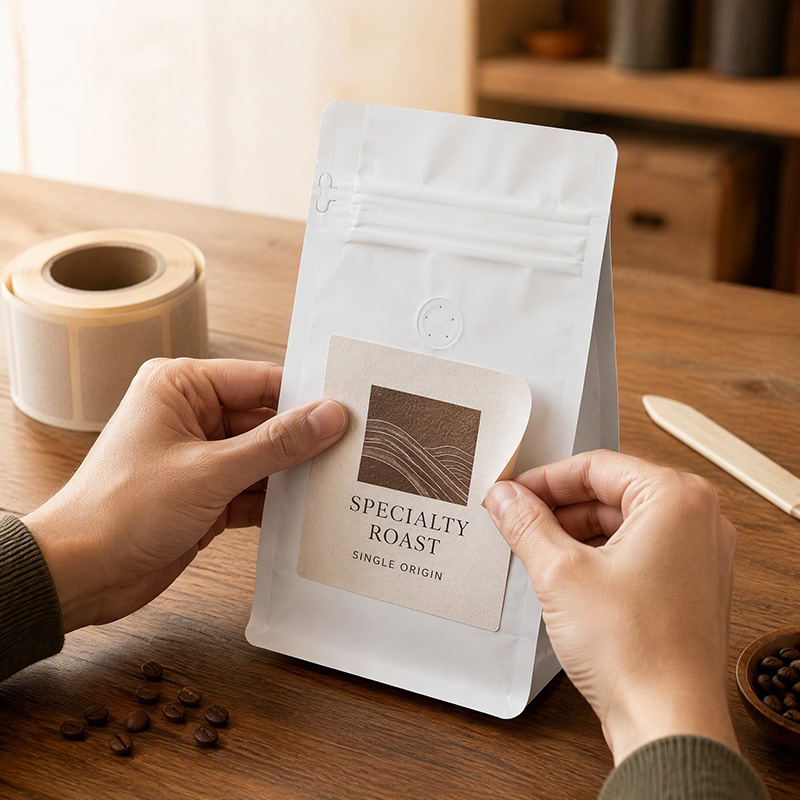
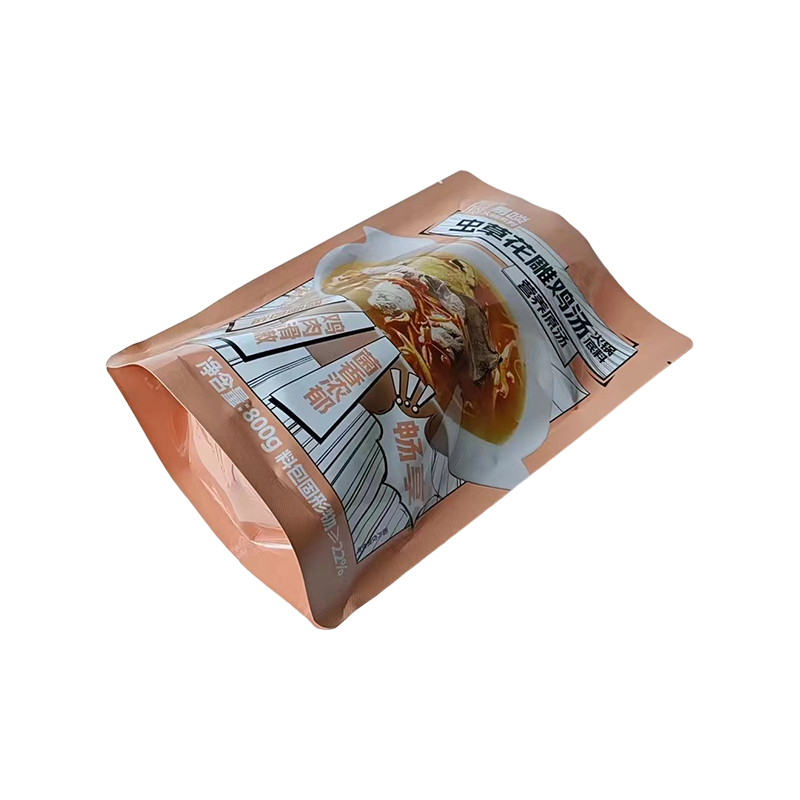 Moisture-Proof Universal Stand-Up Pouch with Reclose ZipperThis flexible pouch offers a lightweight, self-supporting design with barrier options like foil or EVOH, making it a cost-effective entry format for new markets seeking shelf-ready packaging.View Product →
Flexible formats also reduce freight and warehousing costs. A stand-up pouch weighs roughly 6 to 15 grams against 80 to 120 grams for a comparable can; over full containers, that difference converts directly into lower logistics cost and lower carbon per unit.
Film structure: where the barrier is actually built
Regardless of bag shape, a high-barrier flexible milk powder pouch is almost always a lamination of three functional groups:
- Outer substrate: biaxially oriented PET (or OPP) carries the print, provides stiffness and scuff resistance, and gives a smooth surface for inkjet coding.
- Barrier layer: aluminium foil (about 7 to 12 µm), EVOH, or a metallized film. Aluminium foil is the reference for very long shelf life; EVOH enables foil-free, more easily recyclable structures.
- Sealant layer: PE or CPP from about 60 to 120 µm, responsible for seal strength and for tolerating powder dust that lands in the seal area during filling.
The same foil-laminated structure used in this aluminium foil pouch is a practical benchmark. Flat foil offers near-zero transmission of moisture and oxygen, but the finished bag is only as good as its folds, seals, and flex resistance. A thin 7 µm foil with poor flex-crack resistance can lose most of its barrier advantage during container shipping.
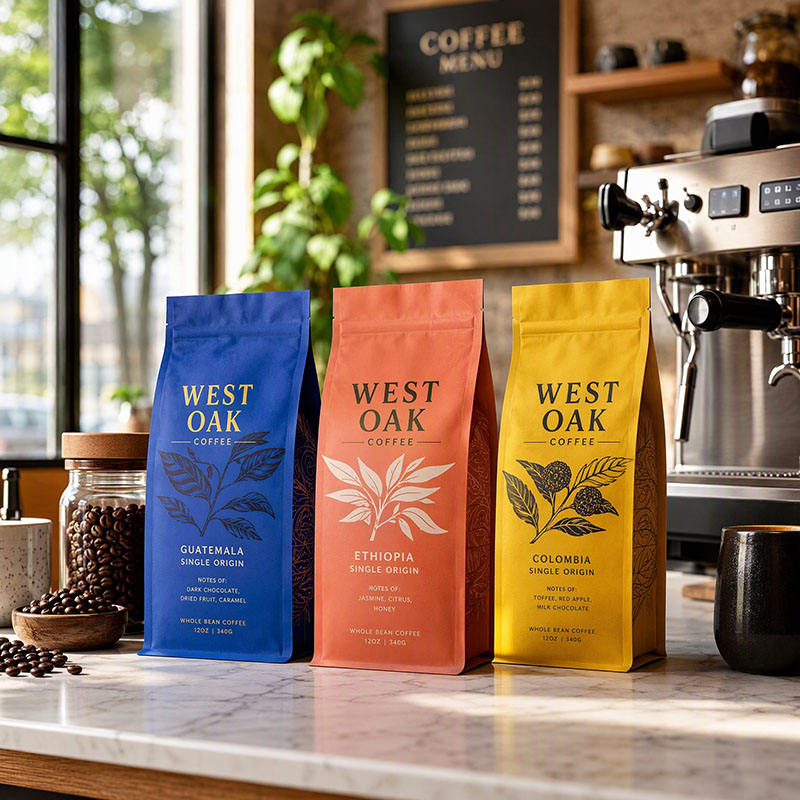
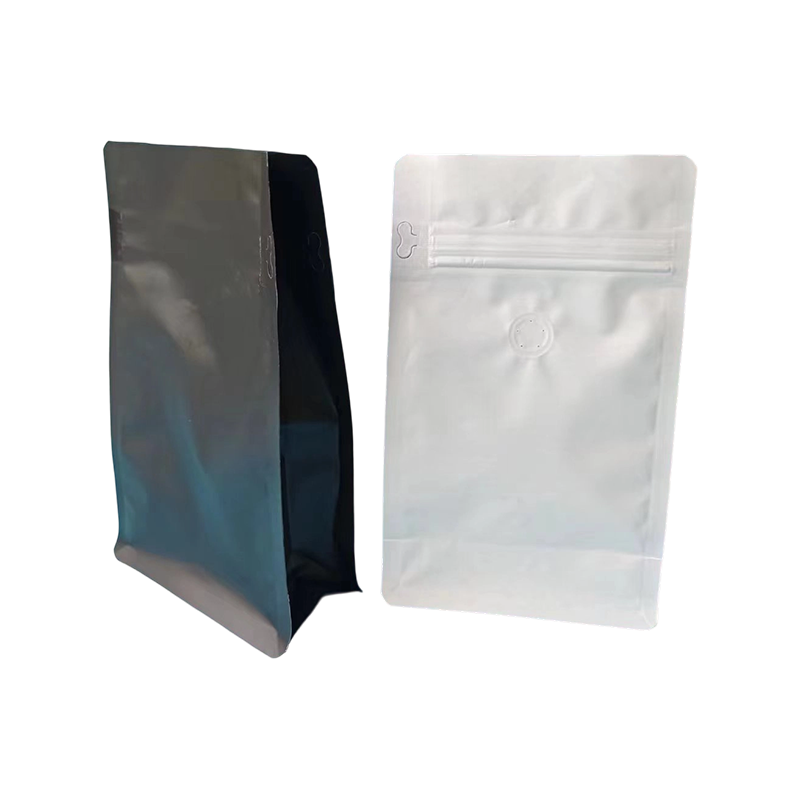 Plain Aluminum Foil Coffee Bean Bag with One-Way ValveAvailable in 250g, 500g, and 1kg matte finishes, this flat-bottom pouch uses aluminum-plated barrier and a Japanese one-way valve to preserve roasted coffee freshness and release CO2.View Product →
A common misconception is that a thicker film means a better barrier. A 110 µm monolayer PE bag will protect milk powder far worse than a 70 µm PET/foil/PE lamination. Barrier comes from structure and lamination quality, not from total gauge. Ask for OTR and MVTR measured on the converted bag, not only on the raw film.
Hidden indicators: transmission rates and seal integrity
Data sheets usually quote flat-film transmission rates. The number that matters is the converted-package rate, measured after printing, lamination, bag making, and sealing. The chart below shows typical ranges for common flexible structures at comparable thicknesses.
Seal integrity is the second hidden layer of quality. Milk powder generates fine dust that migrates into the seal zone and creates micro-channels that slowly admit water vapour. A fin seal is somewhat more vulnerable than a lap seal on this point. Using a lower sealing temperature with a longer dwell time, or selecting a sealant with good dirty-seal tolerance, reduces the risk. If the pack is nitrogen-flushed, hold residual headspace oxygen between 1 and 3 percent; that step postpones oxidation without adding film cost.
Where the formats are used: a practical market snapshot
A practical snapshot of retail dairy powder formats puts the selection in perspective. The proportions below are indicative estimates by unit volume in commercial dairy powder markets:
The shift toward pouches is visible mainly because it is economic. Lighter packaging, lower material cost per unit, and the freedom to print across the full surface have moved many private-label and mid-size dairy brands from cans to stand-up or flat-bottom pouches. Cans remain strong for premium infant formula and for markets where rigid protection is a consumer expectation.
A step-by-step selection guide for milk powder pouches
For teams evaluating a pouch programme, five steps reduce the risk of a costly mistake.
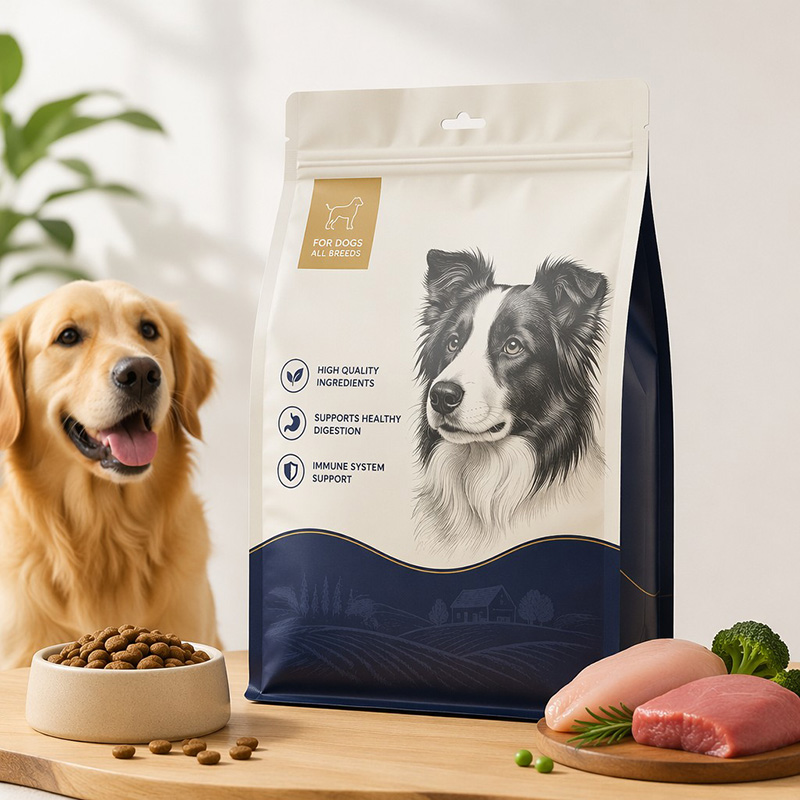
For large family-size volumes, the flat-bottom format with a wide base and high top-load strength has become common in pet food and dairy powder applications, because it runs efficiently through auger filling while offering strong shelf presence.
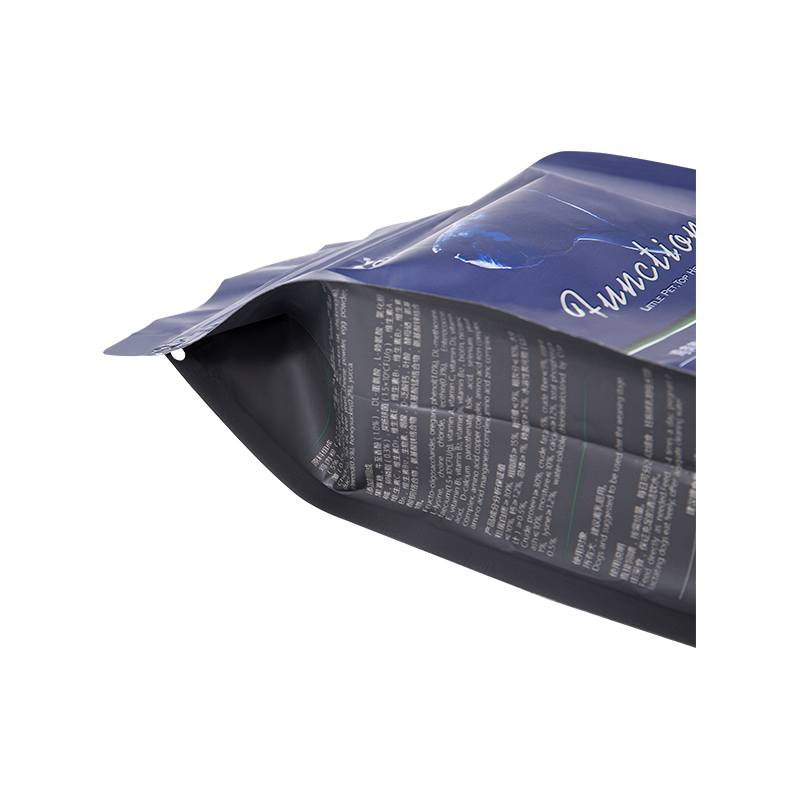 5-20kg Flat Bottom Pouch for Dog Food with High StackabilityDesigned for large family-size volumes, this eight-side sealed bag offers strong compression resistance, stable stacking, and high-strength composite materials for long-term pet food preservation.View Product →
On the economics side, flexible formats usually win on low weight and low material cost. Compared with a 400 g metal can, a comparable foil-lined pouch can reduce packaging material cost per unit by an estimated 20 to 35 percent before closures, which funds the printing and closure features that protect the brand in retail.
Maintenance, testing, and compliance for longer shelf life
Long shelf life is won at the seam between the dairy plant and the packaging supplier. Three areas deserve formal attention:
- Verify incoming material. Check seal strength, coefficient of friction, print adhesion, residual solvents, and bag-level transmission rates on every new batch. A supplier with documented in-house inspection routines, such as the checks behind our quality control programme, shortens this loop and reduces the chance of a surprise in production.
- Control the sealing process. Record seal temperature, jaw pressure, dwell time, and cooling for each lot, and run burst and leak tests on samples every shift. A cold seal that passes a visual check can fail at altitude or in warm warehouses.
- Keep compliance paperwork current. Food-contact flexible packaging must satisfy applicable national regulations on migration of monomers and additives, such as the EU Plastics Regulation framework or FDA 21 CFR concepts. Durability and safety testing methods for food packaging bags are summarized in this industry note.
Milk powder packaging is unforgiving because dairy fat and lactose retain a precise memory of the environment. When the barrier, the seals, and the compliance documentation are aligned, a pouch is not merely cheaper than a can — it is a complete shelf-life tool for the brand.