 EN
 English
 日本語
 Español
 Deutsch
 عربى

A 5 kg bag of dry dog food can pass a visual seal check at the filling line and still fail after two weeks in a warm warehouse. The weak point is rarely the bag alone; it is the mismatch between dry food packaging solutions, fill weight, barrier target, zipper tolerance, and the packing line.
Start with the product's moisture sensitivity, expected shelf life, and distribution route. Then choose the pouch format and film structure. A low-cost bag that loses crispness, clumps powder, or splits at the zipper is not a saving; it becomes a repeated quality claim.
A useful application-led packaging brief should state the fill weight, machine type, shelf-life target, and the failure mode that matters most: moisture pickup, oxygen rancidity, puncture, or closure failure. That brief keeps a quote comparison focused on total performance rather than price per thousand bags.
Content
How dry food packaging solutions control shelf life
Dry food is not automatically stable. Crackers soften, nuts go rancid, coffee loses aroma, and powdered mixes clump when moisture or oxygen crosses the film. The package has to match the food's sensitivity, not just the bag style shown in a catalog.
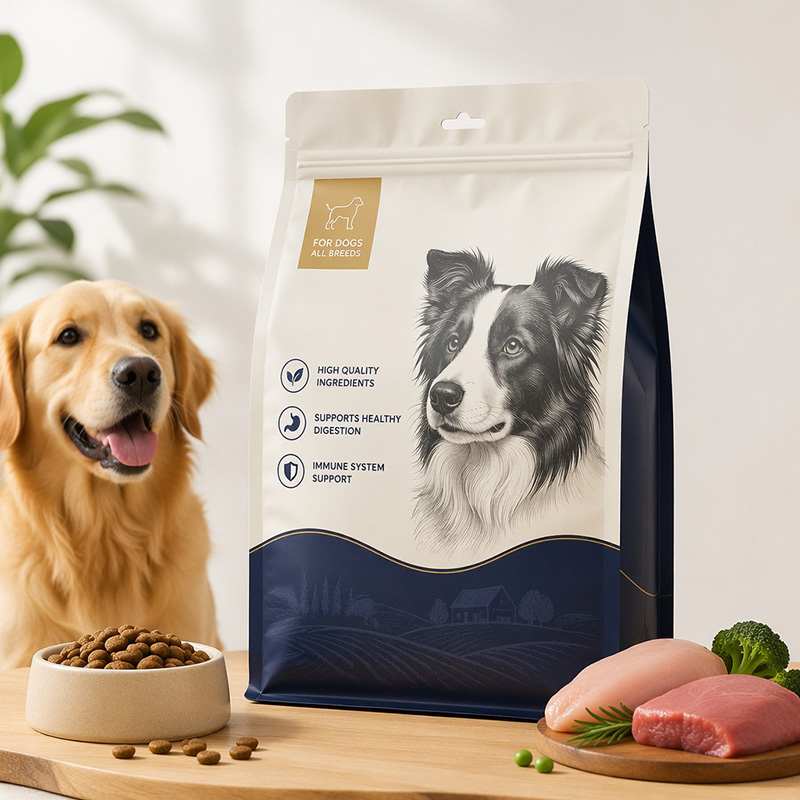
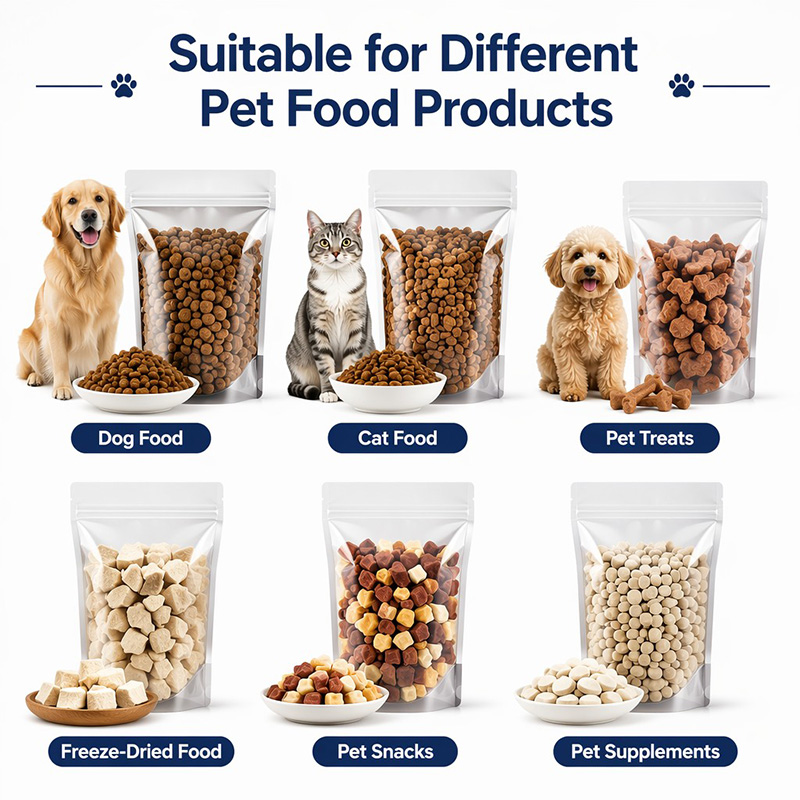 Composite Film Bags for Dry Pet FoodFood-grade composite film bags with barrier options, resealable zippers and upright formats help protect dry pet food from moisture and oxygen.View Product →
For dry pet food, composite-film bags can combine moisture barrier, puncture resistance, and a resealable zipper in one format. The same logic applies to snacks and dry mixes, but the film recipe and seal layer must change with fill weight and line speed.
Moisture barrier
WVTR is the first check for dry pet food, crackers, and powdered mixes. A high moisture rate leads to softening, clumping, and texture loss before visible spoilage appears.
Oxygen barrier
OTR matters for fats, nuts, coffee, and milk powder. Oxidation shows up as rancidity and aroma loss, often before a bag looks damaged.
Seal and zipper
Seal width, contamination tolerance, zipper alignment, and closure cycles decide whether the pack survives filling and repeated opening at home.
Mechanical protection
Puncture, drop, stiffness, and coefficient of friction affect packing speed, pallet stability, and leakage risk in dry food packaging solutions.
Format comparison for dry food packaging
The pouch format changes shelf presence, fill speed, film usage, and abuse resistance. A format that suits 250 g of coffee may be poor for 10 kg of kibble, even when the film barrier is similar.
Buyers often compare price per bag and film thickness. Those numbers miss the cost of line stops, rejected seals, and customer claims. The chart below shows relative risk pressure in dry-food packing projects; it is a planning view, not a universal specification.
Relative risk pressure in dry-food packs (illustrative).
A bag that runs 5% faster on the filler can still lose money if the zipper jams, the film curls, or the seal picks up powder. Ask for line-trial data on the actual fill weight and machine, not only a laboratory barrier report.
Where dry food packaging solutions are used
Dry food covers several very different product risks. Pet kibble needs puncture and moisture resistance; dried fruit needs aroma and moisture control; coffee needs oxygen and aroma protection; powdered mixes need seal integrity and clump prevention.
Illustrative application mix:
- Dry pet food: 35%
- Snacks and dried fruit: 25%
- Coffee and tea: 20%
- Powdered mixes and grains: 20%
For small-batch snack launches, digital printed pouches can reduce plate and plate-change cost while keeping shelf impact. The barrier still has to match the product, so low minimum order quantity should never mean low test standards.
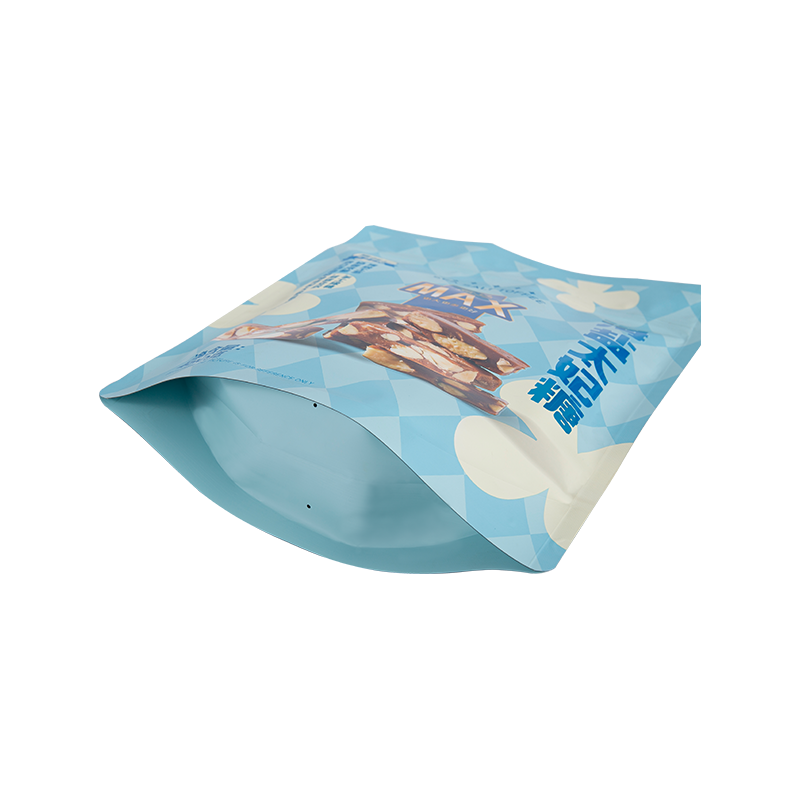 Digital Printed Low-MOQ Snack PouchesDigitally printed composite-film snack bags support small-batch launches with high-resolution graphics and barrier performance for puffed foods and nuts.View Product →
How to compare quotes and ROI
The lowest quote is often not the lowest landed cost. Build a total-cost model that includes film, printing, tooling, scrap, changeover time, freight, and expected claims. Then compare suppliers on the same brief.
1. Define the product risk
State fill weight, shelf life, distribution climate, and the main failure mode before asking for a structure.
2. Set test limits
Agree on WVTR, OTR, seal strength, drop, puncture, and closure-cycle tests with clear pass limits.
3. Run a line trial
Test the actual film on the actual filler. Check forming, sealing, zipper insertion, and pack compression.
4. Compare total cost
Add scrap, line speed, storage, freight, and claim exposure to the quoted bag price before selecting a supplier.
Supplier checks after the sample is approved
Approval of a sample is only the start. Production lots can drift in film thickness, print registration, seal layer, and zipper fit. A documented quality-control process should cover incoming film, in-process seals, and finished-pack testing.
- Food-contact declarations and migration test reports for film, ink, adhesive, and zipper components.
- Seal strength, burst, drop, puncture, WVTR, and OTR data tied to the production lot.
- Closure cycling and tear-notch consistency for resealable dry food packs.
- Traceability, certificates of analysis, and written change control for film structure or adhesive.
- Storage conditions for rolls and finished bags: temperature, humidity, roll orientation, and shelf life.
Keep retained samples from every lot and review complaints against the original test limits. That habit turns dry food packaging solutions from a one-time purchase into a controlled part of the supply chain.