 EN
EN
 English
 日本語
日本語 Español
 Deutsch
 عربى
عربى
Content
- 1 The Chemical Volatility of Roasted Coffee and Packaging Requirements
- 2 The Critical Role of Airtight Sealing in Preserving Aroma
- 3 Moisture Resistance: Preventing Staling and Microbial Growth
- 4 UV Protection: Shielding Lipids from Photodegradation
- 5 Material Selection and Structural Design for Coffee Packaging
- 6 Practical Quality Control Measures for Roasters
- 7 Conclusion: The Intersection of Engineering and Culinary Art
The Chemical Volatility of Roasted Coffee and Packaging Requirements
Roasted coffee beans are a highly volatile and chemically complex matrix containing over a thousand distinct aromatic compounds. Once the roasting process is complete, the clock starts ticking on the bean's peak freshness. The cellular structure of the bean becomes porous and highly hygroscopic, meaning it actively seeks to absorb moisture from its surrounding environment. Simultaneously, the delicate lipids and organic acids within the bean are highly susceptible to environmental degradation. To preserve the intricate flavor profiles, acidity, and aromatic complexity that consumers demand, modern coffee packaging must act as an impenetrable fortress against external elements. The three most critical adversaries to coffee freshness are oxygen, ambient humidity, and light. Therefore, effective coffee packaging is not merely a branding exercise; it is a critical piece of food science engineering designed to halt the degradation process and extend the shelf life of a highly perishable agricultural product.
The Critical Role of Airtight Sealing in Preserving Aroma
Oxygen is the primary catalyst for the staling of coffee. When roasted beans are exposed to O2, a rapid oxidation process begins, breaking down the volatile aromatic compounds and turning the fresh, vibrant flavors into flat, cardboard-like notes. This oxidative rancidity is irreversible and can occur within hours if the beans are left unprotected. Consequently, airtight sealing is the absolute foundation of premium coffee packaging. The integrity of the seal determines whether the internal modified atmosphere or vacuum is maintained throughout the supply chain. Heat sealing technology must be precisely calibrated; if the temperature is too low, the seal will be weak and prone to micro-leaks, while excessive heat can burn through the polymer layers, creating immediate pathways for oxygen ingress.
One-Way Degassing Valves and Oxygen Barrier Mechanics
Achieving a truly airtight environment for freshly roasted coffee presents a unique engineering paradox. Freshly roasted beans continuously emit carbon dioxide (CO2) for days or even weeks after the roasting process. If packaged in a completely rigid, airtight container without a release mechanism, the buildup of CO2 would cause the package to swell and eventually burst. To solve this, the industry relies on one-way degassing valves. These microscopic mechanical marvels allow the internal CO2 to escape without permitting any external oxygen to enter. When combined with high-barrier metallized films or aluminum foil laminates, the airtight sealing of the package ensures that the beans can safely off-gas while remaining completely isolated from the oxidative forces of the outside atmosphere.
Moisture Resistance: Preventing Staling and Microbial Growth
The second critical pillar of protective coffee packaging is moisture resistance. As mentioned, the cellular structure of roasted coffee is highly porous. When the beans absorb ambient humidity, the water molecules act as a solvent, extracting and neutralizing the soluble flavor compounds. This results in a severe dulling of the coffee's taste profile. Furthermore, if the moisture content within the package rises above a critical threshold, it creates an ideal breeding ground for mold and bacterial growth, rendering the product entirely unsafe for consumption. High-quality coffee packaging materials must boast an exceptionally low Water Vapor Transmission Rate (WVTR). Materials like pure aluminum foil or advanced metallized polyethylene terephthalate (MPET) provide near-total moisture barriers, ensuring that the internal water activity of the coffee remains stable regardless of the external climate conditions.
UV Protection: Shielding Lipids from Photodegradation
The third major threat to coffee freshness is light, specifically ultraviolet (UV) radiation. Coffee beans contain a significant amount of natural lipids and oils, particularly in darker roasts where the oils are brought to the surface. When these lipids are exposed to UV light and even intense visible light, a process called photodegradation occurs. The light energy breaks the chemical bonds in the fatty acids, leading to rapid photo-oxidation. This results in a distinct, unpleasant rancid flavor and a stale aroma that completely masks the origin characteristics of the bean. To prevent this, UV protection is mandatory in premium coffee packaging. Transparent or semi-transparent bags, while visually appealing to consumers on the shelf, offer virtually no protection against light strike. Therefore, opaque materials, heavy metallization, or specialized UV-blocking polymer additives are required to ensure the beans remain in total darkness until the moment of brewing.
Material Selection and Structural Design for Coffee Packaging
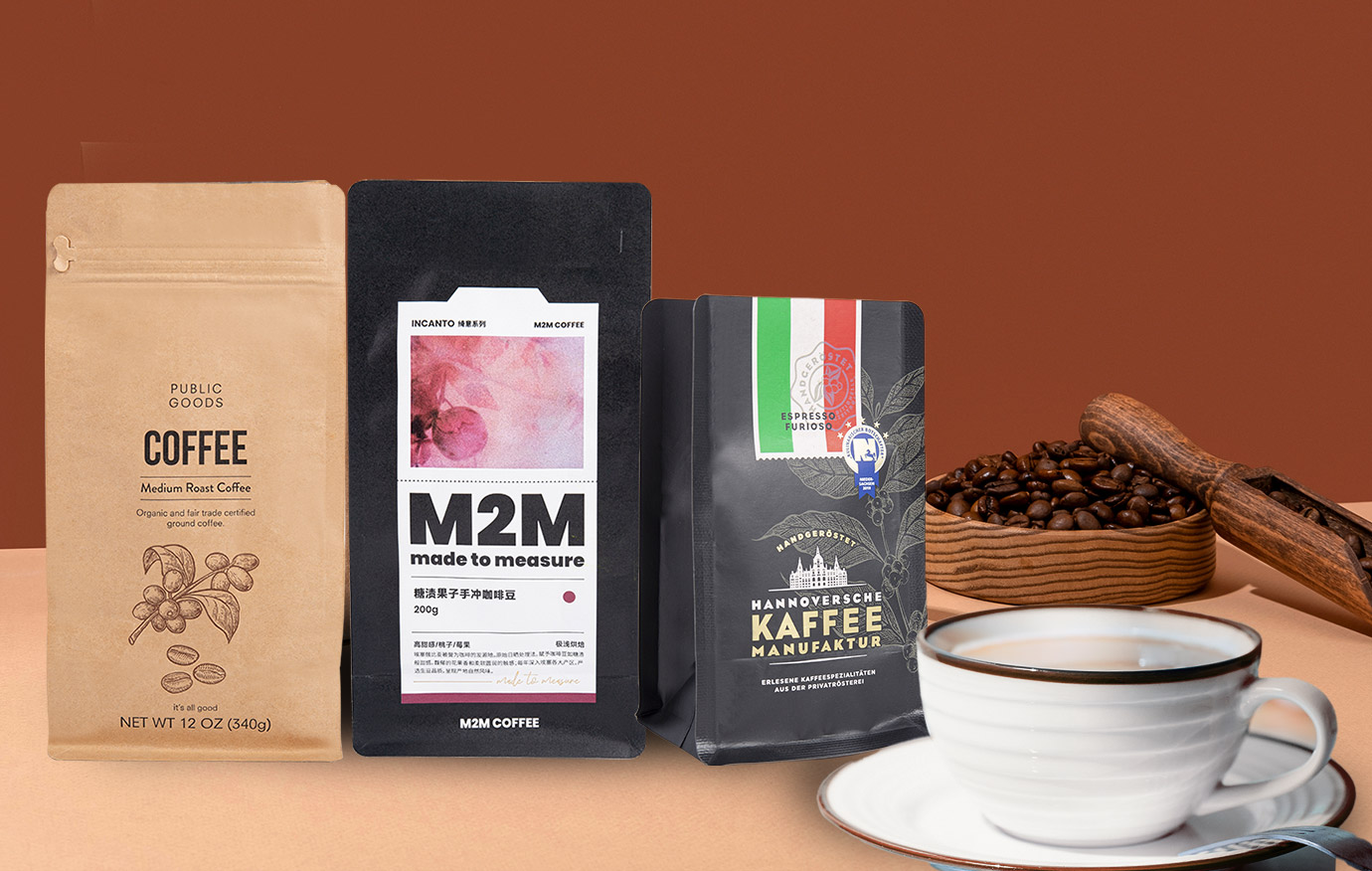
Selecting the optimal material structure for coffee packaging requires balancing barrier properties, mechanical durability, and cost-effectiveness. Modern flexible packaging utilizes multi-layer laminates to achieve the necessary trifecta of moisture resistance, UV protection, and airtight sealing. The outer layer typically provides printability and mechanical strength, the middle layer acts as the primary barrier, and the inner layer ensures food safety and heat-seal integrity. The following table compares the performance of common packaging materials against these critical preservation metrics.
| Material Structure | Moisture Resistance | UV Protection | Airtight Sealing Capability | Best Application |
| Kraft Paper + PE Liner | Low to Moderate | High (Opaque) | Moderate (Requires inner foil) | Short-term retail, artisanal aesthetics |
| PET + METPET + PE | High | Very High (Metalized) | Excellent | Premium specialty coffee, long shelf life |
| PET + ALU Foil + PE | Absolute Barrier | Absolute Barrier | Absolute Barrier | Ultra-premium, export, long-term storage |
| Clear BOPP + PE | Moderate | None (Transparent) | Good | Not recommended for roasted coffee beans |
Practical Quality Control Measures for Roasters
To guarantee that the coffee packaging performs as intended, roasters and packaging engineers must implement rigorous quality control protocols. Relying solely on the supplier's specifications is insufficient; the integrity of the moisture resistance, UV protection, and airtight sealing must be verified on the production floor. Micro-leaks in the heat seal are the most common point of failure, often caused by coffee dust or oils getting trapped in the sealing area during the filling process. Implementing the following practical measures will ensure that every bag leaving the facility meets the highest standards of preservation.
- Conduct routine destructive peel tests on sealed bags to measure the seal strength in Newtons, ensuring the heat seal exceeds the minimum threshold required to prevent micro-leaking during transit.
- Utilize dye penetration testing or bubble emission tests to visually identify any microscopic channels or weak points in the airtight sealing zones, particularly around the degassing valve.
- Verify the opacity and UV-blocking capabilities of the film using a spectrophotometer, ensuring that zero light transmission occurs across the critical UV spectrum that causes lipid rancidity.
- Implement automated vision inspection systems on the packaging line to detect and reject any bags where coffee grounds have contaminated the seal area before the heat bar is applied.
- Perform accelerated shelf-life testing by storing packaged coffee in high-temperature and high-humidity chambers to simulate months of distribution and validate the long-term efficacy of the moisture resistance.
Conclusion: The Intersection of Engineering and Culinary Art
The journey of a coffee bean from the roaster to the consumer's cup is fraught with environmental hazards that can instantly destroy months of careful agricultural and roasting work. By prioritizing advanced moisture resistance, absolute UV protection, and flawless airtight sealing, coffee brands can ensure that their product arrives in the exact condition it left the roasting drum. Investing in high-barrier flexible packaging structures and rigorous quality control is not just an operational expense; it is a fundamental commitment to culinary excellence. As consumer palates become increasingly sophisticated, the technical performance of coffee packaging will remain the silent guardian of flavor, distinguishing premium brands from the rest of the market.