 EN
EN
 English
 日本語
日本語 Español
 Deutsch
 عربى
عربى
A bag that looks premium on the shelf but allows oxygen to seep through in the warehouse is not doing its job. For pet food brands, the packaging decision goes beyond aesthetics — the material structure you choose directly determines how long the food inside stays fresh, aromatic, and nutritionally intact. High barrier pet food packaging is the technical response to this challenge: laminate structures engineered to block oxygen, moisture, light, and aroma loss across the full shelf life of the product. This article explains what barrier performance actually means in measurable terms, how the two most common laminate structures compare, and what packaging format works best for different pet food weights and retail requirements.
Content
- 1 What "High Barrier" Actually Means in Pet Food Packaging
- 2 PET/VMPET/PE vs. PET/AL/PE: Choosing the Right Laminate Structure
- 3 Why Eight-Side Seal Bags Are the Preferred Format for 1–3 kg Pet Food
- 4 Zipper Closures: Resealability as a Freshness Extension Tool
- 5 Barrier Performance and Shelf Presence: Two Requirements, One Package
- 6 Sourcing Considerations: What to Specify When Ordering
What "High Barrier" Actually Means in Pet Food Packaging
Barrier performance in flexible packaging is measured by two standardized metrics: Oxygen Transmission Rate (OTR) and Moisture Vapor Transmission Rate (MVTR). OTR measures how much oxygen passes through the packaging material over a 24-hour period — the lower the value, the better the barrier. Materials with an OTR below 1.5 cc per square meter per day are classified as high oxygen barriers by industry standards, and packaging meeting this threshold has been shown to extend pet food freshness by up to 18% longer during storage and shipping compared to lower-barrier alternatives.
MVTR measures water vapor transmission. Dry pet food — kibble, treats, freeze-dried products — is particularly vulnerable to moisture ingress: absorbed humidity leads to softening, clumping, microbial growth, and accelerated rancidity in fat-containing products. High barrier packaging keeps MVTR low enough to maintain texture and palatability throughout the product's rated shelf life, whether that is 12 months or 24 months.
Light transmission is a third factor that is often overlooked. Vitamins A and E — both common in premium pet food formulations — degrade significantly under UV exposure. Opaque or metallized barrier layers block light as well as gas and moisture, protecting the nutritional profile of the product from the filling line to the feeding bowl.
PET/VMPET/PE vs. PET/AL/PE: Choosing the Right Laminate Structure
Most high barrier flexible packaging for pet food is built on one of two laminate architectures. Understanding the difference between them is the foundation of any packaging specification decision.
PET/VMPET/PE is a three-layer structure: an outer PET (polyethylene terephthalate) layer provides structural rigidity, puncture resistance, and a high-quality print surface; a middle VMPET (vacuum metallized PET) layer provides the barrier function through a thin vacuum-deposited aluminum coating; and an inner PE (polyethylene) layer provides the heat-seal interface and food-contact surface. VMPET reduces OTR to as low as 0.01–0.11 cc/100 in²/24 hr and MVTR to below 1 g/m²/24 hr — barrier performance that is more than sufficient for most dry pet food applications including kibble, biscuits, and dried treats. It is also lighter than foil-based laminates, which reduces freight costs, and has better flex-crack resistance, which matters for bags that are handled repeatedly during opening and resealing.
PET/AL/PE replaces the metallized film with a true aluminum foil layer. Aluminum foil at standard packaging thickness provides essentially zero OTR and near-zero MVTR — the highest barrier achievable in flexible film packaging. This structure is the specification of choice for products with extreme sensitivity: freeze-dried pet food, raw-diet products, products formulated without preservatives, or pet food destined for markets with long distribution chains where the packaging may spend months in transit or ambient storage before reaching the end consumer. The trade-off is weight and cost — aluminum foil laminates are heavier and more expensive than metallized film structures, and foil can develop pinholes at crease points if the bag is repeatedly flexed.
For most retail pet food products in the 1–3 kg range — a segment that covers the large majority of dry dog food and cat food SKUs — PET/VMPET/PE provides high barrier performance at a cost and weight profile that suits standard retail distribution. PET/AL/PE is the right choice when the product formulation, shelf life target, or distribution conditions demand maximum protection without compromise.
Why Eight-Side Seal Bags Are the Preferred Format for 1–3 kg Pet Food
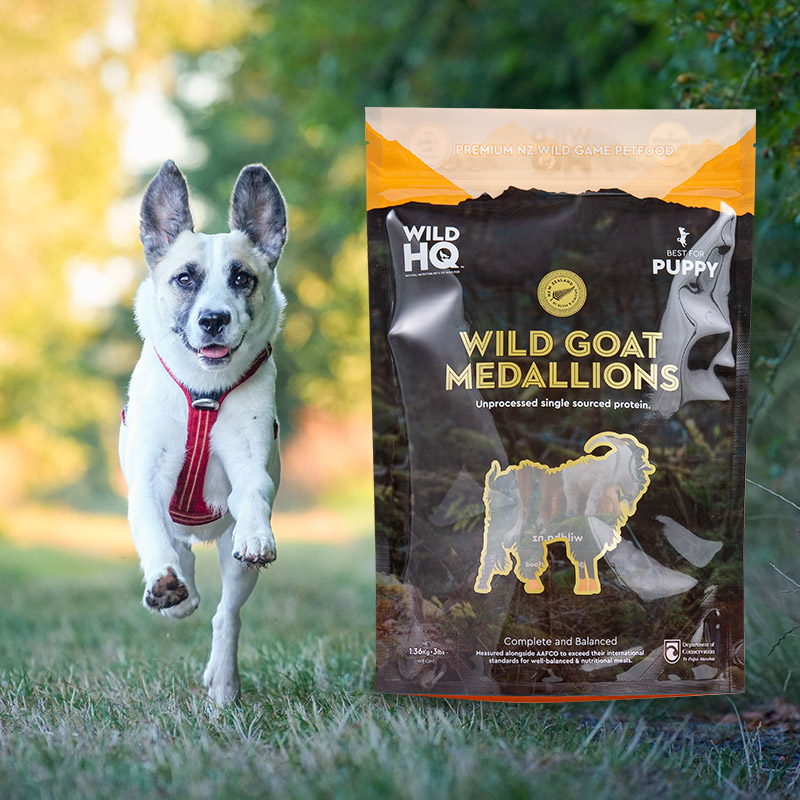
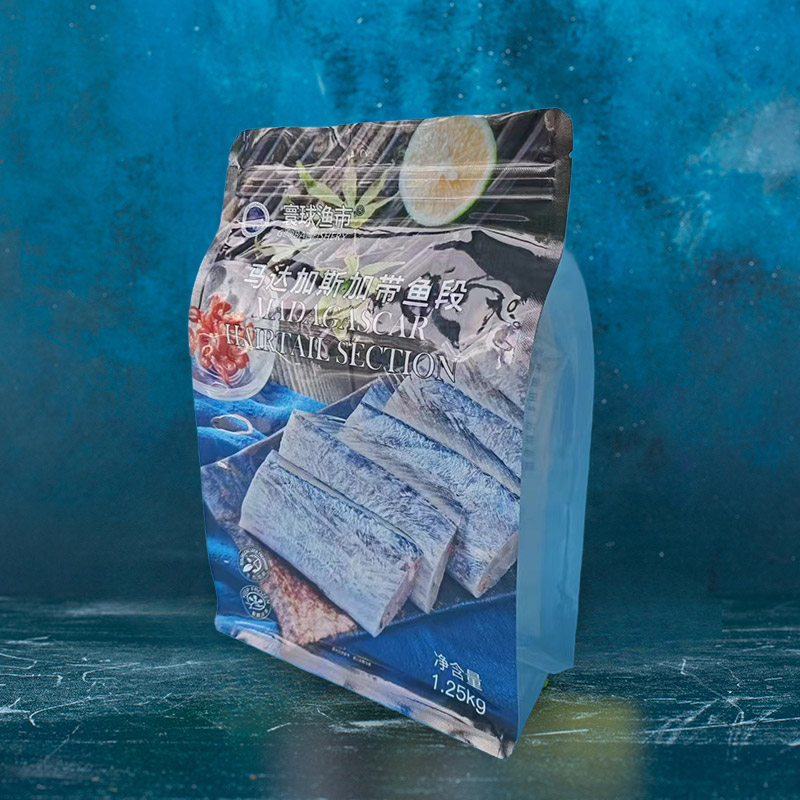
Material structure determines how well the packaging protects — but bag format determines how it performs on the shelf, in the home, and across the logistics chain. For pet food in the 1–3 kg weight range, the eight-side seal bag (also called a flat-bottom bag or block-bottom bag) has become the dominant retail format among premium and mid-premium brands globally.
The structural advantage is immediately visible: eight heat-sealed panels create a stable, box-like base that allows the bag to stand independently without shelf support, without a display stand, and without leaning against adjacent products. This self-standing stability means consistent shelf presence across different retail environments — from narrow convenience store shelves to open hypermarket gondolas. The wide, flat base also distributes the weight of dense pet food contents evenly, reducing the stress on the bottom seals that can cause failures in stand-up pouches under heavy loads.
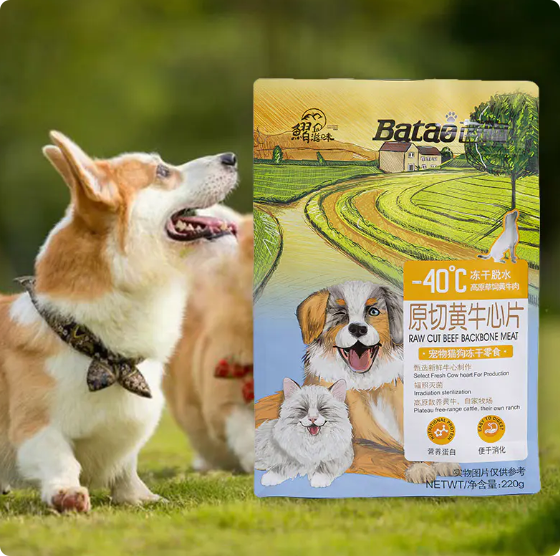
For brands and retailers, the eight-side format offers a practical advantage that stand-up pouches cannot match: all four vertical faces of the bag are flat printable surfaces. Product information, feeding guides, ingredient lists, certifications, and brand imagery can be distributed across the full bag surface rather than compressed onto two sides. This is particularly valuable for premium pet food brands where the packaging serves as a primary communication channel with the end consumer at point of sale.
The format also performs well in household use. A zipper closure on an eight-side seal bag maintains the bag's structural integrity through repeated opening and resealing — the wide base keeps the bag upright during scooping, and the resealable closure maintains freshness between feedings. For pet owners buying a 2 kg or 3 kg bag that will last several weeks, this daily usability is as important as the initial barrier performance. Our eight-side seal bags for pet food are available with standard zipper closures in PET/VMPET/PE and PET/AL/PE laminate structures, sized for the full range of typical retail weights.
Zipper Closures: Resealability as a Freshness Extension Tool
A high-barrier laminate structure protects the product from the point of manufacture to the point of first opening. After that, the closure mechanism determines whether the remaining product stays fresh or degrades with each subsequent feeding.
Standard press-to-close zippers — the type integrated into the top of an eight-side seal bag — provide an airtight reseal when properly closed. For dry pet food, this resealability extends the practical freshness window significantly compared to unzipped alternatives. Roll-top closures or fold-and-clip methods leave more surface area exposed to ambient air and are more dependent on user technique; a zipper provides a consistent, reliable seal that does not require the pet owner to do anything except press the closure shut.
For higher-end applications, double-track zippers provide additional security against accidental opening and improve the tactile quality of the closure — a detail that contributes to the premium perception that many pet food brands actively cultivate. Slider zippers are a further upgrade, eliminating the need for the user to align two tracks by hand, which is particularly useful for elderly consumers or for bags that will be opened frequently.
The barrier value of the zipper is only as good as the integrity of the surrounding seal. On a well-manufactured eight-side seal bag, the zipper sits above the product fill zone and below the top seal, with the heat-sealed laminate forming an additional barrier behind the zipper. This belt-and-suspenders construction means that even if the zipper is not perfectly closed, the laminate behind it continues to provide meaningful barrier protection.
Barrier Performance and Shelf Presence: Two Requirements, One Package
The technical and commercial requirements of pet food packaging are sometimes discussed as if they are in tension — as if improving barrier performance requires sacrificing shelf presence, or vice versa. In practice, well-specified high barrier packaging addresses both simultaneously.
PET/VMPET/PE laminates provide a smooth, dimensionally stable outer surface that accepts high-definition gravure or flexographic printing across the full color gamut. The metallic sheen of VMPET gives finished bags a premium visual quality that resonates with the values-conscious pet food consumer segment. PET/AL/PE laminates offer the same print quality with additional opacity — a useful property for brands whose packaging design relies on deep, rich backgrounds. In both structures, the outer PET layer's rigidity and scratch resistance ensure that the printed surface remains intact through transit, retail handling, and repeated shelf restocking.
The eight-side format amplifies this visual impact. Four printable vertical panels give designers significantly more canvas than a two-panel stand-up pouch, enabling richer storytelling, larger product photography, clearer nutritional claims, and more prominent brand identity — all of which contribute to the purchase decision at shelf level.
For brands sourcing custom pet food packaging bags at volume, the combination of PET/VMPET/PE laminate with eight-side seal format and zipper closure represents the most complete answer to the dual requirement of barrier performance and retail-ready shelf presence in the 1–3 kg segment.
Sourcing Considerations: What to Specify When Ordering
For procurement managers and brand owners ordering pet food packaging at production volumes, the specification sheet drives quality consistency across every production run. The following parameters should be confirmed before placing an order.
- Laminate structure: Specify PET/VMPET/PE or PET/AL/PE explicitly, including the thickness of each layer. A common specification for dry pet food in the 1–3 kg range is 12μm PET / 12μm VMPET / 80μm PE, but the optimal structure depends on your product's specific OTR and MVTR requirements and target shelf life.
- Bag dimensions and fill weight: Eight-side seal bag dimensions are specified by width, height, and gusset depth. For 1 kg dry kibble, a typical size is 160mm × 270mm × 90mm; for 3 kg, approximately 220mm × 340mm × 110mm. Confirm dimensions with a physical sample fill test before committing to a production run.
- Zipper type and position: Standard press-to-close zipper width (typically 4mm or 6mm track), height from bottom of bag, and whether a tear notch is required for first-open functionality.
- Print specification: Number of colors, print method (gravure for high-volume, digital for short runs and samples), finish (gloss, matte, soft-touch laminate), and any special effects (spot UV, metallic ink).
- Food safety certification: Confirm that the laminate and inks comply with the food contact material regulations applicable to your target market — FDA (US), EU Regulation 10/2011 (Europe), or GB standards (China).
For brands managing multiple SKUs across different product lines — dry food, wet food, freeze-dried, treats — consolidating laminate specifications and bag formats across the range simplifies procurement and reduces tooling costs. A supplier offering custom flexible packaging specification and OEM production services can guide material selection across the full range and ensure consistent barrier performance and brand presentation across every format in the portfolio.