 EN
EN
 English
 日本語
日本語 Español
 Deutsch
 عربى
عربى
Content
- 1 Why Frozen Food Packaging Demands Specialized Plastic Bags
- 2 Core Film Materials Used in Frozen Food Packaging Bags
- 3 Common Laminate Structures for Frozen Food Packaging Bags
- 4 Bag Formats and Closure Systems for Frozen Food
- 5 Key Performance Specifications to Evaluate
- 6 Sustainability Trends in Frozen Food Packaging Bags
Why Frozen Food Packaging Demands Specialized Plastic Bags
Standard plastic bags were not engineered to survive the freezer. At temperatures ranging from −18 °C to −30 °C, many conventional polymer films become brittle, develop micro-cracks, or lose their seal integrity — all of which compromise food safety and shelf life. Plastic bags for frozen food packaging must simultaneously resist low-temperature embrittlement, block moisture vapor transmission, prevent freezer burn, and maintain structural integrity through shipping, stacking, and repeated temperature fluctuation.
The global frozen food packaging market is driven by rising demand for convenience foods and an expanding cold chain infrastructure. Selecting the right frozen food packaging bag is not merely a cost decision — it directly affects product quality, regulatory compliance, and brand perception on the retail shelf.
Core Film Materials Used in Frozen Food Packaging Bags
Material selection is the foundation of any frozen food packaging solution. The following are the most widely used polymer structures:
Polyethylene (PE) — LLDPE and LDPE
Linear low-density polyethylene (LLDPE) is the workhorse of frozen food bags. It offers excellent puncture resistance and flexibility at sub-zero temperatures, making it ideal for products with sharp edges such as frozen vegetables, seafood, and french fries. LDPE is softer and typically used as a sealant layer in laminated structures. Standalone PE bags are cost-effective for low-to-medium barrier applications.
Oriented Polypropylene (OPP) and Cast Polypropylene (CPP)
OPP provides excellent clarity and stiffness, frequently used as the outer print layer in frozen food laminate structures. CPP performs as a heat-sealable inner layer with good low-temperature performance. However, standard PP grades can become brittle below −10 °C, so frozen food specifications typically call for cold-seal or specially formulated low-temperature PP grades rather than standard homopolymer grades.
Nylon (Polyamide / PA)
Nylon films offer outstanding oxygen barrier properties, puncture resistance, and thermoformability, making them the material of choice for vacuum-packed frozen meat, poultry, and prepared meals. Biaxially oriented nylon (BON) is commonly used in multi-layer laminates such as PA/PE or PA/EVOH/PE to combine structural strength with superior gas barrier performance.
EVOH (Ethylene Vinyl Alcohol)
EVOH is not used as a standalone film but as a functional barrier layer laminated between PE or nylon films. It delivers the highest oxygen barrier performance available in flexible packaging — an oxygen transmission rate often below 0.5 cc/m²/day — and is critical for premium frozen protein products where oxidation and freezer burn must be minimized over extended storage periods of 12 to 24 months.
PET (Polyester)
Biaxially oriented PET (BOPET) is widely used as the outer layer in laminated frozen food bags due to its dimensional stability, printability, and stiffness at low temperatures. A typical three-layer structure for frozen ready meals might be PET / adhesive / PE or PET / aluminum foil / PE, combining excellent print quality on the outside with moisture and oxygen protection on the inside.
Common Laminate Structures for Frozen Food Packaging Bags
Most commercial frozen food packaging bags are not single-layer films but engineered multi-layer laminates, each layer contributing a specific function:
| Laminate Structure | Key Properties | Typical Application |
|---|---|---|
| LLDPE (mono-layer) | Flexible, puncture-resistant, economical | Frozen vegetables, ice bags, bulk storage |
| OPP / CPP | Clear, printable, heat-sealable | Retail frozen snack pouches |
| PET / PE | Stiff, high-clarity, moisture barrier | Frozen ready meals, retail frozen food bags |
| PA / PE | Excellent O₂ barrier, puncture-resistant | Vacuum-packed frozen meat and seafood |
| PET / Al foil / PE | Superior moisture and light barrier | Frozen bakery, long-shelf-life premium meals |
| PA / EVOH / PE | Ultra-low OTR, high-performance barrier | Premium frozen proteins, export products |
Bag Formats and Closure Systems for Frozen Food
The physical format of a frozen food packaging bag must match the product's filling method, portion size, and end-user experience. The most common formats include:
- Three-side seal flat pouches — The simplest format, commonly used for retail vacuum-packed frozen seafood and meat portions. They are lightweight, printable over the full surface, and compatible with most filling and sealing lines.
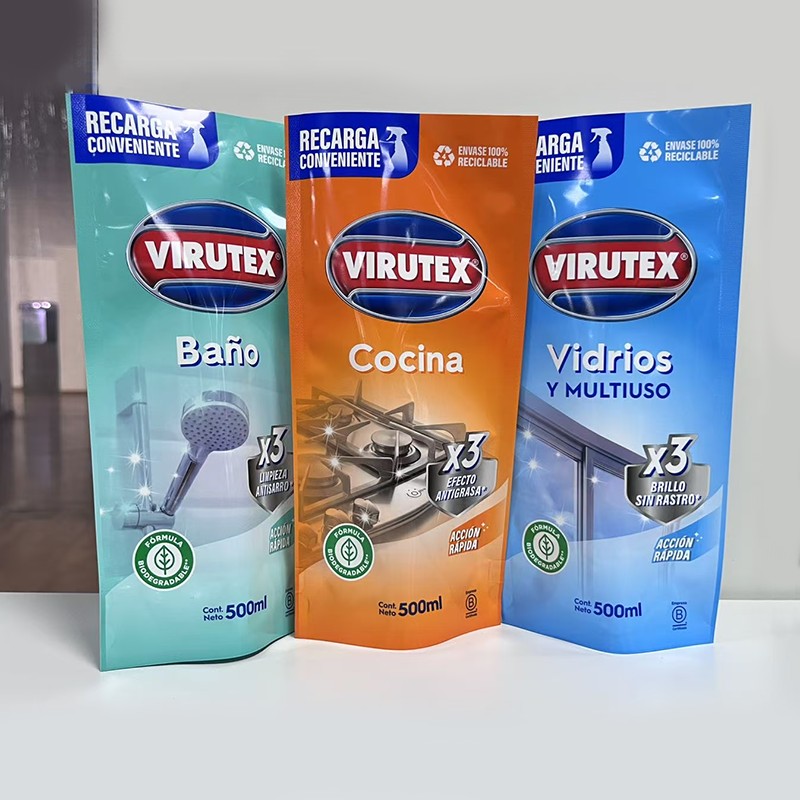
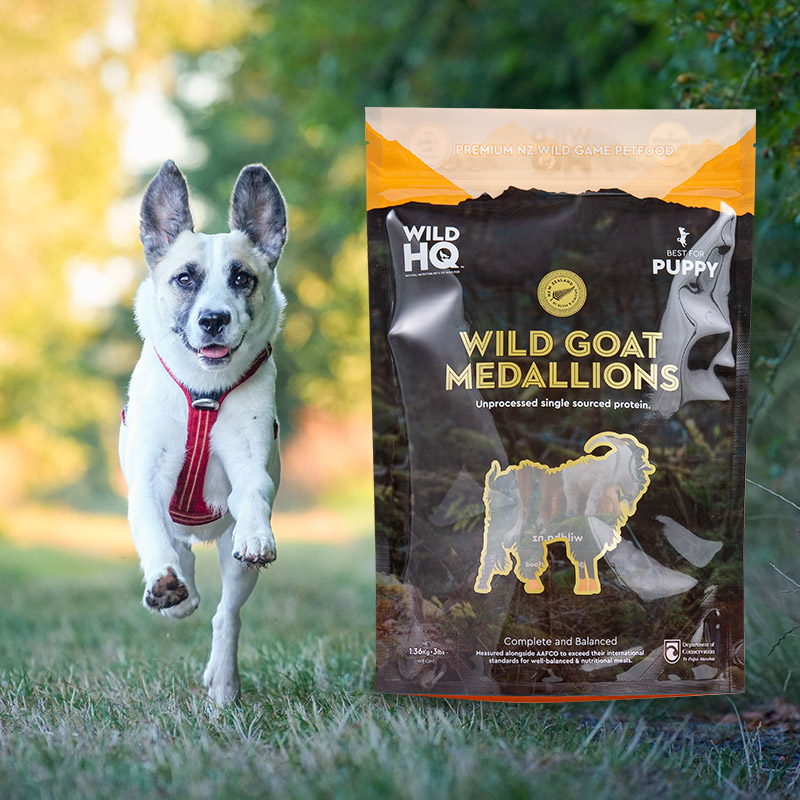
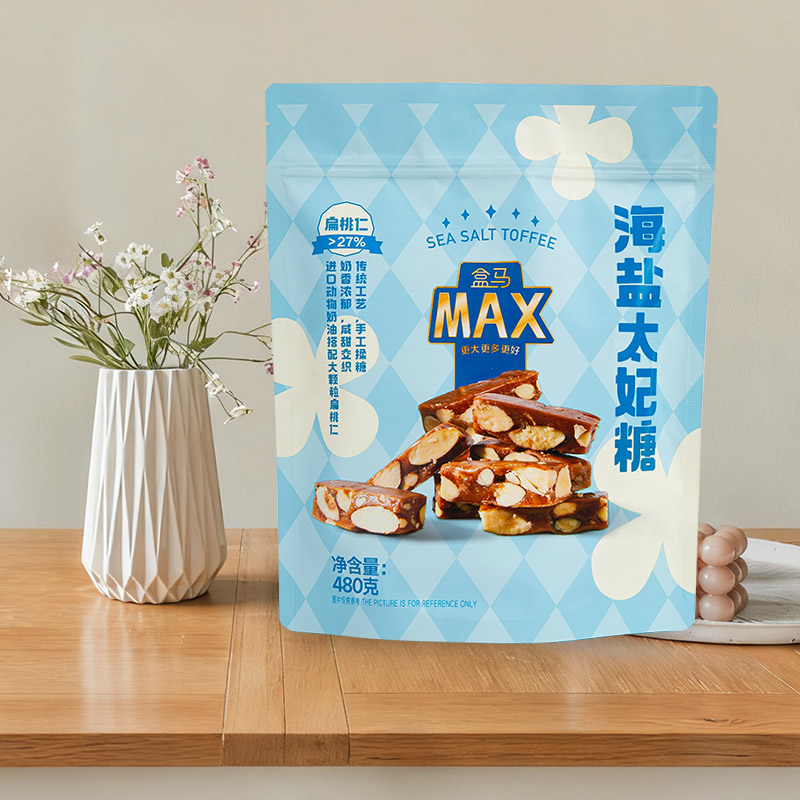
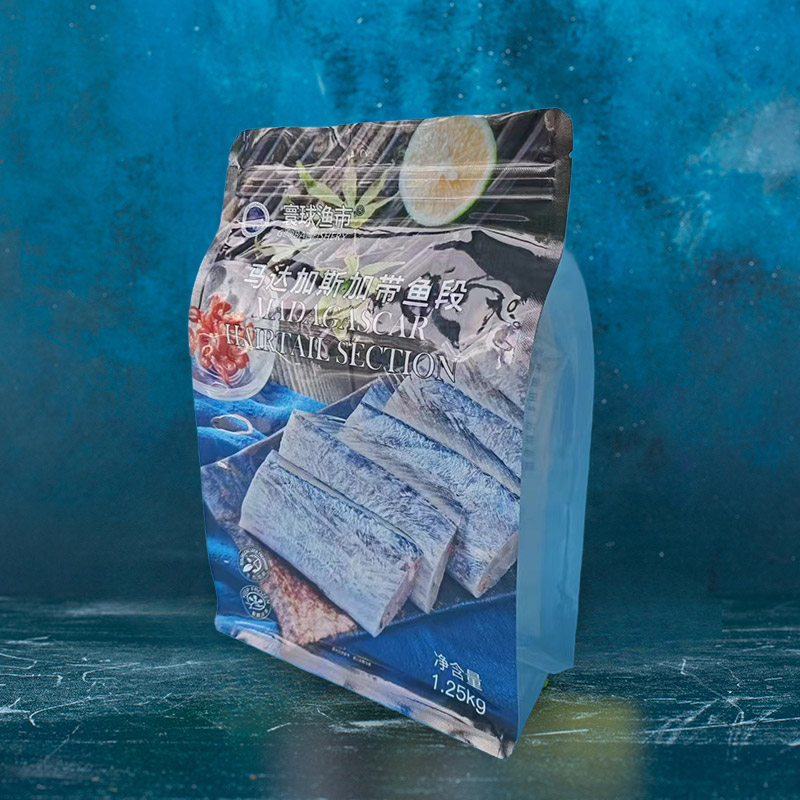
- Stand-up pouches (SUP / Doypack) — Increasingly popular for retail frozen vegetables, fruits, and snacks. The bottom gusset allows the bag to stand upright on the shelf, maximizing visibility. Many incorporate a reclosable zipper for consumer convenience.
- Pillow bags (VFFS pouches) — Produced on vertical form-fill-seal machinery at high speed, pillow bags are standard for bulk-packed frozen products such as french fries, edamame, and mixed vegetables. Pack weights typically range from 500 g to 2.5 kg.
- Gusseted bags and block-bottom bags — Used for heavier portions (2–10 kg), particularly in foodservice and institutional frozen food supply. Side gussets provide volume without increasing footprint.
- Vacuum bags and cook-in bags — Specialized bags designed to be sealed under vacuum and, in some cases, to withstand boiling or steam cooking directly from frozen. These require PA/PE or PA/EVOH/PE structures with precisely controlled seal widths.
Closure and sealing systems range from standard heat seals (the most common) to laser-cut peel-and-reseal lids, zipper reclosure strips, and press-to-close PCTFE or PE/nylon zip tracks. For frozen food, seal strength at low temperature is a critical specification — seals that hold at room temperature may delaminate or crack when stressed at −18 °C during distribution.
Key Performance Specifications to Evaluate
When sourcing or specifying plastic bags for frozen food packaging, buyers and product developers should evaluate the following technical parameters:
- Water vapor transmission rate (WVTR) — Determines the bag's ability to prevent freezer burn and moisture loss. For long-shelf-life products, WVTR should typically be below 3–5 g/m²/day at standard test conditions.
- Oxygen transmission rate (OTR) — Critical for products susceptible to oxidative rancidity or color change. Vacuum-packed frozen meat typically requires OTR below 10 cc/m²/day; high-barrier products may require below 1 cc/m²/day.
- Low-temperature flexibility (cold crack resistance) — The film must remain flexible and impact-resistant at the intended storage temperature. Tested via Elmendorf tear or dart drop methods at −18 °C or below.
- Seal integrity at low temperature — Heat seals must maintain integrity under freezer conditions. Peel strength testing at −18 °C to −30 °C is standard for qualified frozen food applications.
- Coefficient of friction (COF) — Affects bag performance on automated filling lines. Frozen food bags typically require COF values between 0.1 and 0.3 for smooth machine handling.
- Food contact compliance — All materials in contact with frozen food must comply with applicable regulations: EU Regulation 10/2011 for plastic food contact materials, FDA 21 CFR for the US market, and GB 4806 series for China.
Sustainability Trends in Frozen Food Packaging Bags
Environmental pressure on single-use plastic packaging is reshaping frozen food bag specifications. Several trends are gaining traction across the industry:
- Mono-material PE structures — Replacing PET/PE laminates with all-polyethylene multilayer films (using MDO-PE or HDPE/LLDPE blends) to improve recyclability through the PE film stream, while maintaining sufficient stiffness and barrier performance for frozen food applications.
- Reduced film thickness (downgauging) — Advanced LLDPE metallocene grades allow wall thickness reduction of 15–25% without sacrificing puncture resistance, directly lowering plastic content per pack.
- Recycled content integration — Post-consumer recycled (PCR) PE is being incorporated at rates of 20–30% in the outer structural layers of frozen food bags, with food-contact-compliant grades now available for the inner sealant layer in several markets.
- Bio-based polymers — Bio-PE (from sugarcane ethanol) and PLA-based structures are under evaluation, though PLA's brittleness at sub-zero temperatures currently limits its standalone use in frozen food bags without substantial modification.
- Extended producer responsibility (EPR) — Regulatory frameworks in the EU, UK, and increasingly in North America are incentivizing the adoption of packaging that is either recyclable, compostable, or made with minimum recycled content thresholds — pushing frozen food brands to accelerate material transitions.
Balancing sustainability goals against the uncompromising performance requirements of frozen food packaging — particularly barrier performance and cold-temperature integrity — remains the central engineering challenge for packaging developers and film suppliers in this segment.