 EN
EN
 English
 日本語
日本語 Español
 Deutsch
 عربى
عربى
Content
- 1 What Makes the Eight Side Seal Bag Different from Standard Pouches
- 2 Aluminum Foil Eight Side Seal Bag: Material Structure and Barrier Performance
- 3 Stand-Up Pouch with Airtight Seal: How Eight-Point Sealing Achieves True Closure
- 4 Three-Dimensional Stand-Up Design: Shelf and E-Commerce Advantages
- 5 Bulk Food Packaging Bags: Capacity, Load-Bearing, and Industrial Applications
- 6 Specifying the Right Eight Side Seal Bag for Your Product
What Makes the Eight Side Seal Bag Different from Standard Pouches
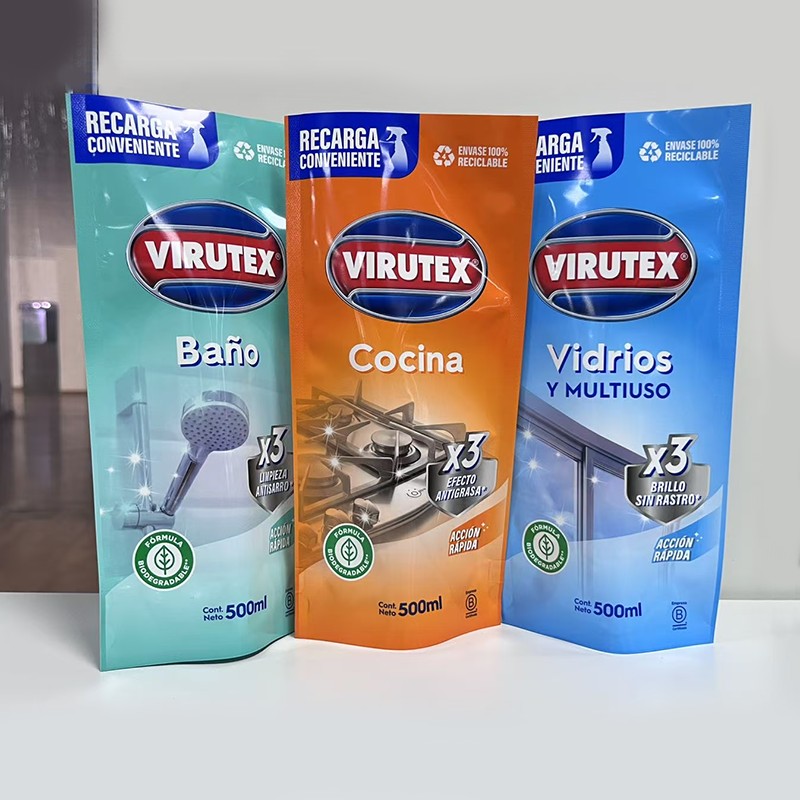
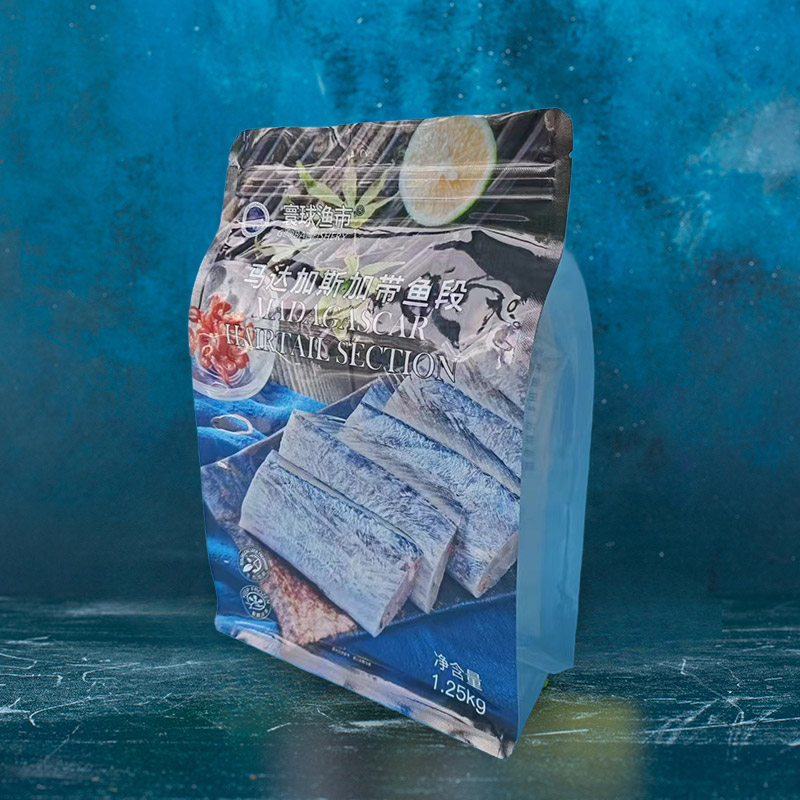
Most packaging bags seal along three or four edges, leaving the structure flat and limiting how much the bag can hold. The eight side seal bag takes a fundamentally different approach. By heat-sealing across eight separate edges — front, back, left, right, top, bottom, and both diagonal corners — it creates a fully enclosed three-dimensional frame that holds its shape under load, stands upright without support, and seals far more completely than conventional formats. This structural difference is not cosmetic. It directly affects sealing performance, shelf stability, and the range of products the bag can safely contain.
The diagonal corner seals are the defining feature that separates this format from a standard stand-up pouch. In a typical stand-up pouch, the bottom gusset creates a base but the upper corners remain unsealed, which creates stress points where leaks and tears most commonly originate. In an eight side seal bag, those corners are fully bonded, distributing pressure evenly across the entire structure. The result is a bag that performs more like a rigid container than a flexible pouch — while retaining all the weight, cost, and shipping advantages of flexible packaging.
Aluminum Foil Eight Side Seal Bag: Material Structure and Barrier Performance
The aluminum foil eight side seal bag is the most widely specified version of this format for food, pharmaceutical, and chemical applications. The material construction typically consists of multiple laminated layers, each contributing a specific performance function. Understanding the layered structure helps buyers specify the right combination for their product requirements.
| Layer | Typical Material | Primary Function |
| Outer layer | PET (Polyester) | Puncture resistance, print surface, dimensional stability |
| Middle layer | Aluminum foil | Oxygen barrier, moisture barrier, light barrier |
| Inner layer | PE (Polyethylene) | Heat-seal bonding, food-contact safety, flexibility |
| Optional layer | NY (Nylon) | Additional puncture and flex-crack resistance |
The aluminum foil layer is what sets this construction apart from clear film pouches. Foil achieves an oxygen transmission rate (OTR) close to zero and a water vapor transmission rate (WVTR) near zero, providing barrier performance that no plastic film alone can match. This is critical for products sensitive to oxidation — roasted coffee, ground spices, processed meats, pharmaceutical tablets, and chemical powders all degrade rapidly when exposed to oxygen or humidity. The foil barrier combined with the eight-point heat seal creates a package that genuinely protects contents from the moment of sealing until the consumer opens it.
The outer PET layer provides the structural rigidity that allows high-resolution flexographic or rotogravure printing directly onto the bag surface. Unlike paper-based packaging, PET maintains its surface integrity in humid environments, so graphics and barcodes remain scannable and visually sharp throughout the supply chain — from the warehouse to the retail shelf.
Stand-Up Pouch with Airtight Seal: How Eight-Point Sealing Achieves True Closure
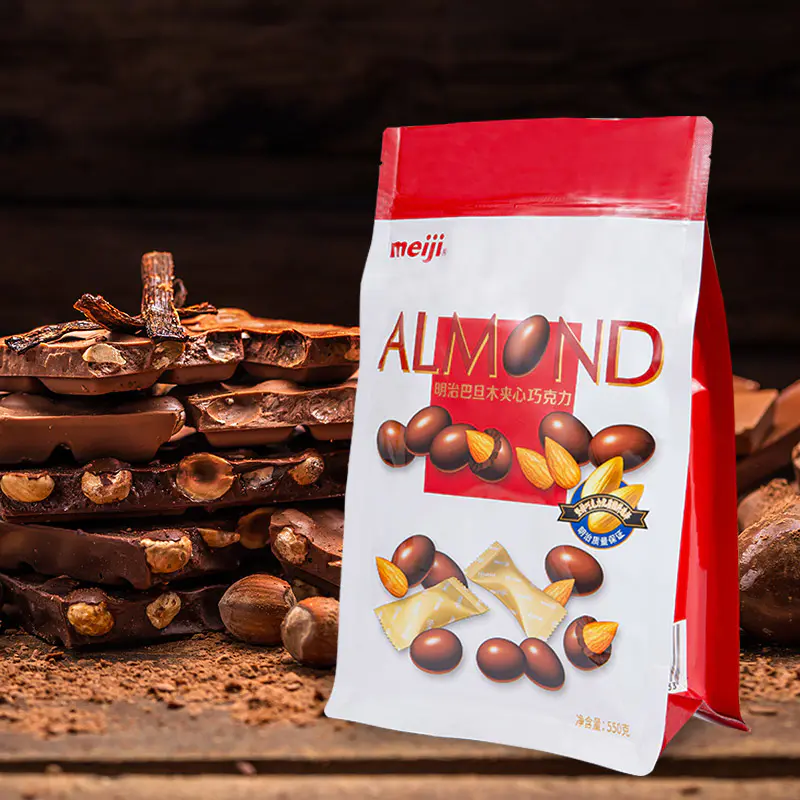
The term "airtight seal" is used loosely in packaging, but in the context of a stand-up pouch with airtight seal based on eight-side construction, it has a specific technical meaning. Each of the eight seal zones is created by applying calibrated heat and pressure to bond the inner PE layers together into a continuous, gap-free joint. When all eight seals are correctly formed, there is no unsealed edge anywhere on the bag — the interior is entirely enclosed.
This full-perimeter closure delivers measurably better performance than three-side or four-side sealed bags in three critical areas:
- Leak-proof performance: Even liquid or semi-liquid contents — sauces, oils, liquid nutritional supplements — cannot escape through unsealed corners, which is the most common failure point in standard pouches.
- Moisture resistance: The sealed corners prevent ambient humidity from wicking into the package structure, which is particularly important for hygroscopic products like protein powders, dried mushrooms, and pharmaceutical granules.
- Anti-oxidation protection: Combined with the aluminum foil barrier layer, the complete corner sealing eliminates the micro-channels through which oxygen can slowly migrate into the package over weeks or months of storage.
Many manufacturers add a resealable zipper at the top of the bag to extend these benefits after the initial opening. A zip-lock closure allows consumers to reclose the bag between uses, maintaining the effective airtight condition throughout the product's usage period rather than only until first opening. This is especially valuable for products consumed over multiple servings, such as snack nuts, dried fruit, protein powder, and pet treats.
Three-Dimensional Stand-Up Design: Shelf and E-Commerce Advantages
The bottom gusset and side sealing edges work together to allow the bag to stand independently on a flat surface with no additional support required. This is not a minor convenience feature — it has direct commercial implications for both retail shelf display and e-commerce fulfillment. On a supermarket shelf, a bag that stands upright and faces the consumer presents its full printed surface as a billboard. A bag that slumps or tilts wastes shelf real estate and reduces brand visibility.
For e-commerce, the self-standing design makes the bag far easier to photograph for product listings. It also means the product arrives at the consumer's door looking presentable rather than creased or deformed — which matters for brand perception in unboxing-sensitive categories like specialty food, supplements, and premium pet products.
The three-dimensional structure also increases the usable internal volume relative to the bag's footprint. Because the flat bottom expands outward when filled, the bag accommodates significantly more product than a flat pouch of the same width and height. This reduces the number of packages required per shipping carton, cutting both material costs and freight costs for high-volume shippers.
Bulk Food Packaging Bags: Capacity, Load-Bearing, and Industrial Applications
Eight side seal bags engineered as bulk food packaging bags are produced in sizes ranging from 250g retail pouches up to 5kg, 10kg, and larger formats for foodservice, wholesale, and industrial supply. The multi-layer PET/aluminum foil/PE construction gives these larger bags the structural integrity to support their own weight when filled with dense products such as rice, pet kibble, protein powder, nuts, or chemical granules.
The pressure resistance of this format comes from two sources working together. First, the laminated film structure — particularly when nylon is included as an additional layer — resists the puncture and flex-crack stresses that occur during filling, transport, and stacking. Second, the distributed eight-point sealing means that load forces from the contents are spread evenly around the entire perimeter rather than concentrating at two or four points where failures typically initiate.
Common bulk food packaging applications where this format delivers measurable performance advantages include:
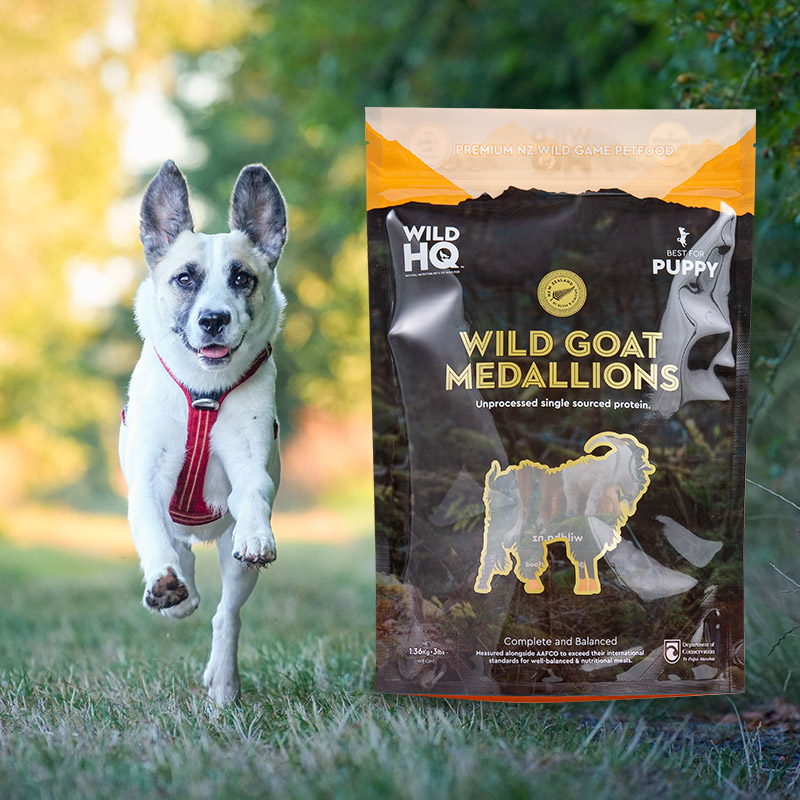
- Pet food: Kibble, freeze-dried raw food, and veterinary prescription diets. The airtight aluminum foil barrier prevents fat oxidation and rancidity, which is the primary shelf-life limiting factor for high-fat pet foods.
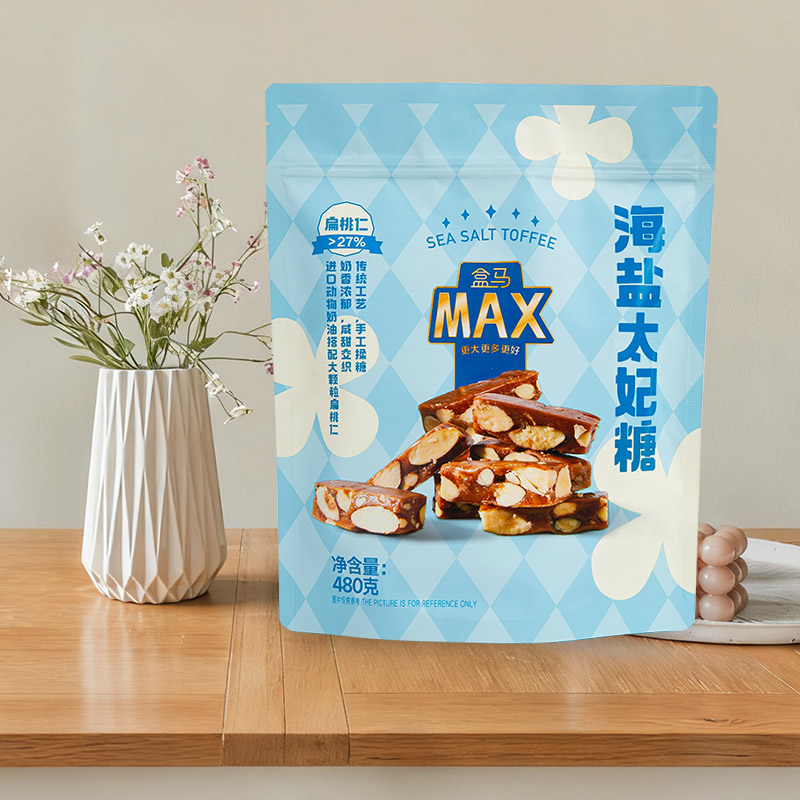
- Nuts and dried snacks: Cashews, almonds, mixed trail mix, and dried fruit. The moisture barrier keeps product crisp and prevents sugar crystallization on fruit surfaces.
- Powder products: Protein powder, flour, coffee, spice blends, and infant formula. Powder products are highly sensitive to humidity uptake and clumping; the foil/PE construction keeps moisture out across long storage periods.
- Chemical and industrial granules: Agricultural fertilizers, detergent powders, and specialty chemical compounds that require moisture-proof and contamination-resistant packaging during storage and transit.
Specifying the Right Eight Side Seal Bag for Your Product
Selecting the correct specification requires matching four variables — material structure, bag dimensions, seal width, and closure type — to the actual demands of the product and its supply chain. The following checklist covers the most important specification decisions:
- Material structure: For products requiring maximum barrier performance, specify PET/AL/PE three-layer or PET/AL/NY/PE four-layer. For products with lower barrier requirements, a PET/PE or BOPP/PE construction reduces material cost while retaining the structural benefits of the eight-side format.
- Bag dimensions: Width, height, and gusset depth must be matched to the fill weight and the physical dimensions of the product. Overly large bags relative to fill weight result in excess headspace, which retains oxygen and shortens shelf life even with excellent barrier materials.
- Seal width: Wider seals (10mm–15mm) provide greater peel resistance and are recommended for heavier fill weights and products with high internal pressure (carbonated products, nitrogen-flushed packages). Narrower seals reduce material consumption on lightweight retail pouches.
- Closure and access features: Resealable zipper closures, tear notches, hang holes, and valve fittings (for nitrogen-flushed coffee) can all be incorporated into the eight side seal format without compromising the structural integrity of the bag.
Requesting physical samples and conducting fill tests with the actual product before committing to a production run remains the most reliable way to confirm that a specified bag performs as expected. Testing should include drop tests from representative heights, seal peel strength measurement, and storage trials under the temperature and humidity conditions the product will actually encounter in the supply chain.