 EN
EN
 English
 日本語
日本語 Español
 Deutsch
 عربى
عربى
Content
- 1 Why Packaging Matters for Coffee Pouches
- 2 Common Types of Coffee Pouch Packaging
- 3 Key Functional Features to Look for in Coffee Pouches
- 4 Understanding Coffee Pouch Packaging Stickers
- 5 Sticker Printing Methods for Coffee Pouches
- 6 Design Tips for Coffee Pouch Stickers That Convert
- 7 Sustainability Considerations in Coffee Pouch Packaging
- 8 Choosing a Supplier for Coffee Pouch Packaging and Stickers
Why Packaging Matters for Coffee Pouches
Coffee pouch packaging plays a far more critical role than simply holding the product. It protects the beans or ground coffee from moisture, oxygen, light, and odors — all of which degrade flavor and aroma. For roasters and retailers alike, the right packaging choice directly impacts shelf life, brand perception, and customer loyalty. With the specialty coffee market growing rapidly, standing out on a crowded shelf starts with understanding what makes a great coffee pouch.
Modern coffee pouches are typically made from multilayer laminated films that combine different materials to achieve barrier protection while remaining flexible and lightweight. The outer layer is usually polyester or kraft paper for printability and aesthetics, while inner layers of aluminum foil or metalized film provide the oxygen and moisture barriers that preserve freshness. Understanding these layers helps brands make informed decisions about both performance and sustainability.
Common Types of Coffee Pouch Packaging
Coffee brands have several structural formats to choose from, each with distinct advantages depending on product volume, distribution channel, and target audience. The most widely used styles include:
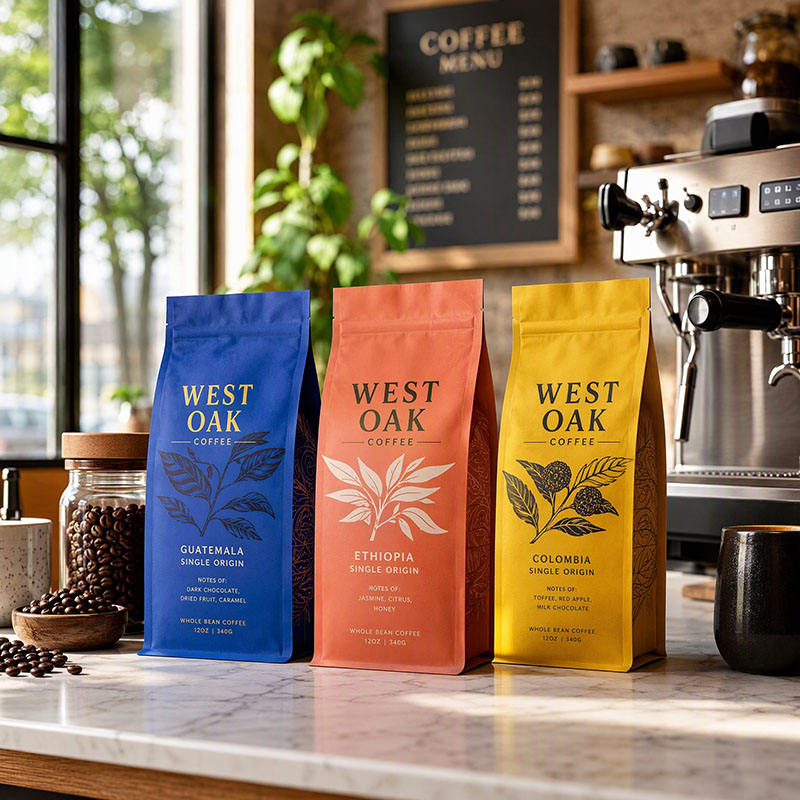
- Stand-up pouches (SUP): These are the industry standard for retail coffee. They feature a gusseted bottom that allows the bag to stand upright on shelves. Most include a resealable zipper and a one-way degassing valve to release CO₂ from freshly roasted beans without letting oxygen in.
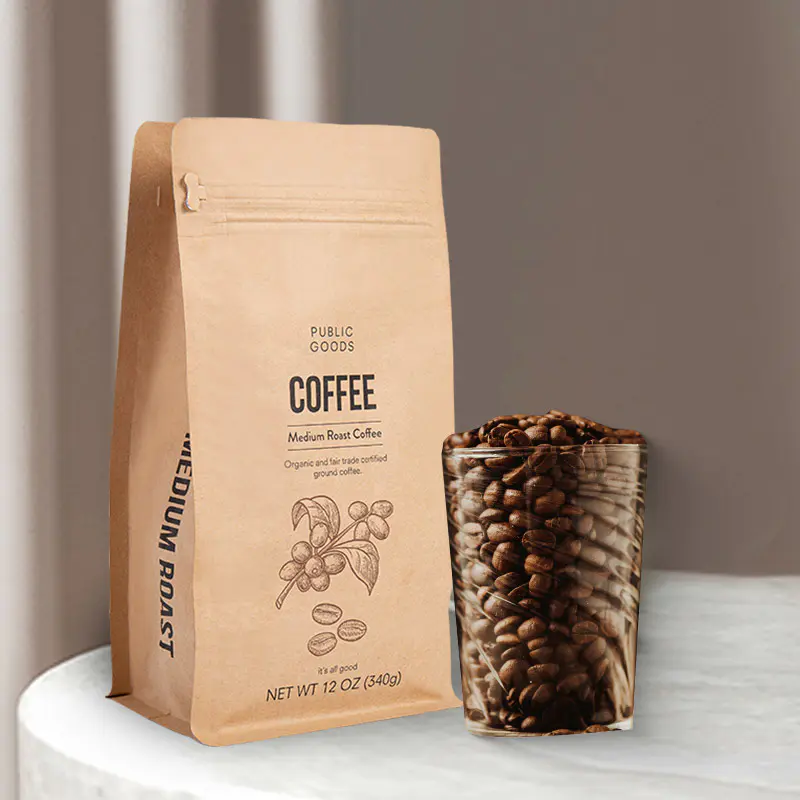
- Flat bottom pouches (box pouches): A premium alternative to the stand-up pouch, these have a wider, more structured base that gives them a box-like appearance when filled. They offer excellent shelf presence and a larger printable surface area, which is ideal for premium branding.
- Side-gusset bags: Common in bulk or wholesale coffee packaging, side-gusset bags lay flat and are heat-sealed after filling. They accommodate large volumes (1 kg and above) and are easy to stack and store.
- Pillow pouches: Typically used for single-serve or sample-size coffees, these are heat-sealed on all sides with no gusset. They are cost-effective for small quantities but offer limited standup capability.
- Quad seal bags: These four-sealed corner bags are gaining popularity for their rigid, brick-like shape. They stack well, maximize shelf space, and look distinctly premium.
Key Functional Features to Look for in Coffee Pouches
Beyond the pouch structure, several functional components define whether a coffee pouch performs well in real-world conditions. These features protect the product and enhance the customer experience.
One-Way Degassing Valve
Freshly roasted coffee releases carbon dioxide for days after roasting. Without a degassing valve, this CO₂ would cause the pouch to inflate and potentially burst. The one-way valve allows gas to escape without letting air enter, making it an essential feature for any coffee pouch meant to hold whole beans or freshly ground coffee. Valves are typically placed on the front panel and can be incorporated discreetly or used as a design element.
Resealable Zipper Closure
A resealable zip-lock closure is practically a baseline expectation for retail coffee pouches. Once opened, coffee begins to absorb surrounding odors and lose its aromatic compounds. A tight zipper allows customers to reseal the bag after each use, extending the perceived freshness of the product and reducing waste. Press-to-close zippers and slider zippers are both common, with sliders offering a more premium feel.
Barrier Layers and Material Options
The most common barrier materials used in coffee pouch construction include foil-laminated films, metalized PET, and EVOH (ethylene vinyl alcohol). Each offers different levels of oxygen and moisture protection. Foil-based laminates provide the highest barrier but are not recyclable in most curbside programs. Metalized films offer a moderate barrier with a more sustainable profile. EVOH is used in mono-material structures aimed at recyclability without sacrificing too much protection.
Understanding Coffee Pouch Packaging Stickers
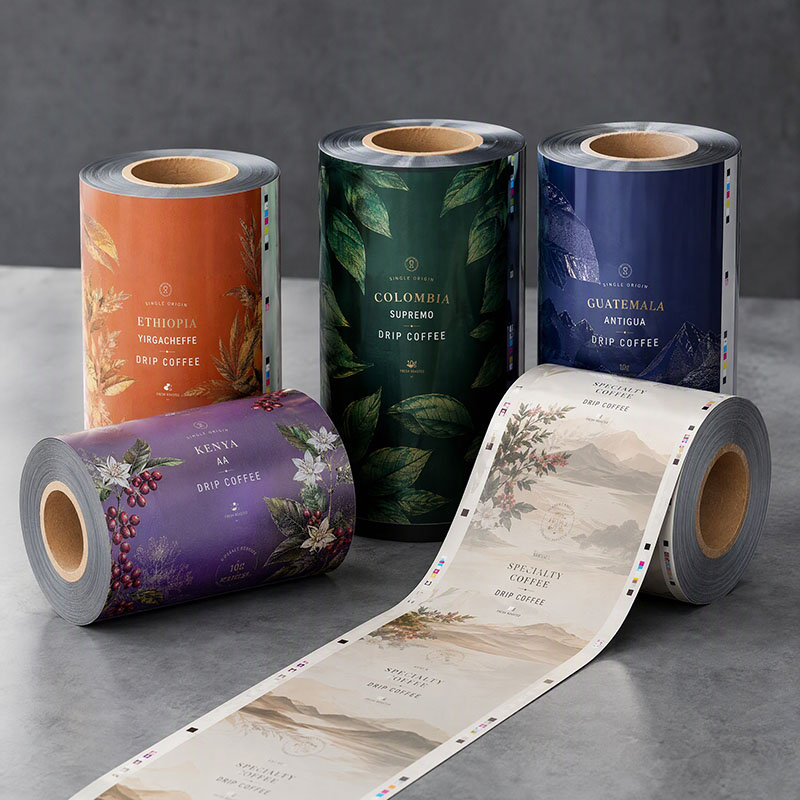
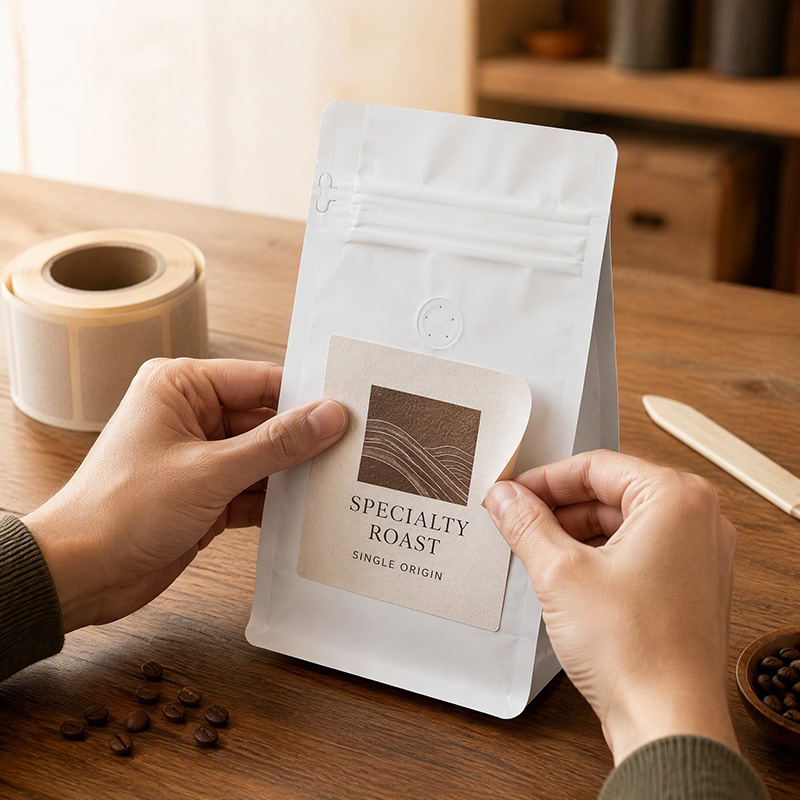
Coffee pouch packaging stickers serve both functional and aesthetic purposes. While digital printing directly onto the pouch film is common for large production runs, stickers — also called labels or pressure-sensitive labels — offer a highly flexible and cost-effective solution for small-batch roasters, private labels, limited editions, and brands that need to localize packaging for different markets without reprinting entire film rolls.
Stickers applied to coffee pouches must adhere reliably to the textured or laminated surfaces typical of coffee packaging. This requires specific adhesive formulations. They also need to maintain their integrity in humid environments, such as cold storage or refrigerated shipping, without peeling, bubbling, or fading.
Types of Coffee Pouch Stickers
There are several label stock and finish options that are particularly well-suited to coffee pouch applications:
- Bopp (biaxially oriented polypropylene) labels: These are water-resistant, tear-resistant, and conform well to flexible pouch surfaces. They are available in gloss, matte, and transparent finishes and are the go-to choice for most coffee brands using sticker labels.
- Kraft paper labels: Popular among artisan and organic coffee brands for their natural, earthy look. They pair especially well with kraft paper pouches. However, they are less water-resistant than BOPP unless coated or laminated.
- Foil labels: Metallic gold or silver foil labels create a high-end visual effect and catch light on retail shelves. They are commonly used for specialty or single-origin coffee lines to convey premiumness.
- Clear transparent labels: These give a "no-label" look, allowing the pouch color or texture to show through while still displaying all required product information. They work particularly well on matte black or kraft pouches.
- Die-cut custom shape labels: Instead of standard rectangles or ovals, die-cut labels can be produced in any custom shape — a coffee bean, a leaf, a crest — adding a distinctive branding element that differentiates the product.
What Information Must Appear on the Sticker
Regulatory and consumer expectations require that coffee pouch stickers include specific information. While exact requirements vary by country, common mandatory and recommended elements include:
| Element | Required or Recommended | Notes |
| Product name / brand | Required | Clearly visible and legible |
| Net weight | Required | In grams and/or ounces depending on region |
| Roast date / best before date | Recommended / Required | Often printed as a variable field via thermal transfer |
| Origin / variety | Recommended | Important for specialty and single-origin products |
| Roast level | Recommended | Light, medium, dark, or espresso |
| Allergen declarations | Required where applicable | Especially relevant for flavored coffees |
| Barcode / QR code | Required for retail | GS1 barcode for distribution; QR for consumer engagement |
| Certifications | Where earned | Organic, Fair Trade, Rainforest Alliance, etc. |
Sticker Printing Methods for Coffee Pouches
The printing method you choose for your coffee pouch stickers affects quality, turnaround time, minimum order quantity, and cost per unit. Each method is suited to different production scales and branding needs.
Digital Label Printing
Digital printing is the preferred method for small to medium runs, typically from 100 to 10,000 labels. It offers full-color output with no plate costs, making it ideal for roasters who want to test new designs, run seasonal editions, or produce multiple SKUs simultaneously. Digital printing also allows variable data printing — meaning each label can include a unique roast date, batch number, or QR code without slowing down production. Print quality has improved dramatically in recent years, with HP Indigo and similar technologies producing near-offset quality on a wide range of label stocks.
Flexographic Printing
Flexographic (flexo) printing is the standard for large-volume label production. It uses flexible relief plates to apply ink at very high speeds. While setup costs (plates) are significant, the per-unit cost drops substantially at volumes of 10,000 labels and above. Flexo is excellent for spot colors and Pantone matching, which is critical when brand color consistency is a priority. Many established coffee brands use flexo for their core product lines due to the cost efficiency at scale.
Offset Label Printing
Offset printing delivers the highest resolution and color accuracy of any printing method, making it suitable for premium coffee brands where image quality is non-negotiable. It is typically used for sheet-fed label printing rather than roll-to-roll, meaning labels are cut and applied individually or in sheets rather than dispensed from a roll. This method has higher setup costs and is less flexible for variable data but produces stunning results for high-end retail packaging.
Design Tips for Coffee Pouch Stickers That Convert
A well-designed coffee pouch sticker does more than inform — it tells a story, communicates quality, and draws the eye. Here are practical design considerations that experienced coffee brand designers rely on:
- Use contrast strategically: If your pouch is dark (matte black or dark kraft), use light-colored or foil labels to create visual contrast. A dark label on a dark pouch will disappear at retail distance.
- Keep the hierarchy clear: Brand name first, product name second, descriptors third. Consumers scan, not read. Your label needs to communicate the essentials within 2–3 seconds.
- Choose readable fonts at small sizes: Many label details — origin, processing method, tasting notes — are printed in small type. Test your font choices at actual print size before committing to a design.
- Incorporate texture or finish for premium appeal: Soft-touch lamination, embossing, spot UV, or foil stamping added to sticker labels can dramatically elevate perceived product quality, especially for single-origin or limited-edition lines.
- Consider the full 360° of the pouch: Even if your sticker only covers the front panel, it should complement the rest of the pouch design — the back panel content, the valve placement, and the zipper color all contribute to the overall look.
- Leave space for variable data: If you plan to print roast dates or batch numbers on your stickers via thermal transfer overprinting, design a dedicated zone for this information that doesn't interfere with other design elements.
Sustainability Considerations in Coffee Pouch Packaging
Sustainability has moved from a marketing angle to a genuine purchasing driver for many coffee consumers. Brands that address packaging sustainability credibly gain a meaningful competitive advantage. However, the multilayer structures required for adequate coffee protection make recyclability genuinely challenging, and greenwashing claims in this space have attracted regulatory scrutiny.
Compostable pouches made from PLA (polylactic acid) or cellulose-based films are commercially available and growing in popularity. However, they typically require industrial composting facilities that most consumers do not have access to, and their barrier performance still lags behind conventional foil-laminated structures. Brands must communicate these nuances clearly on their packaging to maintain consumer trust.
Mono-material polyethylene pouches represent a more practically recyclable option, as PE can be processed in flexible film recycling streams available at many grocery stores. These structures have improved significantly in terms of barrier performance and are now used by several major coffee brands. For stickers applied to mono-material pouches, it is important to choose compatible label adhesives and stocks that do not contaminate the recycling stream — this typically means PE-based label films with pressure-sensitive adhesives designed for recyclability compliance.
Choosing a Supplier for Coffee Pouch Packaging and Stickers
Sourcing coffee pouch packaging and stickers from reliable suppliers requires evaluating several factors beyond price. For pouches, consider minimum order quantities (MOQs), lead times, barrier specifications, available finishes, and whether the supplier offers value-added features like valve installation and zipper integration. Many specialty packaging suppliers offer stock pouches in standard sizes with low MOQs, which is ideal for small roasters starting out, while also offering custom printed options for established brands.
For sticker labels, key evaluation criteria include substrate compatibility with your specific pouch material, adhesive performance across the intended storage and transit temperatures, print quality consistency across runs, and the supplier's ability to handle variable data printing if required. Requesting physical samples before placing a large order is essential — test the adhesive on your actual pouch, simulate handling and shipping conditions, and evaluate color accuracy against your brand standards under the same lighting conditions your retail environment uses.
When working with overseas suppliers, factor in shipping timelines, customs requirements for food-contact materials, and quality control protocols. Many coffee brands source pouches from manufacturers in China or Southeast Asia due to cost advantages, while using local label printers for faster turnaround on stickers — particularly useful when roast dates need to be printed close to the actual roasting date.