 EN
EN
 English
 日本語
日本語 Español
 Deutsch
 عربى
عربى
Content
- 1 Why High Barrier Thermoforming Film Is Essential for Modern Food Packaging
- 2 Multilayer Co-Extrusion Technology: The Engineering Behind the Film
- 3 Bottom Thermoforming Film: The Structural Foundation of Thermoform Packaging
- 4 Application-Specific Film Specifications: Matching Film to Food Category
- 5 Low-Temperature Frozen Films: Packaging for Deep-Freeze Applications
- 6 High-Temperature Cooking Films: Retort and Pressure Cooking Applications
- 7 Selecting the Right Thermoforming Film: A Practical Decision Framework
Why High Barrier Thermoforming Film Is Essential for Modern Food Packaging
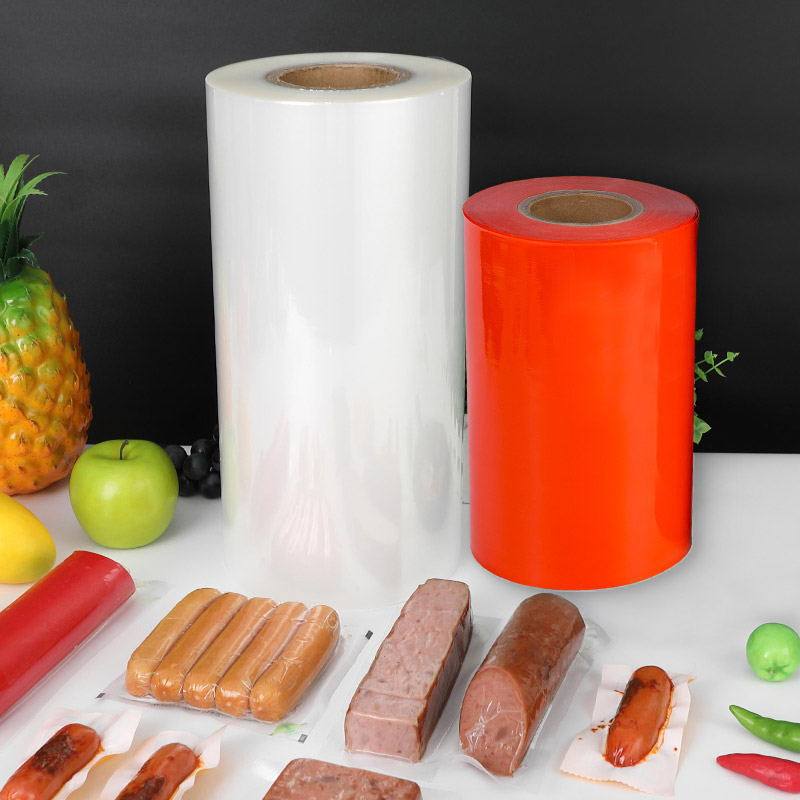
In today's competitive food industry, packaging is no longer a passive container—it is an active preservation system that directly determines how long a product remains safe, fresh, and commercially viable on the shelf. High barrier thermoforming film has emerged as the benchmark solution for food manufacturers who need to protect perishable products against the full spectrum of spoilage factors: oxygen ingress, moisture transmission, aroma loss, UV exposure, and microbial contamination. Whether the application involves fresh meat, chilled seafood, dairy products, or convenience ready meals, the structural integrity and barrier performance of the packaging film are the decisive variables that separate products with a three-day shelf life from those that remain market-ready for three weeks or more.
The evolution of thermoforming packaging technology has been driven by advances in multilayer co-extrusion—a manufacturing process that combines multiple polymer layers into a single film structure, with each layer contributing specific functional properties. The result is a packaging material that no single polymer could achieve independently: the gas barrier performance of EVOH, the mechanical strength of polyamide (nylon), the moisture resistance and sealability of polyethylene or polypropylene, and the structural rigidity needed for automated thermoforming lines. Understanding this technology, and selecting the right film specification for each food application, is the foundation of effective food packaging strategy.
Multilayer Co-Extrusion Technology: The Engineering Behind the Film
Modern high barrier thermoforming film is manufactured through advanced multilayer co-extrusion processes that simultaneously extrude multiple polymer melts through a single die, fusing them into a unified film structure before cooling and orientation. The most demanding food packaging applications are served by seven-layer, nine-layer, and eleven-layer co-extruded structures, each offering progressively more sophisticated combinations of barrier, mechanical, and sealing performance.
In a typical nine-layer structure, the film architecture might incorporate outer polyamide layers for puncture resistance and thermoformability, a central EVOH core layer for oxygen barrier performance, tie layers to bond the incompatible polymer families, and inner polyethylene sealing layers to enable reliable heat sealing on thermoform-fill-seal packaging machines. Eleven-layer structures allow for even finer optimization—multiple EVOH layers can be distributed through the film cross-section for enhanced barrier redundancy, additional tie layers can improve inter-layer adhesion under stress, and co-extruded color or opacity layers can be incorporated without compromising functional performance.
The key performance parameters that define the quality of a multilayer co-extruded high barrier thermoforming film include:
- Oxygen Transmission Rate (OTR): Measured in cc/m²/day, a lower OTR indicates superior oxygen barrier performance. High-barrier EVOH-containing films achieve OTR values below 1 cc/m²/day, critical for vacuum and MAP packaging of oxygen-sensitive proteins.
- Moisture Vapor Transmission Rate (MVTR): Controls moisture loss or gain through the packaging wall, essential for maintaining the texture and weight of fresh meat, seafood, and dairy products throughout the distribution chain.
- Puncture resistance: Measured in Newtons, high puncture resistance prevents film failure when packaging products with sharp bones, shells, or irregular surfaces—a critical requirement for fish, shellfish, and bone-in meat cuts.
- Deep-draw formability: The film's ability to stretch uniformly into deep thermoforming molds without thinning, tearing, or creating uneven wall thickness—essential for consistent, professional packaging presentation.
- Seal integrity: The strength and consistency of the heat seal between the bottom forming web and the top lidding film, which determines the package's resistance to leakage during transit and handling.
Bottom Thermoforming Film: The Structural Foundation of Thermoform Packaging
In a thermoform-fill-seal (TFFS) packaging system, the bottom thermoforming film serves as the structural foundation of the package. It is the web that is heated, stretched, and formed into the pocket or tray shape that holds the product before the lidding film is applied and sealed. The performance demands placed on the bottom thermoforming film are therefore distinct from those of the top web: it must combine thermoformability—the ability to be heated and drawn into complex shapes without defects—with the barrier and mechanical properties needed to protect the product throughout its shelf life.
A high-quality bottom thermoforming film must maintain uniform thickness distribution across the formed pocket, even in deep-draw applications where the draw ratio may exceed 1:1. Inconsistent wall thickness—caused by inadequate formability or poor film orientation—creates weak points that compromise barrier performance and increase the risk of pinhole formation or seal failure. Advanced multilayer co-extrusion technology, combined with precise temperature control during the thermoforming process, ensures that the film draws uniformly and maintains consistent barrier properties across the entire package surface.
For food manufacturers operating high-speed automated packaging lines, the bottom thermoforming film must also deliver reliable machine runnability—consistent gauge, low coefficient of friction on the forming platen, and stable sealing temperature ranges that allow the line to run at rated speed without frequent adjustments or film breaks. These operational characteristics are as commercially important as the film's intrinsic barrier properties, since line downtime and packaging waste directly impact production economics.
Application-Specific Film Specifications: Matching Film to Food Category
Different food categories impose fundamentally different requirements on thermoforming packaging films. The correct film specification for frozen shrimp is not the same as for retorted cooked duck, and the packaging engineer who understands these distinctions will select films that deliver optimal protection and commercial performance for each product. The table below summarizes the key application parameters across the major food categories served by multilayer co-extruded thermoforming films.
| Food Category | Temperature Range | Film Type | Key Performance Requirement |
| Fresh Meat (pork, beef, lamb) | 0°C to +4°C | High barrier, flexible | Ultra-low OTR, vacuum integrity |
| Poultry (chicken, duck, goose) | 0°C to +4°C / -18°C | High barrier, puncture resistant | Bone puncture resistance, seal strength |
| Frozen Seafood (fish, shrimp) | -18°C to -45°C | Low-temperature frozen film | Flexibility at deep-freeze, no brittleness |
| Dairy (cheese, processed dairy) | +2°C to +8°C | High barrier, aroma retention | Moisture and gas barrier, flavor preservation |
| Ready Meals (MAP trays) | +2°C to +8°C / ambient | High barrier, microwaveable options | Rigidity, MAP compatibility, clarity |
| Cooked Meats (retort packaging) | Up to 121°C (pressure cooking) | High-temperature cooking film | Retort resistance, barrier retention post-process |
Low-Temperature Frozen Films: Packaging for Deep-Freeze Applications
Frozen food packaging imposes a unique set of mechanical demands on thermoforming films. At temperatures ranging from -18°C to -45°C, many standard polymer films become brittle, losing the flexibility and impact resistance that prevent package failure during frozen storage, transportation, and handling. A specialized low-temperature frozen film is engineered to retain its mechanical properties—elongation at break, impact resistance, and seal integrity—throughout the entire deep-freeze temperature range.
For frozen meat and seafood applications—including pork, beef, lamb, chicken, duck, goose, fish, shrimp, and a wide range of shellfish—the frozen packaging film must also maintain its barrier performance at low temperatures. EVOH's oxygen barrier properties are temperature-dependent and actually improve at lower temperatures, making multilayer EVOH-containing films particularly well-suited for frozen protein packaging where maintaining color stability and preventing oxidative rancidity are critical quality objectives throughout an extended frozen shelf life.
High-Temperature Cooking Films: Retort and Pressure Cooking Applications
At the opposite end of the temperature spectrum, high-temperature vacuum cooking barrier films must withstand the demanding thermal conditions of retort sterilization—typically 121°C under elevated pressure—without delaminating, losing barrier properties, or compromising seal integrity. This thermal resistance requirement eliminates standard polyethylene-based films from consideration and demands structures incorporating high-temperature-stable polymers such as polypropylene and high-performance polyamides.
High-temperature cooking films are the preferred packaging solution for cooked and processed meat products including whole chicken, duck, goose, pig's feet, and a wide range of value-added meat preparations. The retort process simultaneously cooks and sterilizes the product within the sealed package, creating a shelf-stable product that requires no refrigeration. The film must therefore maintain its structural integrity, barrier performance, and seal strength through the entire thermal process—and continue to provide adequate barrier protection throughout the subsequent ambient or chilled shelf life of the product.
Selecting the Right Thermoforming Film: A Practical Decision Framework
For food manufacturers evaluating bottom thermoforming film and high barrier thermoforming film options, the selection process should follow a structured evaluation framework that addresses both technical requirements and commercial priorities.
- Define the shelf life target: The required shelf life determines the minimum barrier specification. Short shelf life products (3–7 days) may be adequately served by medium-barrier films, while extended shelf life products (21+ days) or retorted ambient products require full high-barrier multilayer structures with EVOH.
- Identify the processing temperature range: Frozen applications from -18°C to -45°C require low-temperature flexible films; retort applications up to 121°C require high-temperature resistant structures. These are non-negotiable constraints that determine the polymer selection for each film layer.
- Assess product geometry and puncture risk: Products with sharp bones, shells, or irregular surfaces—bone-in poultry, whole fish, shellfish—require higher puncture resistance ratings and may benefit from thicker polyamide layers or additional mechanical reinforcement in the film structure.
- Confirm packaging machine compatibility: The film specification—thickness, forming temperature range, seal temperature window—must be matched to the thermoforming equipment's capabilities to ensure reliable, high-speed operation without film breaks or seal failures.
- Evaluate regulatory compliance requirements: Films for direct food contact must comply with applicable food safety regulations, including FDA standards in the United States, EU Regulation 10/2011 for plastic food contact materials, or equivalent national standards in the target market.
Partnering with an experienced multilayer co-extrusion film manufacturer provides access not only to a broad range of proven film specifications for meat, seafood, dairy, and ready meals applications, but also to the technical expertise needed to optimize film selection, troubleshoot packaging line performance, and develop customized solutions for unique or challenging applications. Comprehensive technical service support—from initial film selection through line trials and ongoing production quality assurance—is an integral part of the value proposition that distinguishes a true packaging film partner from a commodity film supplier.