 EN
EN
 English
 日本語
日本語 Español
 Deutsch
 عربى
عربى
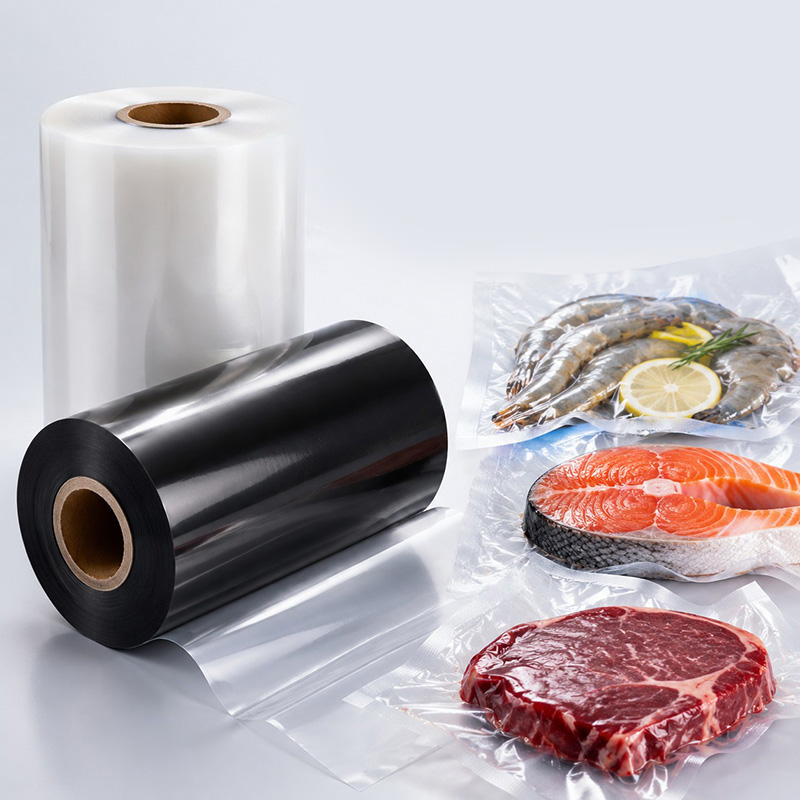
A thermoformable barrier film is a multi-layer plastic structure engineered to be heated and formed into a three-dimensional cavity while retaining its gas and moisture barrier properties after stretching. The core technical challenge is that the barrier layer—typically EVOH (ethylene vinyl alcohol) or PVDC (polyvinylidene chloride)—is inherently brittle and prone to cracking or thinning when stretched. A successfully designed thermoformable barrier film solves this by sandwiching the barrier polymer between structural layers of polypropylene, polyethylene, or nylon that carry the mechanical load during forming, allowing the barrier to stretch uniformly without rupture. The result is a formed tray, cup, or blister that protects oxygen-sensitive products like fresh meat, cheese, pharmaceutical tablets, and ready meals, extending shelf life from days to weeks or even months.
Content
- 1 The Multi-Layer Architecture: Why Barrier Films Are Never Monolithic
- 2 Barrier Polymer Selection: EVOH vs. PVDC vs. Alternatives
- 3 The Thermoforming Process and Its Effect on Barrier Integrity
- 4 Plug-Assist Forming and Material Distribution Control
- 5 Post-Forming Barrier Performance and Retort Shock
- 6 Water Vapor Barrier and the Role of the Outer Layers
- 7 Recyclability and Sustainability Trends
- 8 Quality Testing of Formed Barrier Packages
The Multi-Layer Architecture: Why Barrier Films Are Never Monolithic
No single polymer combines excellent thermoformability, high oxygen barrier, moisture barrier, sealability, and cost-effectiveness in one material. Polypropylene thermoforms beautifully and blocks moisture but is a poor oxygen barrier. EVOH blocks oxygen nearly perfectly at low humidity but loses its barrier properties dramatically when exposed to moisture and is too stiff to form alone. The solution is coextrusion or lamination of multiple polymer layers into a single film, each layer performing a specific function. A typical seven to nine-layer thermoformable barrier film structure looks like this, from outside to inside:
- Outer abuse layer (PP or HDPE): Provides surface hardness, printability, and heat resistance for the forming process.
- Tie layer (maleic anhydride grafted polymer): Bonds the non-polar polyolefin to the polar barrier polymer. Without this layer, the structure delaminates under the stresses of forming.
- Oxygen barrier layer (EVOH or PVDC): The functional heart of the film, typically only 3 to 10 microns thick in a film that may be 300 to 500 microns total. This thin barrier layer is what gives the film its ability to exclude oxygen.
- Tie layer (second adhesive).
- Moisture barrier and bulk layer (PP or PE): Protects the EVOH from humidity, which would otherwise plasticize it and destroy its oxygen barrier.
- Tie layer (third adhesive).
- Sealant layer (LLDPE, EVA, or ionomer): The innermost layer that heat-seals to the lidding film at temperatures typically between 120°C and 180°C, forming the hermetic closure.
The total thickness of the film and the thickness ratio between layers are adjusted based on the draw ratio of the thermoformed cavity. A deep-draw application, such as a ready-meal tray with a depth-to-width ratio exceeding 1:3, requires a thicker barrier layer to compensate for the thinning that occurs in the corners, which are the points of maximum stretch and minimum residual barrier.
Barrier Polymer Selection: EVOH vs. PVDC vs. Alternatives
The choice of barrier polymer is the single most important material decision in film design because it defines the oxygen transmission rate (OTR) and the sensitivity of that OTR to environmental conditions. The two dominant barrier polymers have fundamentally different performance profiles.
| Barrier Polymer | OTR at 0% RH | OTR at 85% RH | Thermoformability | Typical Application |
|---|---|---|---|---|
| EVOH (32-44 mol% ethylene) | < 0.1 cc/m²/day | 5-15 cc/m²/day | Good when properly supported | Modified atmosphere meat packs, cheese, coffee capsules |
| PVDC (vinylidene chloride copolymer) | 0.5-2 cc/m²/day | 0.5-2 cc/m²/day | Moderate, can crack on deep draw | Pharmaceutical blister packs, retort pouches |
| Nylon-MXD6 (aromatic polyamide) | 2-5 cc/m²/day | 3-8 cc/m²/day | Excellent, similar to PP | Retortable trays, high-temperature processing |
| SiOx or AlOx coated PET | 0.5-3 cc/m²/day | 0.5-3 cc/m²/day | Coating fractures under strain | Shallow trays, lidding films, limited forming depth |
EVOH is the barrier of choice for the majority of food packaging applications because of its exceptional dry-state oxygen barrier and its compatibility with polyolefin tie-layer systems. However, its Achilles' heel is moisture sensitivity. The ethylene comonomer content—typically 27 to 44 mol%—is a tuning parameter: higher ethylene content improves moisture resistance and thermoformability but reduces the absolute oxygen barrier. An EVOH with 38 mol% ethylene is a common compromise for thermoformable films because it offers an oxygen transmission rate below 0.5 cc/m²/day at 65% relative humidity, which is sufficient for shelf-life targets of 10 to 21 days for processed meat products.
The Thermoforming Process and Its Effect on Barrier Integrity
Thermoforming a barrier film involves heating the film to its softening point—typically 130°C to 170°C for polypropylene-based films—and then forcing it against a cooled mold using vacuum, compressed air, or a mechanical plug. The film stretches biaxially, with the degree of stretch varying dramatically across the formed cavity. The flat flange area remains unstretched and retains its original barrier thickness. The side walls experience moderate stretch, and the bottom corners experience the maximum stretch, often with area draw ratios exceeding 3:1.
The critical quality metric is the minimum residual barrier thickness at the thinnest point of the formed cavity. This is typically found in the bottom corner radius, where the film is stretched in both the machine and transverse directions simultaneously. If the original EVOH layer is 8 microns thick, and the corner experiences an area draw ratio of 3.5:1, the EVOH thickness in that corner will be approximately 2.3 microns. Below roughly 1.5 to 2 microns, the EVOH layer begins to lose its continuity; micro-voids and pinholes form, and the oxygen transmission rate in that local area can increase by one or two orders of magnitude. This is the dominant failure mode of barrier trays: not a uniform degradation of barrier, but a localized failure at the corners where the product contacts the package and where oxygen ingress causes discoloration and spoilage.
Plug-Assist Forming and Material Distribution Control
To achieve uniform material distribution and preserve barrier integrity, thermoformable barrier films are almost always processed using plug-assisted forming. A pre-heated plug—typically made of syntactic foam, PTFE-coated aluminum, or a thermally insulating composite—pushes the softened film into the mold cavity before the vacuum or pressure is applied. The plug contacts the film and forces material into the bottom of the cavity, counteracting the natural tendency of the film to thin preferentially in the side walls and accumulate excess material in the flange. A well-designed plug geometry, combined with precise plug speed and temperature control, can reduce the thickness variation across the formed part from ±30% without plug assist to ±10% or better with an optimized plug profile.
The plug material and its surface finish directly affect the film's barrier layer. A plug that is too hot will stick to the sealant layer and create drag marks that thin the film locally. A plug that is too cold will chill the film and prevent it from stretching uniformly. The plug temperature is typically maintained at 60°C to 100°C for PP-based barrier films, significantly below the film's forming temperature, to create a controlled temperature gradient that stabilizes the stretching process. The plug surface should be polished or coated to a low coefficient of friction—below 0.2 against the hot sealant layer—to allow the film to slip smoothly without binding.
Post-Forming Barrier Performance and Retort Shock
The barrier performance of a thermoformed tray is not a static property; it changes during the product's lifecycle. The formed tray must survive filling, sealing, and in some cases, thermal processing such as pasteurization, hot-fill, or retort sterilization without losing barrier integrity. Retort processing at 121°C for 30 minutes imposes an extreme thermal and mechanical shock on the barrier film. The polymer layers absorb moisture, the EVOH swells and its oxygen barrier degrades temporarily, and the differential thermal expansion of the layers can cause inter-layer delamination at the tie-layer interfaces.
For retortable applications, the film design must be upgraded. The EVOH is replaced or supplemented with a retort-resistant barrier such as MXD6 nylon or a SiOx-coated PET layer protected by additional polypropylene over-layers. The tie layers must be formulated for high-temperature adhesion retention. The total film thickness is typically increased by 20% to 30% compared to a non-retort version to maintain the minimum barrier thickness after the additional stretch and thermal cycling. A retortable barrier film must demonstrate, through package integrity testing per ASTM F2095 or equivalent, that the oxygen transmission rate after retort has not increased by more than a factor of two compared to the pre-retort value.
Water Vapor Barrier and the Role of the Outer Layers
While the oxygen barrier gets the most attention, the water vapor transmission rate (WVTR) is equally important for product quality. Moisture loss from fresh produce causes wilting and weight loss. Moisture gain in dry products like crackers or pharmaceutical powders causes caking and spoilage. The polypropylene outer layers of a barrier film provide excellent moisture barrier; PP has a WVTR of approximately 0.5 to 1.0 g/m²/day at 38°C and 90% RH for a 500-micron film, which is an order of magnitude better than EVOH alone. The sealing layer must also contribute to the moisture barrier, especially in the flange area where the formed tray is sealed to the lidding film. Any moisture ingress through the seal area will be trapped in the package headspace, raising the local relative humidity and progressively degrading the EVOH oxygen barrier from the edge inward.
Recyclability and Sustainability Trends
The multi-material, multi-layer structure that gives thermoformable barrier films their performance is also their greatest environmental liability. The combination of polypropylene, polyethylene, EVOH, and tie-layer adhesives is incompatible with mechanical recycling streams. The layers cannot be economically separated, and the mixed-material regrind has poor mechanical properties and is unsuitable for food contact applications. The industry is responding to regulatory pressure—particularly the European Union's Packaging and Packaging Waste Regulation—with several technology shifts.
The most promising approach is the development of mono-material polyolefin barrier films, where the entire structure is based on polypropylene or polyethylene, including a polyolefin-based barrier layer. PP-based EVOH is already highly compatible with the PP recycling stream when the EVOH content is below 5% by weight and the tie layers are PP-g-MAH. The barrier layer is encapsulated within the PP matrix and does not disrupt the mechanical recycling process. The second approach is the replacement of barrier films with thin, transparent vacuum-deposited coatings of SiOx or AlOx on a PP or PET substrate. These coatings are less than 100 nanometers thick and do not interfere with recycling. The limitation remains their sensitivity to cracking during thermoforming, which currently restricts their use to shallow-draw applications with draw ratios below 1.5:1.
Quality Testing of Formed Barrier Packages
Validating that a thermoformed barrier tray meets its shelf-life specification requires a combination of physical and chemical tests on the formed part, not just on the flat film. The film manufacturer's data sheet provides the flat-film oxygen transmission rate, but the OTR of the formed tray can be two to five times higher depending on the draw ratio and the uniformity of the forming process.
The critical tests for formed barrier packages include:
- Whole-package OTR measurement (ASTM F1307): Measures the oxygen ingress rate of the entire sealed package, capturing the combined effect of the formed tray, the lidding film, and the seal integrity. This is the truest measure of barrier performance for the product.
- Corner thickness measurement: Cross-sections of the formed tray corners are examined under a microscope to measure the residual barrier layer thickness at the point of maximum thinning. This is correlated with the whole-package OTR to establish a minimum acceptable corner thickness specification.
- Dye penetration test (ASTM F3039): A colored dye solution is applied to the inside of the formed cavity, and the outside is examined for dye penetration through pinholes or cracks in the barrier layer. This is a pass-fail test that detects barrier layer rupture.
- Shelf-life validation under accelerated conditions: Sealed packages filled with the actual product or a simulant are stored at elevated temperature and humidity—typically 38°C and 90% RH for food products—and the product quality attributes are monitored over time. The oxygen concentration in the package headspace, measured by a non-destructive optical sensor, is the most direct indicator of barrier integrity over the shelf-life period.