 EN
EN
 English
 日本語
日本語 Español
 Deutsch
 عربى
عربى
Content
Understanding Coffee Packaging Bags
Coffee packaging bags play a crucial role in preserving the freshness, aroma, and flavor of coffee. The right packaging protects coffee beans or ground coffee from moisture, oxygen, light, and contaminants, ensuring that the product maintains its quality from production to consumption.
Materials Used in Coffee Packaging Bags
Selecting the proper material is essential to maintain coffee quality. Common materials include:
- Polyethylene (PE): Lightweight, flexible, and cost-effective; provides basic moisture protection.
- Polypropylene (PP): Offers higher heat resistance; commonly used for laminated bags.
- Aluminum Foil: Excellent barrier against oxygen, moisture, and light; often used in high-end coffee bags.
- Multi-layer Laminates: Combines materials like PET, PE, and aluminum to provide superior protection and durability.
- Kraft Paper: Environmentally friendly option often combined with inner barrier layers for better preservation.
Key Features of Coffee Packaging Bags
High-quality coffee packaging bags often include features that enhance product shelf life and consumer experience:
- One-Way Degassing Valve: Releases carbon dioxide from freshly roasted coffee while preventing oxygen entry.
- Resealable Zippers: Allow consumers to maintain freshness after opening.
- Foil or Barrier Layers: Protect against light, moisture, and odors.
- Custom Printing Options: Branding, labels, and freshness indicators enhance marketing appeal.
- Eco-Friendly Options: Biodegradable or compostable materials for sustainable packaging solutions.
Types of Coffee Packaging Bags
Different styles of packaging bags are designed for various coffee products and usage scenarios:
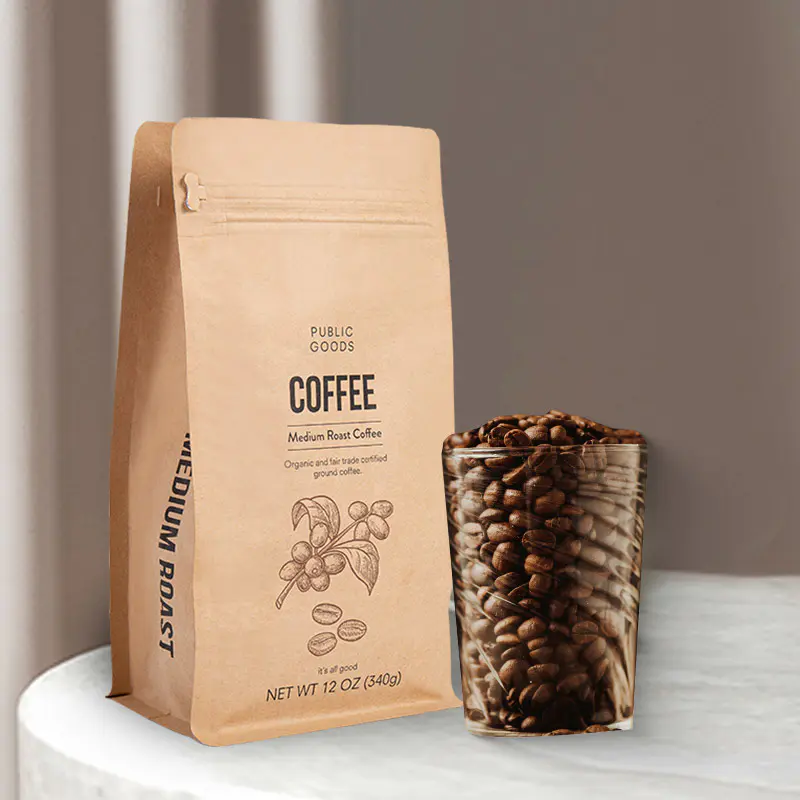
- Flat Bottom Bags: Stand upright on shelves; suitable for retail packaging.
- Side Gusset Bags: Flexible design; can expand to hold more volume.
- Valve Bags: Equipped with degassing valves for freshly roasted coffee.
- Stick Packs: Single-serve portioned bags; convenient for instant coffee or drip coffee pods.
- Zip-Lock Bags: Reusable bags ideal for consumer convenience and freshness preservation.
Coffee Packaging Bag Sizes and Capacities
Packaging size varies depending on the type of coffee and target market. Typical sizes include:
| Bag Type | Weight Capacity | Typical Use |
|---|---|---|
| Flat Bottom Bag | 250g – 1kg | Retail coffee beans or ground coffee |
| Side Gusset Bag | 100g – 500g | Small batch or specialty coffee |
| Valve Bag | 250g – 1kg | Freshly roasted coffee beans |
| Stick Pack | 10g – 20g | Single-serve instant coffee or drip bags |
Printing and Customization Options
Custom packaging helps coffee brands stand out on the shelf. Key customization options include:
- Flexographic Printing: Cost-effective for high-volume production with basic color schemes.
- Offset Printing: High-quality images and intricate designs for premium branding.
- Digital Printing: Suitable for small batches or limited editions with variable designs.
- Matte or Glossy Finishes: Enhances the look and feel of the packaging.
- Embossing and Foil Stamping: Adds tactile appeal and premium perception.
Sustainability in Coffee Packaging
Sustainable coffee packaging is increasingly important to consumers and regulators. Options include:
- Compostable Bags: Made from plant-based materials that degrade naturally.
- Recyclable Laminates: Packaging that can be separated and processed in existing recycling streams.
- Minimalist Packaging: Reduces material usage and carbon footprint.
- Reusable Bags: Encourage consumers to refill and reduce single-use waste.
Conclusion
Coffee packaging bags are a critical component of coffee quality preservation and brand identity. Choosing the right material, bag type, size, and customization ensures freshness, enhances consumer experience, and supports sustainability. Brands that invest in high-quality and innovative packaging can maintain product integrity while differentiating themselves in a competitive market.