 EN
EN
 English
 日本語
日本語 Español
 Deutsch
 عربى
عربى
Content
- 1 Why the Right Coffee Packaging Bag Makes a Measurable Difference
- 2 The Science Behind One-Way Degassing Valves
- 3 Aluminum Foil and Food-Grade LDPE: The Material Stack That Blocks Degradation
- 4 Resealable Coffee Bags: Closure Technology and Consumer Experience
- 5 Comparing Coffee Bag Formats: Which Configuration Suits Your Product?
- 6 Customization: Turning a Functional Bag into a Brand Asset
Why the Right Coffee Packaging Bag Makes a Measurable Difference
Coffee is one of the most chemically volatile food products on the shelf. Freshly roasted beans continuously off-gas carbon dioxide while simultaneously absorbing oxygen, moisture, and ambient odors — all of which degrade flavor within days if the container is inadequate. The wrong coffee packaging bag does not merely shorten shelf life by a small margin; it can render a premium single-origin roast indistinguishable from supermarket commodity coffee within two weeks of roasting.
This is why professional coffee roasters, specialty retailers, and private-label brands invest significantly in packaging engineering rather than treating the bag as an afterthought. The combination of material science, structural design, and closure technology directly determines how much of the roaster's work arrives intact in the customer's cup. Understanding what each component does — and why it matters — is the foundation for making an informed procurement decision.
The Science Behind One-Way Degassing Valves
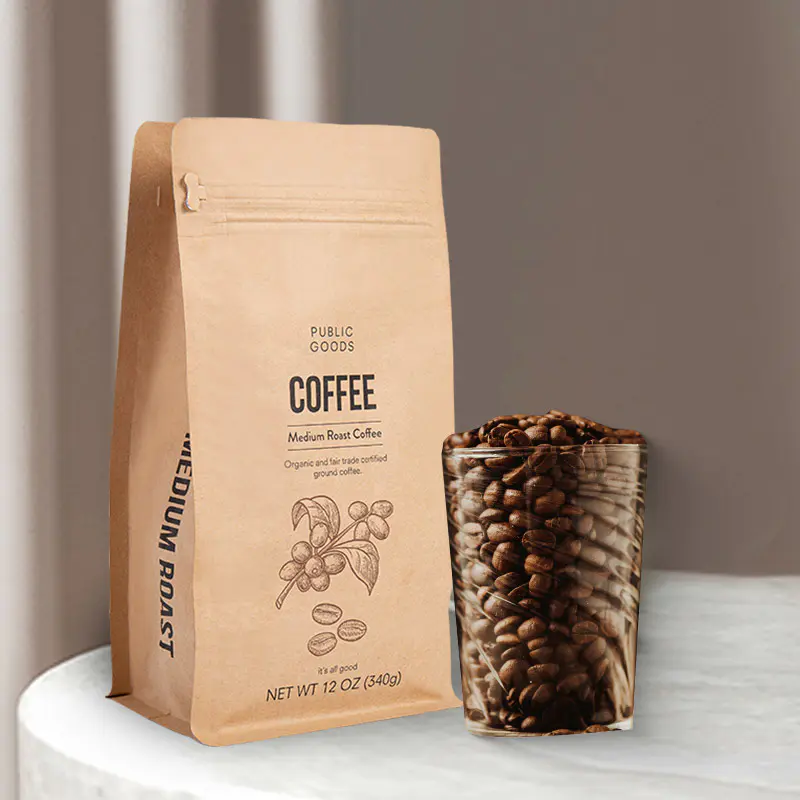
The single most important functional component in a modern coffee bags with valve design is the one-way degassing valve — a small, pressure-sensitive membrane typically 22 mm in diameter, heat-welded directly onto the bag surface. Its operating principle is deceptively simple but chemically critical: the valve opens under internal CO₂ pressure, allowing gas to escape, then closes when internal pressure equalizes with the atmosphere, blocking any inward flow of outside air.
Freshly roasted coffee beans release CO₂ for anywhere from 24 hours to 14 days depending on roast level and grind size. Dark roasts off-gas more aggressively in the first 48 hours; light roasts off-gas more slowly but over a longer period. Without a degassing valve, a roaster faces an impossible choice: either wait several days before sealing — during which time oxygen exposure has already begun degrading flavor — or seal immediately and risk the bag inflating, seams splitting, or pressure buildup causing a rupture during transport.
Coffee bags with valve resolve this entirely. Beans can be packaged within minutes of leaving the roaster, locking in peak aroma and volatile flavor compounds at their highest concentration while the valve safely manages the ongoing gas release. The practical consequence is a bag that can be shipped the same day as roasting — a significant competitive advantage for direct-to-consumer roasters building a reputation on freshness.
What to Look for in a Quality Valve
Not all valves perform equally. When evaluating a coffee packaging bag supplier, verify the following valve specifications:
- BPA-free materials: The valve membrane contacts the internal bag environment. Food-grade, BPA-free plastics are non-negotiable for any product destined for human consumption.
- Cracking pressure: Typically set between 0.3 and 0.6 kPa. Too low and the valve admits air during handling; too high and CO₂ builds up enough to stress seams.
- Adhesion method: Heat-welded valves create a hermetic bond with the bag laminate. Adhesive-mounted valves can delaminate under temperature fluctuations during international shipping.
- Filter membrane: A fine internal filter prevents fine coffee dust from clogging the valve seat, which would cause it to stick open and admit air.
Aluminum Foil and Food-Grade LDPE: The Material Stack That Blocks Degradation
The barrier performance of a coffee packaging bag is determined entirely by its laminate structure — the sequence of material layers bonded together to form the bag wall. Entry-level bags use a simple two-layer construction: a printed outer film and a polyethylene inner seal layer. High-performance bags use a four- or five-layer construction that incorporates an aluminum foil core, and the difference in oxygen transmission rate (OTR) between the two is measured in orders of magnitude.
A typical premium construction works as follows. The outermost layer is a biaxially oriented polyester (BOPET) or biaxially oriented nylon (BON) film, chosen for puncture resistance, printability, and dimensional stability. Beneath it sits the aluminum foil layer — usually 7 to 9 microns thick — which provides near-zero OTR and complete UV-light blockage. The innermost layer is food-grade low-density polyethylene (LDPE), which provides the heat-sealable surface that closes the bag at the bottom and top seams, and critically, contains no plasticizers or additives that could migrate into the coffee.
LDPE is the preferred inner layer material for several practical reasons beyond food safety. Its flexibility at low temperatures prevents the bag from becoming brittle in cold-chain distribution. Its low seal initiation temperature — typically 90°C to 110°C — allows high-speed automated filling lines to run without dwelling, maintaining production throughput. And its chemical inertness means it will not absorb or transfer any of the coffee's volatile aromatic compounds, preserving both flavor integrity and the bag's seal strength over the full shelf life.
The combination of aluminum foil and food-grade LDPE granules in the laminate construction produces bags with OTR values typically below 0.5 cc/m²/day and water vapor transmission rates (WVTR) below 0.5 g/m²/day — performance levels that support a 12- to 18-month shelf life for whole beans sealed under nitrogen flush conditions.
Resealable Coffee Bags: Closure Technology and Consumer Experience
Once a customer opens the bag for the first time, the original factory seal is broken and the barrier system is partially compromised. How well the bag protects the remaining coffee from this point forward depends entirely on the reseal closure. Resealable coffee bags are now the default expectation across retail, foodservice, and direct-to-consumer channels — but the type of reseal mechanism significantly affects both performance and user experience.
Sliding Zipper vs. Press-to-Close Profiles
The two dominant closure types are the sliding zipper (also called a slider zipper) and the press-to-close PTEK profile. The sliding zipper uses a separate plastic slider mechanism that runs along a double-track channel, clamping both tracks together with consistent, even pressure across the full width of the bag. The press-to-close profile relies on the user manually pressing two interlocking ridges together by hand.
For coffee specifically, the sliding zipper delivers meaningfully better performance. Manual press-to-close profiles depend on the user applying even pressure across the entire closure width — a 150 mm or 200 mm span — and partial engagement leaves micro-gaps through which oxygen and moisture enter. The slider mechanism eliminates this variability entirely: one pass of the slider guarantees full engagement. For consumers storing an open bag on a pantry shelf for two to four weeks, this difference is practically significant. Independent comparative tests have shown that properly closed slider-zipper bags maintain oxygen levels inside within 5% of factory-sealed values after 30 days of consumer storage, versus 15% to 25% degradation for press-to-close profiles under equivalent conditions.
Stand-Up Pouch Structure and Practical Storage
Resealable coffee bags in a stand-up pouch configuration combine the closure benefits above with a structural advantage: a gusseted bottom panel that allows the bag to stand upright on a shelf without support. This matters more than it initially appears. A bag that stands independently is easier to reseal cleanly — the user can apply the slider with both hands while the bag sits stable on a countertop — and it eliminates the folding and rolling that degrades the zipper channel on flat pillow bags over multiple open-and-close cycles.
The stand-up format also maximizes retail shelf presence. A 250 g stand-up pouch occupies roughly 80 cm² of shelf footprint and presents the full front panel face-forward, enabling brand graphics, origin information, roast date, and flavor notes to be read without the customer picking up the bag. For specialty coffee brands where storytelling is central to perceived value, this display efficiency directly supports sales conversion.
Comparing Coffee Bag Formats: Which Configuration Suits Your Product?
Different product types, distribution channels, and fill weights call for different bag configurations. The table below summarizes the most common formats and their practical suitability:
| Bag Format | Valve | Reseal | Best For |
|---|---|---|---|
| Stand-up pouch (SUP) | Yes | Slider zipper | Retail, DTC, 250 g–1 kg whole bean |
| Flat-bottom (block bottom) | Yes | Slider zipper | Premium retail, gift, 250 g–500 g |
| Side gusset bag | Yes | Tin tie or none | Wholesale, 1 kg–5 kg bulk |
| Pillow pouch | Optional | Press-to-close | Ground coffee, high-volume low-cost |
For most specialty roasters selling 250 g or 340 g retail units, the stand-up pouch with a one-way valve and sliding zipper represents the optimal balance of protection, user experience, and brand presentation. The flat-bottom format commands a higher per-unit cost but delivers a box-like base that further elevates shelf presence for premium positioning.
Customization: Turning a Functional Bag into a Brand Asset
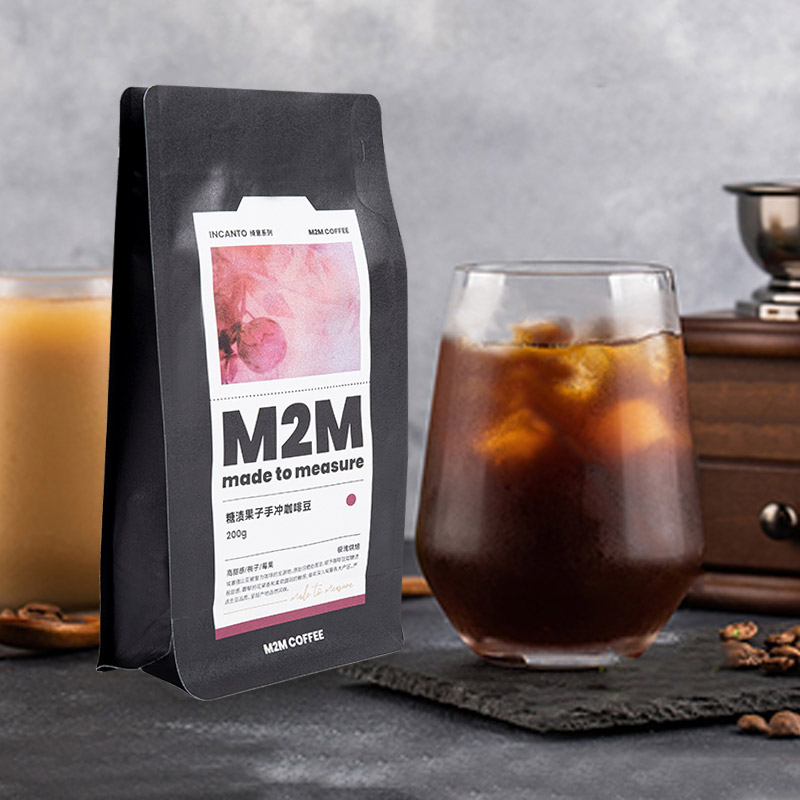
A well-engineered coffee packaging bag protects the product; a well-designed one sells it. The two objectives are not in tension — they are delivered by the same bag, and the customization decisions made at the specification stage determine how effectively the packaging achieves both goals simultaneously.
Printing is applied to the outer BOPET or kraft paper layer using rotogravure or flexographic processes, both of which support up to ten color channels and allow photographic-quality image reproduction at production speeds. Surface finishes applied over the print — matte lamination, gloss lamination, soft-touch coating, or spot UV — change the tactile and visual character of the bag significantly. Matte finishes with spot UV highlights on logos or flavor notes are currently the dominant aesthetic in the specialty coffee segment, projecting a premium, artisanal identity.
Structural customization options include bag width, height, and gusset depth to accommodate fill weights from 100 g to 2 kg; valve position (typically centered on the upper front panel or offset); zipper color matching to brand palette; and tear notch placement for consumer convenience. For brands requiring short runs — seasonal releases, origin launches, or limited editions — digital printing eliminates plate costs and supports minimum order quantities as low as 500 units, making premium customized resealable coffee bags accessible to small-batch roasters without the capital commitment of traditional print runs.